



புறநானூறு 353
பாடல் · The poem
Tap a word to see where else it occurs.
பொருள் · Meaning in TamilAI
குற்றமற்ற பொற்கொல்லன் மாசில்லாமல் செய்த, பொன்னாலான பல காசுகள் கோத்த மேகலையை இடையில் அணிந்து, ஈகை மலர் மாலையை ஒளிர அணிந்து, அறநெறியோடு நடக்கும் இவளுடைய அழகைப் பார்த்து, உன் தேரை நிறுத்தி, ஏக்கத்தால் வெளிறிய கண்களோடு ஓயாமல் கேட்டுக்கொண்டிருக்கிறாய், வெற்றிப் போருடைய தலைவனே! 'இவள் யார் மகள்?' என்று கேட்கிறாய்; சொல்கிறேன், கேள். குன்றுகளைப் போல நிற்கும் பல வைக்கோல் போர்களும், காலையில் கடாக்கள் மிதித்துப் பிரித்த அகன்ற களத்து நெல் குவியல்களும் உடைய, வலிய வில் ஏந்திய இளைஞர்களுக்கு உணவு மறுக்காத பழங்குடித் தலைவனின் மகள் இவள். முன்பு இவளைக் கேட்டு வந்த பெரிய பழைய வேந்தர்களை … மிதித்துக் குருதியை ஓடச் செய்தனர். முனை மழுங்கிப் பல் விழுந்த கூரிய வேல்களோடு, புண்ணில் கட்டிய பஞ்சு கூட இன்னும் அகற்றப்படாதவர்களாக இருக்கிறார்கள் இவளுடைய அண்ணன்மார்; அவர்கள் அஞ்சத் தக்கவர்கள்.
இது காஞ்சித் திணை, மகட்பாற் காஞ்சித் துறை: பெண்ணை விரும்பிய தலைவனுக்கு அவள் குடியின் வலிமையைச் சொல்லி எச்சரிப்பது. பாடியவர் காவிரிப்பூம்பட்டினத்துக் காரிக்கண்ணனார். பதின்மூன்றாம் அடியின் தொடக்கம் விடுபட்டுள்ளது.
ஆங்கிலம் · English translationAI
Translation
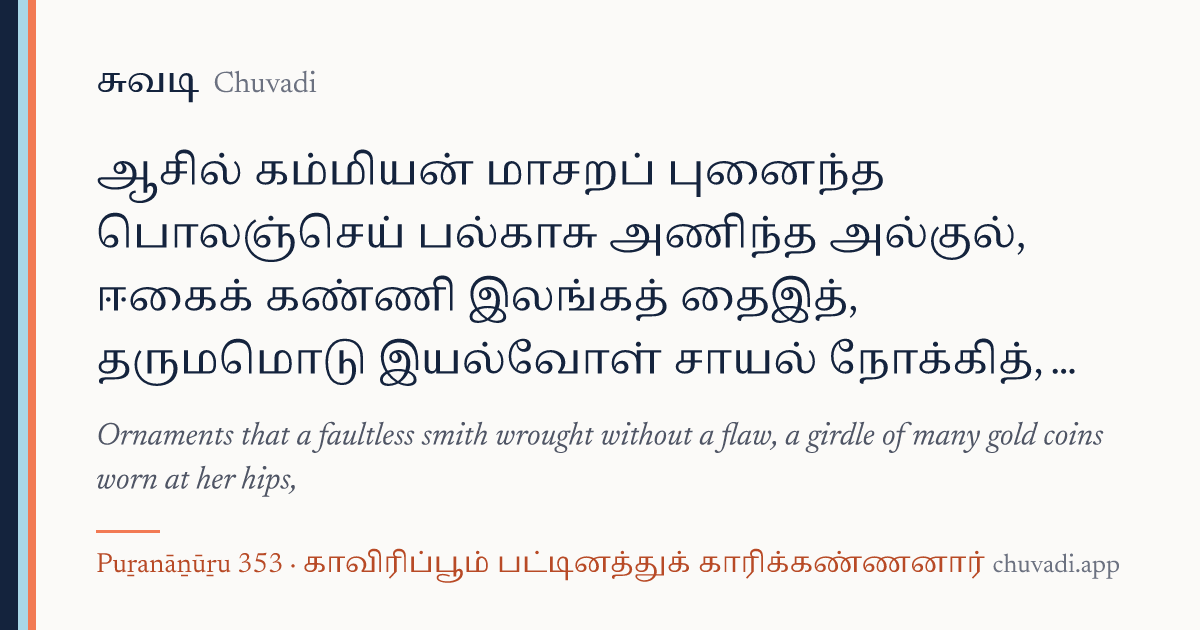
- Ornaments that a faultless smith wrought without a flaw,
- a girdle of many gold coins worn at her hips,
- a garland of īkai flowers tied so that it shines —
- she who walks in the way of right: gazing at her grace,
- you halted your chariot, your eyes grown pale with longing,
- and never stop asking, lord of conquering battles!
- 'Whose daughter is she?' you ask. Hear me tell you, then:
- with many stacks of straw that stand like hills,
- with heaps of grain on the wide floor, threshed by the morning's buffaloes,
- never withholding provisions from young men of strong bows,
- she is the daughter of the lord of an ancient clan. In former days,
- to the great old kings who came speaking for her,
- … trampling, they sent the blood streaming,
- and with sharp-tipped spears whose edges were all notched,
- with wounds whose cotton dressings are not yet removed,
- they are men to be feared — her brothers.
What the poem says
Kāvirippūmpaṭṭiṉattuk Kārikkaṇṇaṉār addresses a warrior lord who has stopped his chariot to stare at a girl, in the makaṭpāṟ kāñci theme of a daughter sought by force and a family that will not yield.
The first six lines describe her through his eyes: gold-coin girdle, a shining garland, a gait that keeps to what is right, and the lord himself, chariot halted, eyes pale with desire, asking again and again who she is. The speaker answers, and the answer is a warning. She belongs to an old landed clan, rich in straw-stacks and threshed grain, which always feeds its young bowmen. Earlier kings who came to ask for her were driven back with bloodshed.
Line 13 begins with a gap, so the exact action is lost. The poem ends on the brothers, their spears notched from use and their wounds still bound in cotton: they are men to be feared. The dressing of wounds with cotton ('pañci') is a detail the poem gives plainly; 'viḷartta kaṇ', 'pale eyes', is taken as the pallor of longing.