



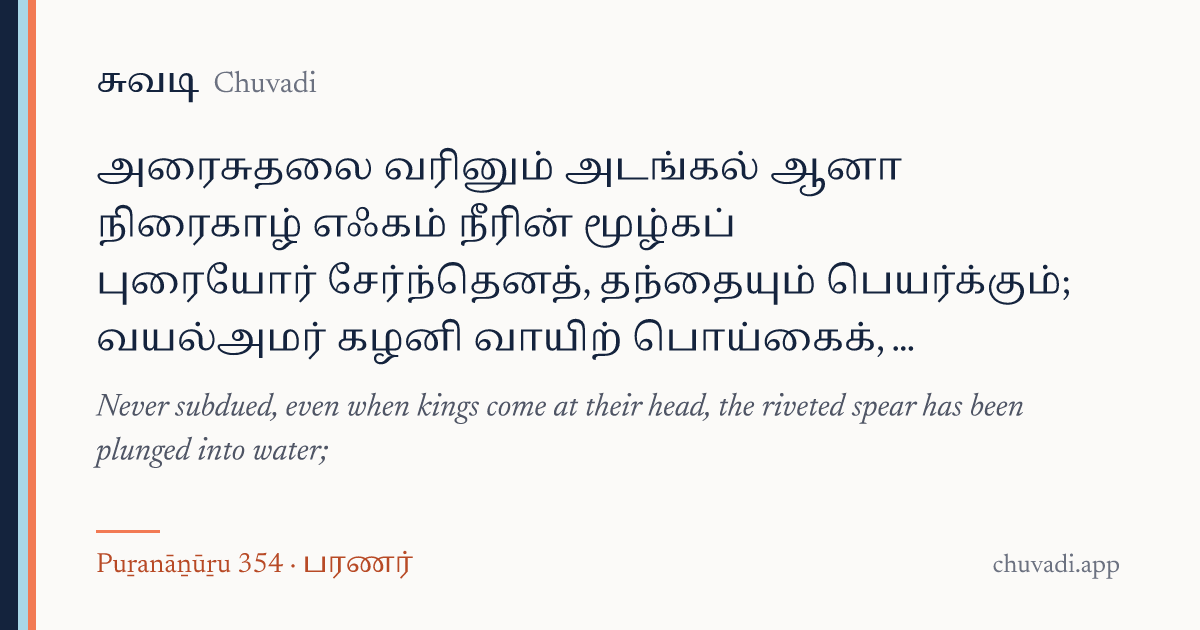
புறநானூறு 354
பாடல் · The poem
Tap a word to see where else it occurs.
பொருள் · Meaning in TamilAI
அரசர்களே தலைமை தாங்கி வந்தாலும் அடங்காதவர்கள் இவர்கள். வரிசையாக ஆணி அடித்த வேல் நீரில் மூழ்கடிக்கப்பட்டது. தகுதியுடையவர்கள் மணம் கேட்டு வந்தாலும் இவளுடைய தந்தை அவர்களைத் திருப்பி அனுப்புகிறான். நெல் வயல்களின் வாயிலில் உள்ள பொய்கையில், கயல் மீனைப் பிடிக்க வந்த நாரை துரத்திய வாளை மீனை, நீராடும் பெண்கள் தங்கள் வளமான வீடுகளுக்குக் கொண்டு செல்கிறார்கள். இப்படிப்பட்ட ஊர் தன் அழகை இழக்கும் நிலையும் வருமோ? தேமல் அணிந்து அழகாக மேல்நோக்கி எழும் இளமுலைகளும், பருத்த மூட்டுடைய மூங்கில் போன்ற தோள்களும், பெண்மானைப் போன்ற மகிழ்ச்சியும் மென்மையும் கொண்ட பார்வையும் உடைய இந்த இளம்பெண்ணால்?
இது காஞ்சித் திணை, மகட்பாற் காஞ்சித் துறை. பாடியவர் பரணர். இரண்டாம், மூன்றாம் அடிகளின் பொருள் உறுதியாகத் தெரியவில்லை; வேல் நீரில் மூழ்கடிக்கப்பட்டது ஏன் என்பதைப் பாடல் சொல்லவில்லை.
ஆங்கிலம் · English translationAI
Translation
- Never subdued, even when kings come at their head,
- the riveted spear has been plunged into water;
- now that worthy suitors have come, her father too sends them away.
- By the pond at the gate of the fields where paddy grows,
- the vāḷai fish startled by the heron hunting kayal
- is carried by women bathing in the stream to their rich homes —
- must it come to this, that such a town loses its beauty,
- for her young breasts, lovely with spots, swelling upward,
- for the girl with bamboo-smooth arms full at the joint,
- for the gentle, joyful glance like a doe's?
What the poem says
In this makaṭpāṟ kāñci poem by Paraṇar, the speaker fears for a prosperous town because of a girl whom kings desire and whose father will not give her.
The first lines are compressed. They seem to say that the clan has never bowed even to kings, that the spear has been dipped in water (perhaps a preparation for battle; the poem does not say why), and that even when worthy suitors come the father sends them back. The reading of lines 2 and 3 is uncertain.
The middle lines show what is at risk: a town of fields and ponds, where a heron chasing small kayal fish startles a large vāḷai, and bathing women carry it home. The last three lines name the girl's beauty, her breasts, her arms, her doe-like glance, as the cause, in the form of a question: must the town lose its loveliness because of this?