



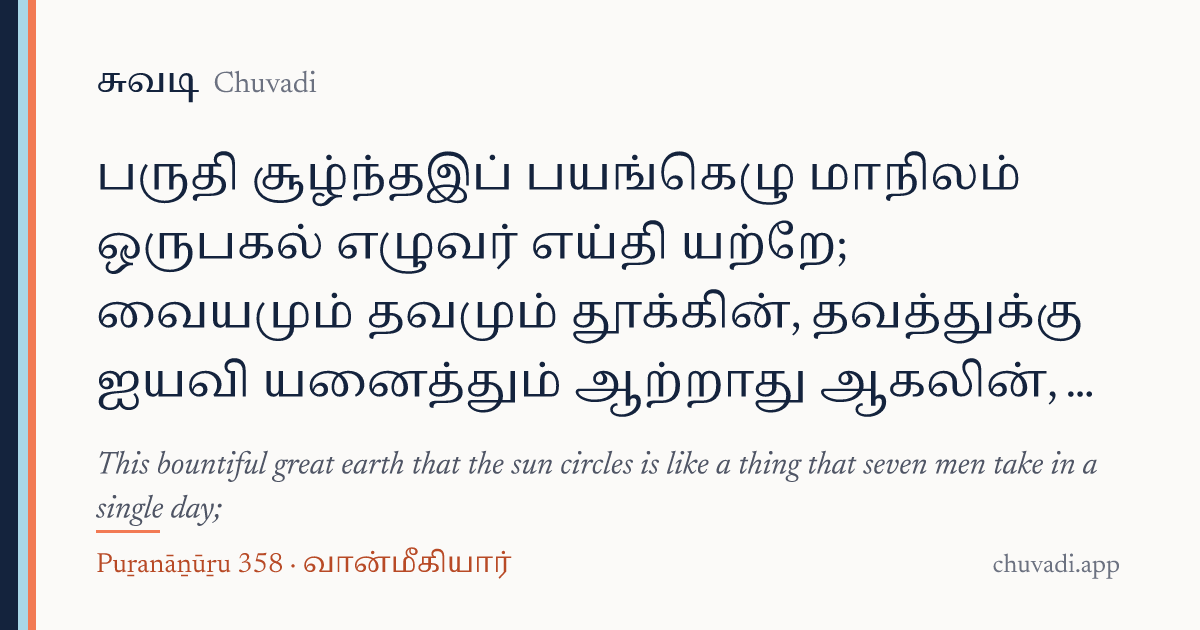
புறநானூறு 358
பாடல் · The poem
Tap a word to see where else it occurs.
பொருள் · Meaning in TamilAI
கதிரவன் சுற்றிவரும் பயன் மிகுந்த இந்தப் பெரிய நிலவுலகம், ஒரே நாளில் ஏழு பேர் அடைந்து விட்டதைப் போல மாறிக்கொண்டே இருக்கிறது. உலகத்தையும் தவத்தையும் தராசில் வைத்து நிறுத்தால், தவத்திற்கு எதிரே உலகம் ஒரு கடுகு அளவுக்கும் ஈடாகாது. ஆகவே தவத்தை விரும்பியவர்கள் உலகத்தைக் கைவிட்டார்கள். அதனால், தன்னை விட்டவர்களைச் செல்வத் திருமகள் விடமாட்டாள்; தன்னை விடாமல் பற்றிக்கொள்பவர்களையே அவள் விட்டுவிடுவாள்.
இது காஞ்சித் திணை; துறை மனையறம், துறவறம் எனக் கொடுக்கப்பட்டுள்ளது, அதாவது இல்வாழ்க்கையையும் துறவையும் ஒப்பிட்டுத் துறவே உயர்ந்தது என்று சொல்வது. பாடியவர் வான்மீகியார். ஐந்தாம் அடியில் 'காதலர்' என்பது தவத்தை விரும்பியவரா, உலகை விரும்பியவரா என்பது உறுதியில்லை.
ஆங்கிலம் · English translationAI
Translation
- This bountiful great earth that the sun circles
- is like a thing that seven men take in a single day;
- if you weigh the world against penance, against penance
- it will not come to even a mustard seed; and so
- those who longed for penance let it go; therefore
- those who have left her, she will not leave — Fortune;
- those who will not leave her are the ones she leaves.
What the poem says
This short poem is attributed to Vāṉmīkiyār, and its turai is given as 'maṉaiyaṟam, tuṟavaṟam', the life of the householder and the life of renunciation; the tiṇai is kāñci. It weighs the two and comes down firmly for renunciation.
The earth, it says, changes hands so fast that it is as if seven owners took it in one day. Set on a balance against tapas, the discipline of penance, the whole world does not weigh as much as a mustard seed. That is why those who desired the higher good gave it up.
The last two lines are a neat reversal about Tiru, the goddess of fortune and prosperity: she clings to those who let her go and abandons those who cling to her. 'Kātalar' in line 5, 'those who love', is taken as those who love penance; it could also mean the world's lovers who in the end must give it up, which would change the tone.