



புறநானூறு 359
பாடல் · The poem
Tap a word to see where else it occurs.
பொருள் · Meaning in TamilAI
பல வறண்ட கிளைகள் உள்ள இடத்தில் பருந்துகள் சிறகடித்து வந்து இறங்குகின்றன; வேறுபட்ட குரலும் கொடிய வாயும் உடைய கூகைகள் உள்ளன; பிணம் தின்னும் குள்ளநரிகளின் பற்களில் கொழுப்பு மின்னுகிறது; பேய்மகளிர் பிணங்களைக் கட்டிப் பிடித்து, வெளுத்த ஊனைத் தின்று புலால் நாற்றம் வீசும் உடலோடு, களர் நிலத்தில் கால் மாற்றி மாற்றி ஆடி, பிணம் எரியும் தீயின் ஒளியில் அச்சம் தரும்படி திரிகிறார்கள். இப்படிப்பட்ட சுடுகாட்டை, நாடுகளை வென்று கைக்கொண்டவர்களும் சென்று அடைந்தனர். உனக்கும் அந்த நாள் வரும். பழியும் நிலைத்து நிற்கும்; புகழும் நிலைத்து நிற்கும். ஆகவே, பழியை நீக்கிப் புகழை விரும்பி, கைம்மாறு எதையும் விரும்பாமல் நல்லதையே பேசி, நிலவு போல ஒளிரும் தந்தங்களை உடைய பல களிறுகளையும், பொன் அணிகள் பூண்ட குதிரைகளையும், அணிகலன்கள் விளங்கும் நெடிய தேர்களையும் இரப்பவர்களுக்குக் குறைவின்றி 'கொள்' என்று கொடுத்தால், நீ இங்கிருந்து அங்கே சென்ற பின்னும், நீ அடைந்த புகழ் வெளிப்படையாக இங்கே நீண்ட காலம் விளங்கும்.
இது காஞ்சித் திணை, பெருங்காஞ்சித் துறை: நிலையாமையைச் சுட்டிக்காட்டி அறம் செய்யச் சொல்வது. பாடியவர் கரவட்டனார்; பாடப்பட்டவன் அந்துவன் கீரன். முதல் அடியில் 'பன்மாறு' என்பதன் பொருள் உறுதியாகத் தெரியவில்லை.
ஆங்கிலம் · English translationAI
Translation
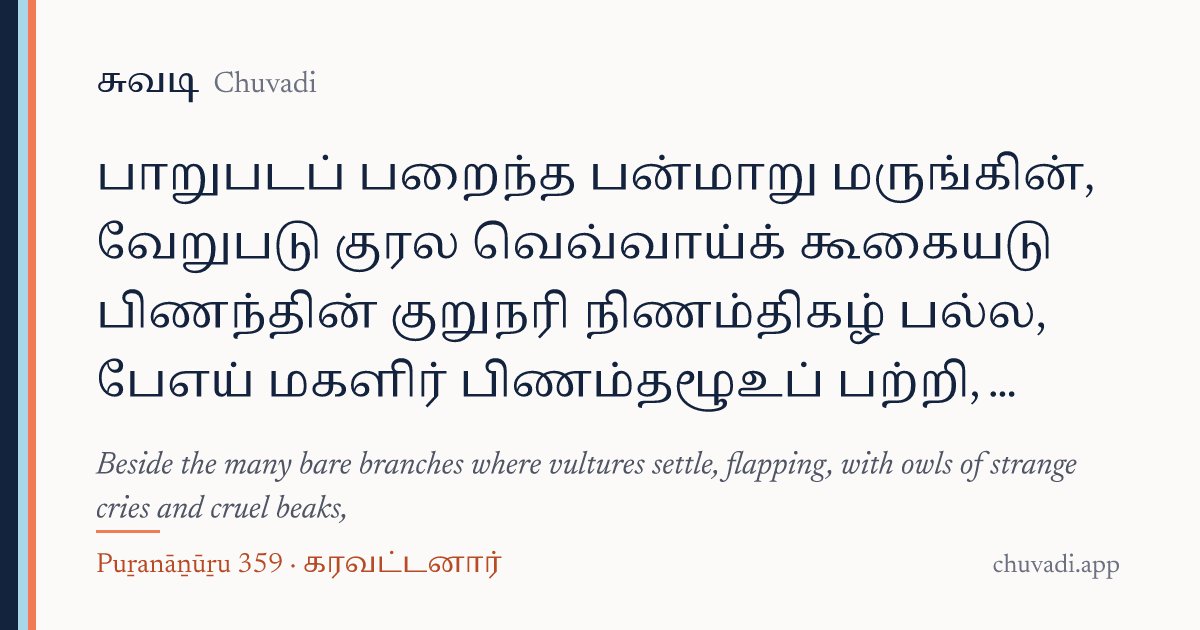
- Beside the many bare branches where vultures settle, flapping,
- with owls of strange cries and cruel beaks,
- with corpse-eating jackals whose teeth gleam with fat,
- with she-demons who seize and hug the corpses,
- their bodies reeking hot of the pale flesh they have eaten,
- lifting their feet and dancing on the salt ground,
- moving about, terrible, by the light of the pyres —
- to that forest they have gone, even those who conquered lands!
- For you, too, that day will come.
- Blame endures, and fame endures;
- so, putting blame aside and seeking fame,
- wanting nothing in return, speaking only good,
- with many bull elephants whose tusks shine like moonlight,
- with horses in golden trappings crowding together,
- and tall chariots bright with ornament, never sparing them to those who ask,
- if you let them go, saying 'Take!', then, plain as day,
- even after you have gone away there,
- here it will shine on for long, the fame that you have won.
What the poem says
Karavaṭṭaṉār speaks to Antuvaṉ Kīraṉ in perunkāñci, the theme of life's impermanence offered as counsel. The patron is named only in the metadata; the poem itself calls him simply 'you'.
The first seven lines are a frightening picture of the cremation forest: vultures on bare branches, owls, jackals with fat on their teeth, and female demons who hug corpses and dance on the salt ground by the light of the pyres. Even those who once conquered kingdoms have gone there, and the poet tells his patron plainly that his day will come too.
The second half draws the lesson. What survives a person is either blame or fame. So the king should avoid blame and seek fame, speak well without hope of reward, and give freely to suppliants elephants, horses in gold harness and ornamented chariots, saying only 'Take!'. Then, after he has gone 'there', his fame will go on shining 'here'. Line 1 ('pal māṟu maruṅkiṉ') is not certain; 'bare branches' is a likely but not a sure reading.