



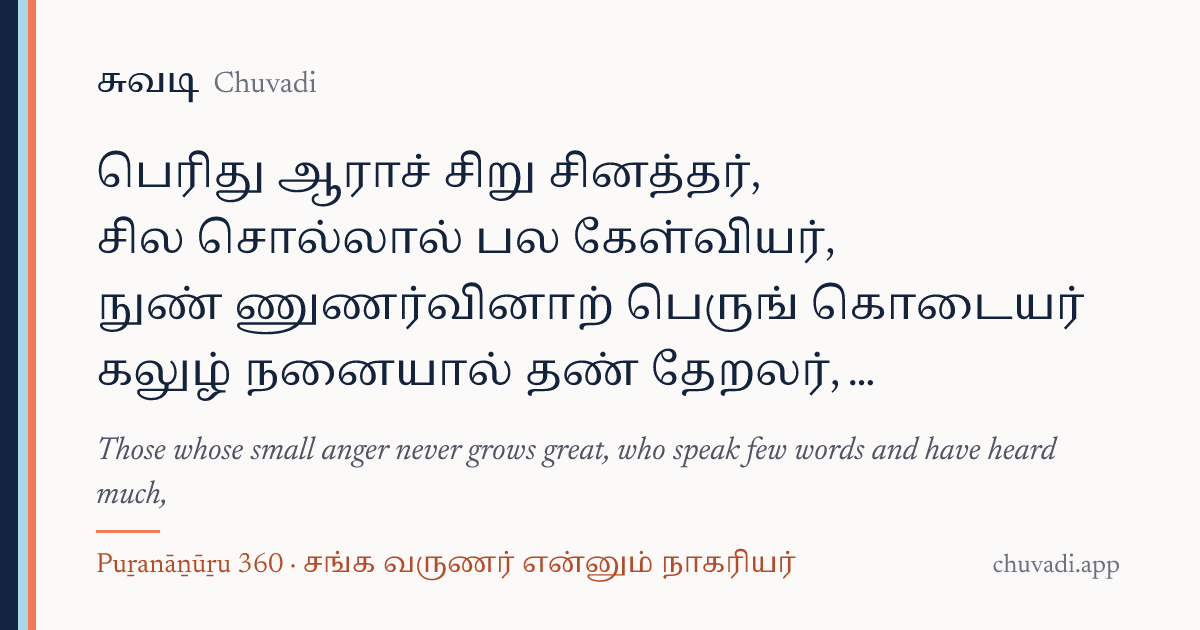
புறநானூறு 360
பாடல் · The poem
Tap a word to see where else it occurs.
பொருள் · Meaning in TamilAI
சிறிய சினம் கொண்டாலும் அது பெரிதாக வளராதவர்கள்; சில சொற்களே பேசினாலும் பல நூல்களைக் கேட்டறிந்தவர்கள்; நுட்பமான அறிவோடு பெரிதும் கொடுப்பவர்கள்; பெருகும் மொட்டுகளால் ஆக்கிய குளிர்ந்த தெளிந்த கள்ளும், தாளிப்புப் புகையோடு செய்த கொழுமையான துவையலும் உடையவர்கள்; பணிவை விரும்பி அன்போடு தழுவும் சொற்களைப் பேசுபவர்கள்; பலருக்கும் பயன்படும்படி உதவி, இந்த நிலத்தைக் காவலாக இருந்து ஆண்டவர்கள். இப்படிப்பட்டவர்கள் சிலரே. பெருமானே, இப்போது கேள்: இந்தத் தகுதியை அறியாதவர்களே எந்நாளும் பலர். அப்படிப்பட்டவர்களின் செல்வமும் நிலைத்து நிற்பதில்லை; இன்றும் அதன் இயல்பு அப்படியே. ஆகவே, நீ எப்போதும் ஒழுக்கத்தில் தவறாதவன்; பரிசிலை விரும்பி வருபவர்களின் கைகளை நிரப்புவதைக் காத்துச் செய். அச்சம் தரும்படி பருந்துகள் தங்கிய பரந்த வெளியில், கள்ளி வளர்ந்த களர் நிலத்தின் அருகே, பாடையை இறக்கி வைத்த பின், கள்ளோடு, புல்லின் மேல் வைத்த சில சோற்றுப் பருக்கைகளை, புலையன் ஏவ, புல்லின் மேல் அமர்ந்து உண்டு, நெருப்பின் வாயில் புகுந்த பின்னும், பகிர்ந்து உண்டவர்கள் பலருள் ஒருவராக மறைந்து போவதில்லை.
இது காஞ்சித் திணை, பெருங்காஞ்சித் துறை. பாடியவர் சங்க வருணர் என்னும் நாகரியர்; பாடப்பட்டவன் பெயர் சொல்லப்படவில்லை. நான்காம், ஐந்தாம், பதினேழாம் அடிகளும் இறுதி அடியும் தெளிவில்லாதவை; இறுதி அடியைப் பகிர்ந்து உண்டவர் பலர் வாயிலும் நிற்க மாட்டார் என்றும் பொருள் கொள்ள இடமுண்டு.
ஆங்கிலம் · English translationAI
Translation
- Those whose small anger never grows great,
- who speak few words and have heard much,
- who in their fine understanding are great givers,
- who keep cool clear toddy brewed from flowing buds,
- who serve rich relishes seasoned with smoking spice,
- who rejoice in humility and speak words that embrace,
- who, doing much for many, make it bear fruit,
- and have ruled this land so that it was a refuge —
- they are few. Great one, listen now: every day
- many are those who do not know that worth!
- Even the wealth of such men does not stay fixed;
- it is so even now; that is its nature. Therefore
- at all times you are unfailing in right conduct; gifts,
- take care to fill the hands of those who long for them. Fearsome,
- on the open ground where vultures have settled, wide and
- by the salt waste where the kaḷḷi has grown tall,
- after the bier has been set down, with toddy,
- a scant meal of a few grains of rice laid on grass
- they eat, seated on the grass, as the pulaiyaṉ directs,
- and even after they have gone into the mouth of the fire,
- they do not stay lost among the many, those who shared what they ate.
What the poem says
Caṅka Varuṇar eṉṉum Nākariyar ('the townsman called Caṅka Varuṇar') addresses an unnamed 'great one' in perunkāñci, counsel drawn from the impermanence of all things.
The poem opens with a portrait of the rare good ruler: slow to anger, sparing in speech and deep in learning, wise and generous, hospitable with toddy and rich food, humble and warm in speech, a protector of the land. Such rulers are few, and most people never understand what they are worth. Yet even their wealth does not last. So the listener should keep to right conduct and fill the hands of those who come for gifts.
The ending is the funeral. On the salt ground where vultures sit and kaḷḷi grows, the bier is set down, a little rice is placed on grass, and the dead 'eat' it as the pulaiyaṉ, who conducts the rites, directs; then they go into the fire. Several details here are uncertain: 'kaḷ aṭu' in line 17 may refer to toddy offered at the rite or to something else, and the last line is hard. It is taken here to mean that those who shared their food are not forgotten among the crowd of the dead; it could also be read as saying they do not linger in many mouths, which would give the poem a darker close. Lines 4 and 5 are also obscure.