



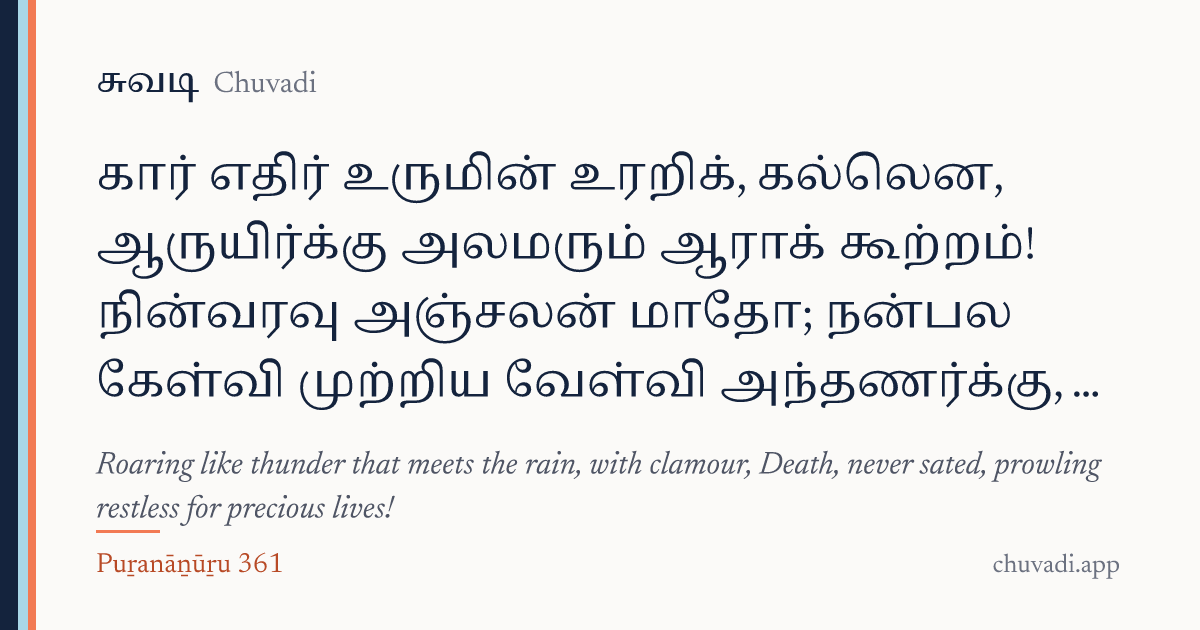
புறநானூறு 361
பாடல் · The poem
Tap a word to see where else it occurs.
பொருள் · Meaning in TamilAI
மழை மேகத்தை எதிர்கொள்ளும் இடியைப் போல முழங்கி, ஆரவாரத்தோடு அரிய உயிர்களுக்காக அலைந்து திரியும், ஒருநாளும் நிறைவடையாத கூற்றமே! உன் வருகைக்கு அவன் அஞ்சமாட்டான். பல நூல்களைக் கேட்டு முடித்த, வேள்வி செய்யும் நல்ல அந்தணர்களுக்கு அரிய அணிகலன்களை நீர் வார்த்துக் கொடுத்தான்; தாயைப் போன்ற பெருந்தன்மையோடு பலருக்கும் நன்மை செய்தான்; கம்பீரமாக நடக்கும் பெரிய யானைகளோடு தன் அருளைப் பாடுபவர்களுக்கு நிறைவாக வழங்கினான்; பகைவரைக் கொன்று பெற்ற, உருண்டு செல்லும் பல தேர்களைத் தன் அடி சேர்ந்தவர்களுக்கு மகிழ்ந்து கொடுத்தான். முறுக்கிய மாலை அணிந்த பாடினியும், பொற்றாமரைப் பூ அணிந்த பாணர்களும் கலந்திருக்கும் அவனுடைய நீண்ட அவையில், பொறுமை நிறைந்த கற்புடைய, மான் போன்ற பார்வையும், வில்லைப் போல வளைந்த புருவமும், வலிமையாகக் கடித்தால் நாக்கே அஞ்சும் முள் போன்ற பற்களும் உடைய மகளிர், தங்கள் இடையின் சுமையால் தளர்ந்து, மெதுவாக, கலக்கிய தெளிந்த கள்ளைப் பொற்கிண்ணத்தில் ஏந்தி, அமிழ்தம் போலப் பருகக் கொடுக்க, அவன் அதை உண்டான்; அவன் பழிக்கு இடமில்லாதவன். நிலையில்லாத இந்த உலகத்தின் நிலையாமையை நீ இந்தத் தலைவனுக்குச் சொல்லத் தேவையில்லை; முழுதும் உணர்ந்த கல்வியுடையவன் ஆதலால், அவன் அதை முன்பே திறமையோடு அறிந்துகொண்டான்.
இப்பாடலுக்குப் பாடியவர், திணை, துறை, பாடப்பட்டோர் ஆகிய குறிப்புகள் எவையும் இந்தப் பதிப்பில் இல்லை. கருத்தில் இது பெருங்காஞ்சியை ஒத்துள்ளது: நிலையாமையை உணர்ந்து அறம் செய்தவன் சாவுக்கு அஞ்சான் என்று கூற்றத்தை நோக்கிப் பாடுவது. பதினைந்தாம், பதினாறாம் அடிகளின் பொருள் உறுதியாகத் தெரியவில்லை.
ஆங்கிலம் · English translationAI
Translation
- Roaring like thunder that meets the rain, with clamour,
- Death, never sated, prowling restless for precious lives!
- He does not fear your coming. To many a good
- Brahmin of the sacrifice, perfect in learning,
- he poured out rare jewels along with water; with greatness of heart
- like a mother's, he gave good things to many;
- with great elephants of stately gait, his
- grace he granted fully to those who sing;
- many chariots of rolling gait, having slain his foes, to those
- who come to his feet he gave gladly;
- with the singing-woman who wears twisted garlands
- and the bards with lotuses of gold
- mingling together in his long hall,
- women of chastity rich in patience, with doe-like eyes,
- brows curving across like a bow, and, should they bite hard,
- thorn-sharp teeth the tongue would fear —
- their hips weary of their own weight, gently
- raising the clear stirred toddy in golden cups,
- pouring it for him like nectar, he drank, and is beyond reproach.
- The impermanence of this world that does not stay, you
- need not tell to this noble one; for he knew it long ago,
- a man of complete learning, wise in its ways.
What the poem says
The edition gives no poet, tiṇai, turai or patron for this poem. It is an address to Kūṟṟam, Death personified, on behalf of an unnamed king, and its argument is close to perunkāñci: the man who has lived generously and knows the world is passing has nothing to fear.
The speaker challenges Death, roaring and restless for lives, and lists why the king does not fear it. He gave jewels with the ritual pouring of water to learned Brahmins of the sacrifice, gave like a mother to many, gave elephants to poets and chariots to those who sought his protection, and kept a hall where singing-women and bards wearing golden lotuses mingled. He also enjoyed life fully: the long middle passage describes women of his household, modest and lovely, pouring toddy for him in golden cups.
The close is the point: Death need not teach this king that the world is impermanent; he learned it long before, and lived accordingly. Lines 15 and 16, about teeth that the tongue would fear, are obscure, and the rendering is tentative. Without the metadata the poem's speaker cannot be named.