



புறநானூறு 362
பாடல் · The poem
Tap a word to see where else it occurs.
பொருள் · Meaning in TamilAI
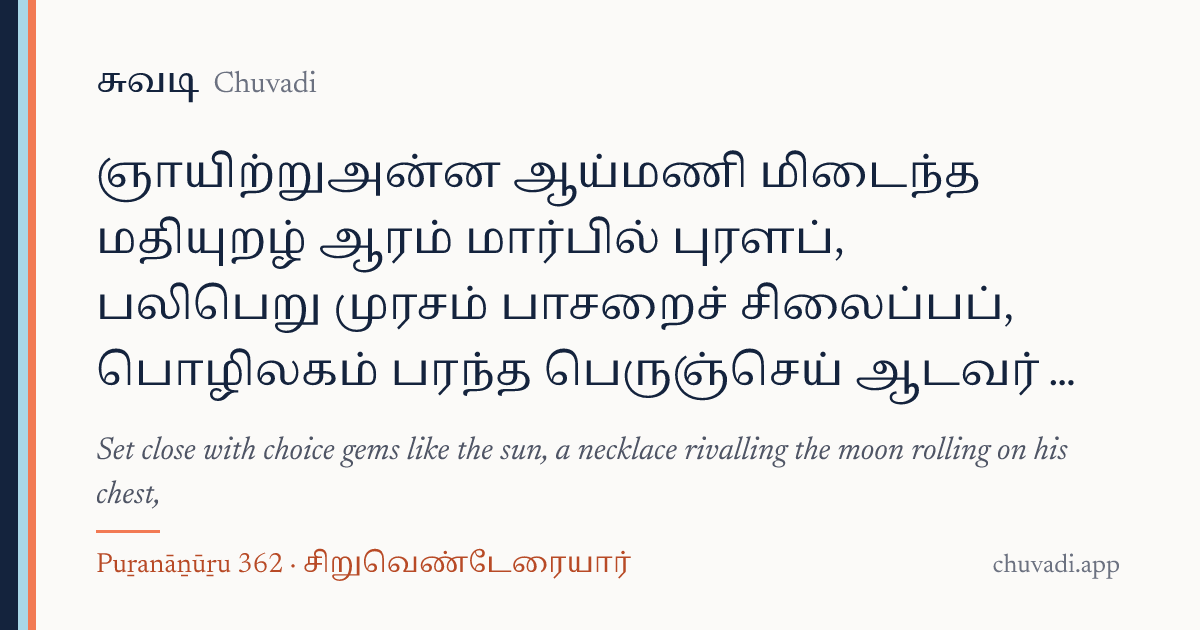
கதிரவனைப் போன்ற சிறந்த மணிகள் நெருக்கமாகப் பதித்த, நிலவைப் போன்ற முத்தாரம் அவன் மார்பில் புரள்கிறது; பலி பெறும் முரசு பாசறையில் முழங்குகிறது; சோலைகள் எங்கும் பரந்திருக்கும் பெருஞ்செயல் புரியும் வீரர்கள் போரை விரும்பி வெற்றியின் வெண்கொடியை உயர்த்துகிறார்கள்; சினந்த தெய்வத்தைப் போன்ற கூட்டமான படையும், கூற்றுவனைப் போன்ற தடுக்க முடியாத வலிமையும் உடையவன் அவன். இந்தக் குரலை ஆராய்ந்தால், இது அந்தணர்களின் நான்கு மறைகளைக் குறித்ததன்று, ஏனெனில் இது அருளைப் பற்றியதன்று; அறத்தைக் குறித்ததும் அன்று, ஏனெனில் இது பொருளைப் பற்றியது. மயக்கம் நீங்கி, குழப்பம் விலகி, கையால் வார்த்துக் கொடுத்த நீர் கடல் வரை பரவும்படி, நீர் நிற்கும் வயல்களை வழங்கி, சோறு கொடுத்து, மிகப் பெரிய அளவில் சிறப்புடைய நல்ல அணிகலன்களை வாரி வழங்கி, … சிறிய வெள்ளை எலும்புகள் கிடக்கும் நீண்ட வெண்மையான களர் நிலத்தில், கடுமையான வாயுடைய காக்கை கூகையோடு சேர்ந்து பகலிலும் கூவும் அகன்ற இடத்தில், காட்டையே மறைக்கும் ஆரவாரமான சுற்றத்தார் 'அவன் இல்லை' என்று சொல்லி வீட்டுக்குத் திரும்புகிறார்கள். அதற்கு முன்பே, சிறிதும் விலகிச் செல்ல அஞ்சி, மெல்ல, உடம்போடேயே உயர்ந்தோர் உலகத்துக்குச் செல்வதற்காக …
இது பொதுவியல் திணை, பெருங்காஞ்சித் துறை: நிலையாமையைச் சொல்லிக் கொடை செய்யத் தூண்டுவது. பாடியவர் சிறுவெண்டேரையார்; பாடப்பட்டவன் பெயர் இல்லை. எட்டு முதல் பத்தாம் அடிவரை உள்ள பகுதியின் பொருள் மிகவும் ஐயத்துக்குரியது; இறுதி அடிகளின் தொடர் முற்றுப்பெறாமல் நிற்கிறது.
ஆங்கிலம் · English translationAI
Translation
- Set close with choice gems like the sun,
- a necklace rivalling the moon rolling on his chest,
- the drum that receives offerings roaring in the camp,
- men of mighty deeds spread through the groves,
- eager for battle, raising the white flag of victory,
- an army in hosts like a goddess grown terrible,
- he, of strength none can resist, like Death —
- if you consider this cry, it is not about the Brahmins'
- four Vedas, since it is not about grace;
- it is not about dharma; since it is about wealth,
- with bewilderment gone and confusion put away,
- the water poured from his hand spreading to the sea,
- granting the fields where water stood,
- giving food, and in very great measure
- scattering fine treasures of distinction, and fully —
- on the long white salt ground of small white bones,
- where the hard-beaked crow, joining the owl,
- calls even by day, in that wide place,
- with a clamorous kin crowding the forest out of sight,
- saying 'he is gone', they turn back home; then, slowly,
- fearing to move even a little aside,
- to go, even with the body, to the land of the exalted.
What the poem says
Ciṟuveṇṭēraiyār's poem is classed as potuviyal, the 'general' tiṇai for poems that fit no single theme, with the turai perunkāñci, counsel on impermanence. It seems to address a powerful king, though the edition names no patron.
The first seven lines are a portrait of martial glory: jewelled necklaces, the drum in the camp, an army in hosts like an angry goddess, a leader as irresistible as Death. Lines 8 to 10 are the hardest in the poem. They seem to say that 'this cry' (perhaps the poet's own words) does not concern the Vedas, since it is not about grace, nor dharma, but about worldly wealth; the sense is very doubtful and the rendering is a literal guess.
What follows urges, or describes, a life of giving: gifts confirmed with poured water so plentiful that the water reaches the sea, fields given away, food and treasure. Then comes the cremation ground of small white bones, crows and owls calling by day, the kin who say 'he is gone' and go home. The last lines are unfinished in syntax and seem to say that one should give before that day, so as to go to the world of the exalted 'even with the body'. That phrase may mean reaching heaven with one's whole self, or simply going while still alive; it is left as the poem gives it.