



புறநானூறு 363
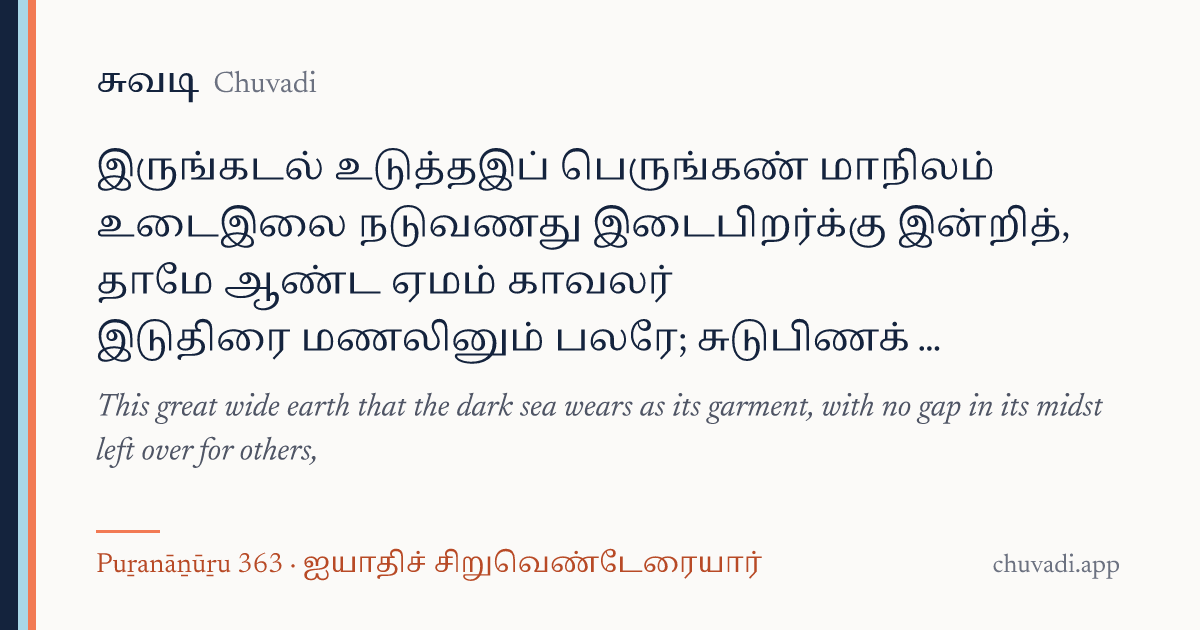
பாடல் · The poem
Tap a word to see where else it occurs.
பொருள் · Meaning in TamilAI
பெரிய கடலை ஆடையாக உடுத்திய இந்த அகன்ற பெரிய நிலவுலகத்தை, அதன் நடுவில் பிறருக்குச் சிறிதும் இடம் இல்லாமல், தாமே தனியாகக் காவல் புரிந்து ஆண்ட மன்னர்கள், அலைகள் கொண்டுவந்து சேர்க்கும் மணலைவிட எண்ணிக்கையில் பலர். அவர்கள் பிணம் சுடும் காட்டையே தங்கள் இருப்பிடமாகக் கொண்டு சென்றனர்; தங்கள் நாட்டைப் பிறர் கைக்கொள்ள, ஒவ்வொருவரும் மறைந்து போயினர். ஆகவே நீயும் கேள்! சாகாமல் உடம்போடு நிலைத்து நின்ற உயிர் எதுவும் இல்லை; சாவு உண்மையே, அது பொய்த்தோற்றம் அன்று. கள்ளி படர்ந்த, முள்ளிச் செடிகள் நிறைந்த ஊர்ப்புறத்துச் சுடுகாட்டில், பாடை சென்ற அகன்ற இடத்தில், உப்பில்லாத வேகவைத்த சோற்றைக் கையில் எடுத்துக்கொண்டு, பின்னால் திரும்பிப் பாராமல், இழிந்த பிறப்பினன் என்று கருதப்பட்டவன் தர, நிலத்தையே உண்கலமாகக் கொண்டு அந்தப் படையலை நீ உண்ணும் துன்பமான நாள் வருவதற்கு முன்பே, கடல் சூழ்ந்த இந்த உலகம் முழுவதையும் துறந்து, நீ செய்ய எண்ணிய நல்வினையைச் செய்.
இது பொதுவியல் திணை, பெருங்காஞ்சித் துறை: சாவு உறுதி என்பதைக் காட்டி, காலம் இருக்கும்போதே நல்லது செய்யச் சொல்வது. பாடியவர் ஐயாதிச் சிறுவெண்டேரையார்; பாடப்பட்டவன் பெயர் சொல்லப்படவில்லை. இரண்டாம் அடியின் பொருள் உறுதியாகத் தெரியவில்லை.
ஆங்கிலம் · English translationAI
Translation
- This great wide earth that the dark sea wears as its garment,
- with no gap in its midst left over for others,
- the guardian kings who ruled it as a refuge all alone
- are more than the sand the waves heap up; the burning-ground
- of corpses they made their dwelling and went, and, each of them,
- as others took their lands, they passed on and perished.
- So you, too, listen to this! Without dying,
- there is no life that stays on in the body;
- the truth of death is no illusion.
- In the outlying burning-ground where kaḷḷi crowds the thorny muḷḷi,
- in the wide open place where the bier has gone,
- the unsalted boiled rice, offered
- taken up in the hand, without looking back,
- by one of low birth who gives it to you,
- with the bare ground as your plate, you will eat the shining offering —
- before that grievous day comes,
- do the deed you have set your mind on,
- renouncing entirely this world bounded by the sea.
What the poem says
Aiyātic Ciṟuveṇṭēraiyār's poem, in potuviyal with the turai perunkāñci, is a direct sermon on death addressed to an unnamed listener, most likely a king.
It begins on the largest scale. Kings who held the whole sea-girt earth alone, leaving no corner for others, have been more numerous than the grains of sand on the shore; all of them made the burning-ground their home and lost their lands to others. No life stays in the body without dying, and death is no illusion.
The second half describes the listener's own funeral in plain, hard detail. In the cremation ground grown over with kaḷḷi and the thorny muḷḷi, a man of low birth, who conducts the rite, will hand over a little unsalted boiled rice without looking back, and the dead man will 'eat' it with the ground for his plate. Before that day comes, the poet says, do the deed you have in mind, giving up the whole world. Whether this means renouncing kingship for an ascetic life or simply acting rightly while there is time, the poem does not say outright, though 'renouncing entirely' leans to the first. Line 2 ('uṭai ilai naṭuvaṇatu') is obscure.