



புறநானூறு 364
பாடல் · The poem
Tap a word to see where else it occurs.
பொருள் · Meaning in TamilAI
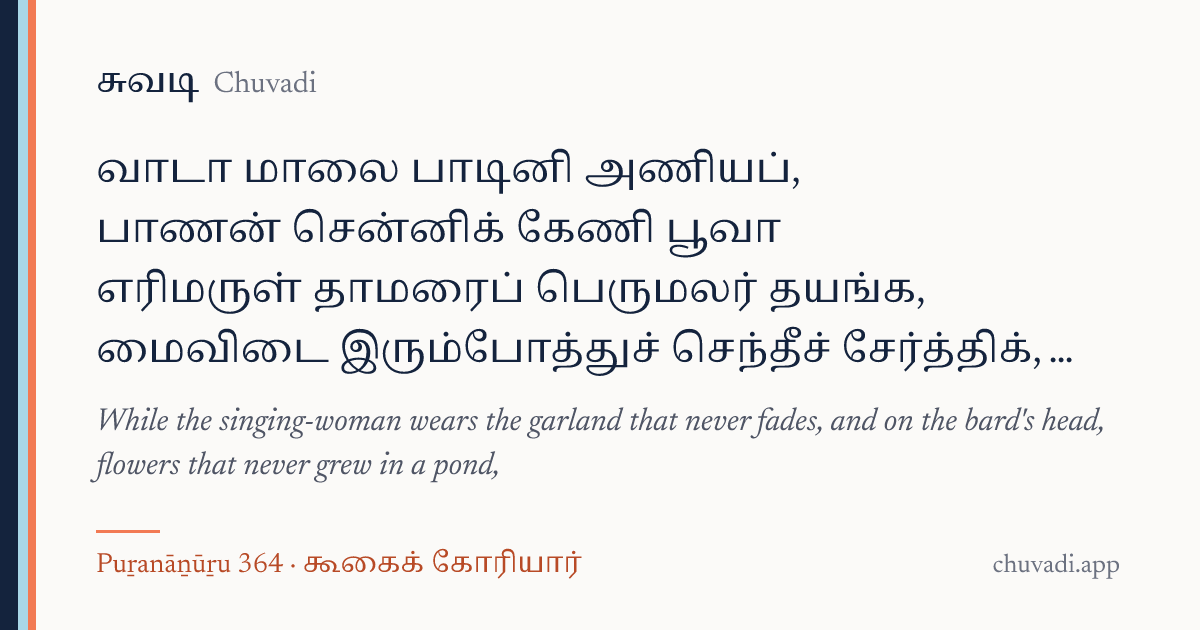
பாடினி வாடாத பொன்மாலையை அணிய, பாணனின் தலையில் குளத்தில் பூக்காத, நெருப்பைப் போல ஒளிரும் பெரிய பொற்றாமரை மலர்கள் விளங்க, கரிய பெரிய ஆட்டுக்கடாவைச் செந்தீயில் வாட்டி, காரமான பொருள்களோடு நன்கு வெந்த அகன்ற கொழுமையான இறைச்சித் துண்டுகள், கள் உண்டு சிவந்த வாயில் நாக்கைப் புரட்ட, உண்டும் தின்றும் இரப்பவர்களுக்குக் கொடுத்தும் மகிழ்வோம், வா, வீரப் போருடையவனே! பெருமானே, நிலம் பிளக்கும்படி விழுந்த, அசையும் பல வேர்களை உடைய பழைய மரத்தின் பொந்தில் திடீரென்று ஒலிக்கும் கூகைக் கோழி ஓயாமல் கூவும், தாழிகள் நிறைந்த பெரிய சுடுகாட்டை நாம் அடையும் நாளில், இவை கிடைப்பது அரிதாகலாம்.
இது பொதுவியல் திணை, பெருங்காஞ்சித் துறை: வாழ்க்கை நிலையில்லாதது ஆதலால் இருக்கும்போதே உண்டு, கொடுத்து, மகிழ வேண்டும் என்பது. பாடியவர் கூகைக் கோரியார்; பாடப்பட்ட வீரனின் பெயர் சொல்லப்படவில்லை.
ஆங்கிலம் · English translationAI
Translation
- While the singing-woman wears the garland that never fades,
- and on the bard's head, flowers that never grew in a pond,
- great lotus blossoms like flame, shine bright,
- with a big dark ram set on the red fire,
- and rich wide cuts of meat cooked soft with spice
- shifting the tongue about in mouths red from toddy,
- eating and feasting, and giving to those who ask,
- let us be glad — come, you of fierce battles!
- It may well be, great one, that these become hard to have
- when, with many swaying roots that split the ground in falling,
- in the hollow of an old tree, suddenly crying out,
- the owl calls without ceasing,
- in the great forest of urns we arrive at last.
What the poem says
Kūkaik Kōriyār's poem is in potuviyal, the general tiṇai, with the turai perunkāñci. Unlike most poems on impermanence, it is an invitation to enjoy: the speaker calls a warrior to feast while life lasts.
The first eight lines are a picture of a patron's festive hospitality. The singing-woman wears a garland of gold that never wilts; the bard wears golden lotuses 'that never bloomed in a pond'; a dark ram roasts on the fire, and rich meat is eaten with toddy. 'Let us eat, feast and give to those who ask, and be happy,' the speaker says. 'Eat and drink' is an easy reading of 'uṇṭum tiṉṟum', which literally pairs eating with chewing or devouring.
The last five lines give the reason. All this may become hard to come by on the day we reach the great burning-ground of burial urns, where the owl cries from the hollow of an old fallen tree.