



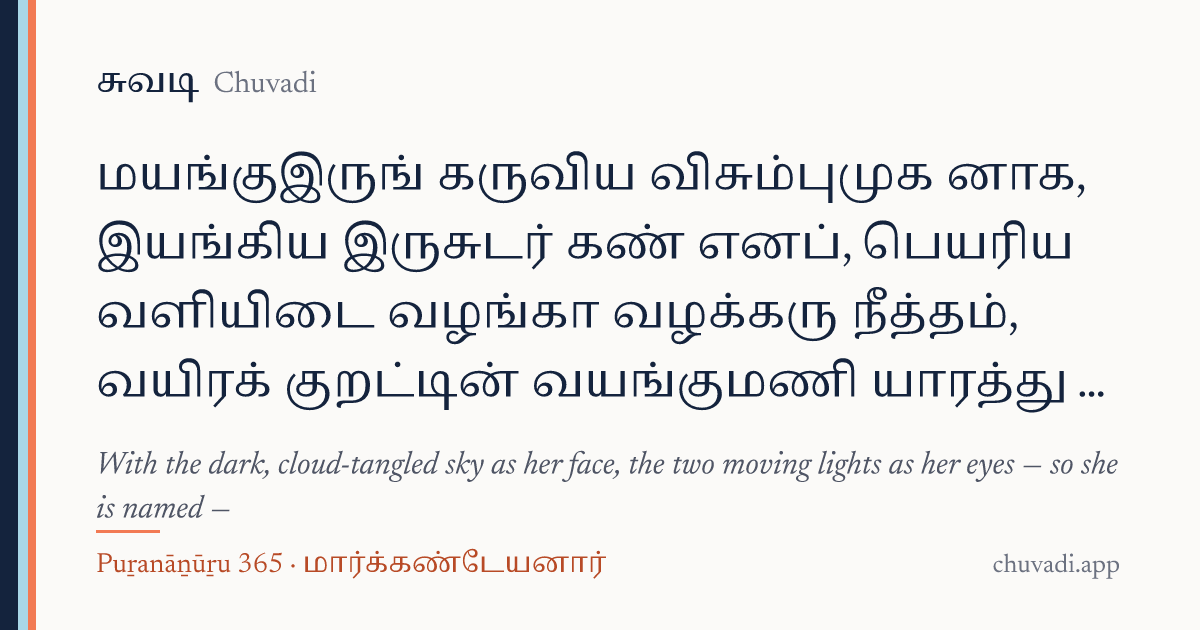
புறநானூறு 365
பாடல் · The poem
Tap a word to see where else it occurs.
பொருள் · Meaning in TamilAI
குழம்பிய கரிய மேகங்கள் நிறைந்த வானமே அவளுடைய முகம்; வானில் இயங்கும் கதிரவனும் நிலவுமே அவளுடைய கண்கள் என்று பெயர் பெற்றவள்; காற்றும் இயங்காத, கடக்க அரிய பரப்பு அவள். வைரத்தால் ஆன குடமும், ஒளிரும் மணிகளால் ஆன ஆரக்கால்களும் கொண்ட பொன் சக்கரத்தைப் போர்முனையில் உருட்டி, தமக்கு இணையான பகைவரைக் காணாத போர் வலிமை மிக்க முன்னோர்கள் எல்லாரும் போய்விட்டனர். ஆனால் நான் போகவில்லை. இன்னும், விலைக்கு அன்பு தரும் பெண்டிரைப் போலப் பலரும் என்னைத் தமக்குரியவள் என்று கூற, 'நான் இன்னும் இருக்கிறேன்; நான் வாழ்வேனாக!' என்று பல சிறப்புகளையுடைய நிலமகள் அழுதாள். இப்படிப்பட்ட காஞ்சியும் உண்டு என்று உணர்ந்தவர்கள் சொல்வார்கள்.
இது பொதுவியல் திணை, பெருங்காஞ்சித் துறை: மன்னர்கள் மாய்ந்தாலும் நிலம் நிற்கிறது, அதை ஆள்பவர் மாறிக்கொண்டே இருக்கிறார்கள் என்று நிலையாமையைச் சொல்வது. பாடியவர் மார்க்கண்டேயனார். மூன்றாம் அடியின் பொருள் உறுதியாகத் தெரியவில்லை.
ஆங்கிலம் · English translationAI
Translation
- With the dark, cloud-tangled sky as her face,
- the two moving lights as her eyes — so she is named —
- the expanse where even the wind does not travel, hard to cross:
- with its hub of diamond and its spokes of shining gems,
- rolling a golden wheel in the forefront of battle,
- men of great battle-strength who never met their match,
- those who came before have gone; yet I have not gone, and still,
- like women whose favours are bought, claimed as theirs by many,
- 'I am still here — long may I live!' — so, many-glorious,
- the Earth-woman wept: this kāñci too
- exists, so say those who know.
What the poem says
Mārkkaṇṭēyaṉār's poem is in potuviyal, the general tiṇai, with the turai perunkāñci. Its speaker, in the end, is the Earth herself, imagined as a woman, Nilamakaḷ.
The opening lines build her body out of the cosmos: the cloudy sky is her face, the sun and moon her eyes, and her extent is a vast space that even the wind does not cross. Then come the great rulers who 'rolled the golden wheel' in battle, a phrase for universal conquest, its diamond hub and gem spokes giving the sovereign wheel its splendour. They never met an equal, yet they are all gone.
The Earth's lament is bitter. She outlives every lord and, like a woman whose love is bought, is claimed by many in turn. 'I am still here; long may I live!' is spoken in irony and grief. The closing lines step back: those who understand say that this, too, is a form of kāñci, the theme of impermanence. Line 3 is obscure; it may describe the sky rather than the earth.