



புறநானூறு 366
பாடல் · The poem
Tap a word to see where else it occurs.
பொருள் · Meaning in TamilAI
சிறந்த குறுந்தடியால் அடிக்கப்படும் முழுக்குரல் முரசு, ஒழுங்கு நிலவும் இடமெங்கும் ஒரே ஆணையாக ஒலித்து, பாம்பைத் தாக்கும் இடியைப் போல முழங்க, தனியாகவே ஆட்சி செய்த பெருமையுடையவர்களும் தங்கள் புகழை நிலைநிறுத்திவிட்டு மாய்ந்து போயினர். ஆகவே, அறிவுடையோன் மகனே! வீரர்களின் தலைவனே! … நான் சொல்வதைக் கேள்: உன் வலிமையைப் பிறர் அறியாதபடி, பிறர் சொல்லும் சொற்களை ஆராயாமல், பகல் நேரத்தை முயற்சிக்குப் பயன்படுத்தி, இரவு நேரம் கொண்டுவருவதை நாடி, … உழவு முடிந்து விடுபட்ட பெரிய எருது வைக்கோலைத் தின்பதைப் போல, சிவந்த கண்களுடைய மகளிரோடு சிறு துளிகளைக் கலந்து, அழகிய தெளிந்த கள்ளை அழகிய கலங்களில் ஊற்றி, குறையாத செல்வத்தோடு … உணவு வேண்டி வருபவர்களுக்குக் குறையாமல் பங்கு கொடுத்து, சோறு வேண்டுபவர்களுக்கு அருளோடு வழங்கி, எருதை வீழ்த்தி, சுட்ட இறைச்சியைக் கிழித்து, நீர்நீலை செழித்த நீண்ட மணற்கரையில் உள்ள ஒவ்வொரு சோலையிலும் … சாவு உண்மையே, அது பொய்த்தோற்றம் அன்று.
இது பொதுவியல் திணை, பெருங்காஞ்சித் துறை. பாடியவர் கோதமனார்; பாடப்பட்டவன் தருமபுத்திரன். பல அடிகள் சிதைந்துள்ளதால் பகுதிகளுக்கு இடையிலான தொடர்பு உறுதியாகத் தெரியவில்லை; 'நீர்நீலை' என்பது எந்தச் செடி என்பதும் தெளிவில்லை.
ஆங்கிலம் · English translationAI
Translation
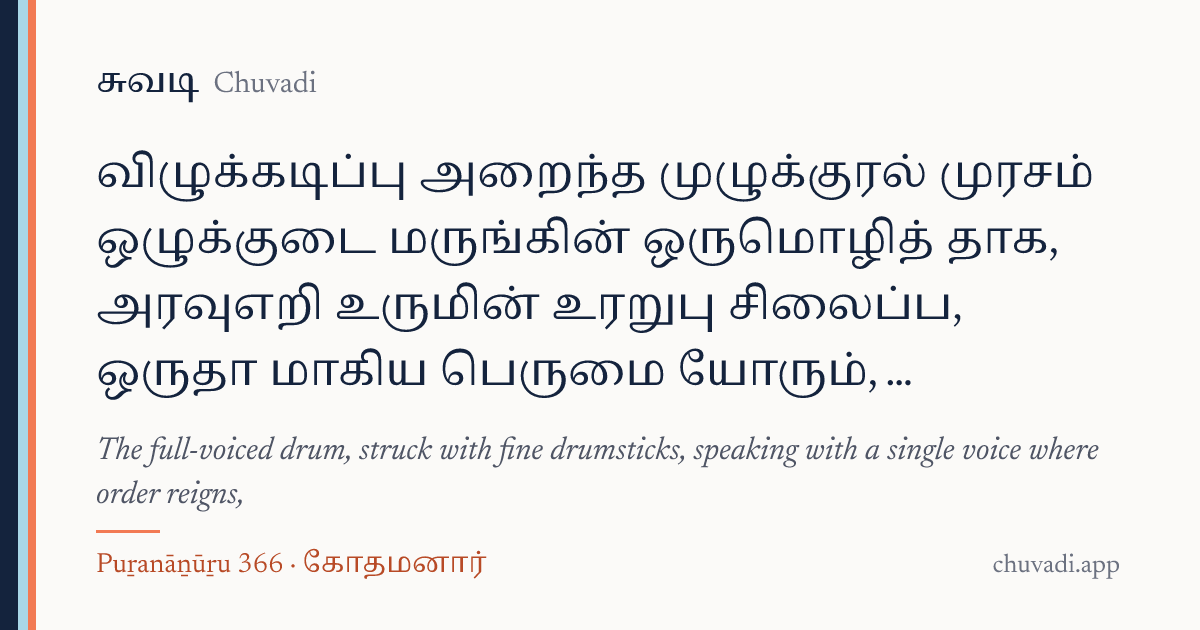
- The full-voiced drum, struck with fine drumsticks,
- speaking with a single voice where order reigns,
- roaring like thunder that strikes the snake —
- even those great ones who stood as sole rulers
- set up their fame and passed away.
- So, son of the wise one! Chief among warriors!
- … listen as I tell you:
- without others knowing your strength,
- without being swayed by words that others speak,
- giving the bounds of daylight to the work of effort,
- looking to what the bounds of night will bring,
- … …
- like a great ox freed from the plough, eating its fill of straw,
- with red-eyed women, mingling small drops,
- pouring the fine clear toddy into fine vessels,
- with wealth that cannot fail …
- never sparing a share to those who want a meal,
- granting a share to those who want rice,
- felling the bull and tearing the roast,
- on the banks of long sand where the water-nīlai grows thick,
- in every grove … …
- the truth of death is no illusion.
What the poem says
Kōtamaṉār addresses Tarumaputtiraṉ, 'son of Dharma', in potuviyal, with the turai perunkāñci. The edition gives this name as the patron; the poem itself calls him 'son of the wise one' and 'chief of warriors'.
The argument is familiar. Even the greatest kings, whose drums gave a single command across their realms, have passed away leaving only their fame. So the listener should act: keep his strength hidden, not be moved by others' talk, use the day for work and the night for what it brings, enjoy himself with toddy and women like an ox let loose from the plough, and above all feed those who come for a meal.
The poem is badly broken. Lines 7, 12, 16 and 21 have large gaps, and the connections between the surviving pieces are often guesses. 'Nīr nīlai' in line 20 is probably a water-plant, perhaps the blue lily, but is uncertain. The final line, 'the truth of death is no illusion', also appears in poem 363 and gives the whole its point.