



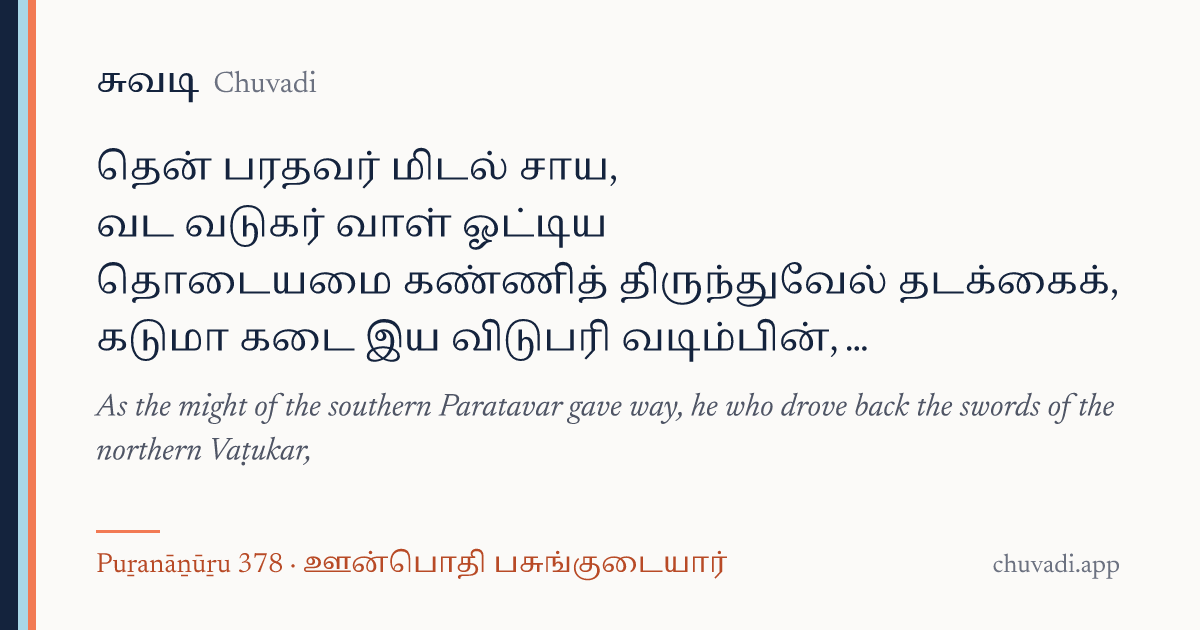
புறநானூறு 378
பாடல் · The poem
Tap a word to see where else it occurs.
பொருள் · Meaning in TamilAI
தெற்கே இருந்த பரதவர்களின் வலிமை குன்றும்படி செய்து, வடக்கே இருந்த வடுகர்களின் வாள்களை ஓட்டியவன்; நன்கு தொடுத்த மாலையும், திருத்தமான வேல் ஏந்திய பெரிய கையும், விரைந்து ஓடும்படி தூண்டப்பட்ட குதிரைகளும், நல்ல மாலையும் கள்ளும் உடையவன் அந்தச் சோழன். அவனுடைய அரண்மனையில், புதிய பிறை நிலவு போலச் சுண்ணாம்பு பூசிய மாடங்களை உடைய, குளிர்ந்த குளம் போன்ற நீண்ட நகரில் நின்று, சட்டகம் உடைய என் பெரிய கிணைப்பறையின் ஒலி எங்கும் பரவும்படி அடித்து, குறையாத மரபோடு வஞ்சிப் பாட்டைப் பாடினேன். எங்களைப் போன்றவர்களுக்கு உரியவை அல்லாத, மிகப் பல, சிறப்பு மிக்க அரிய அணிகலன்களாகிய செல்வத்தை, எங்களால் தாங்க முடியாத அளவுக்கு அவன் பொழிந்தான். அதைக் கண்டு, வறுமையில் உழன்ற என் பெரிய சுற்றத்தாரில், விரலில் அணிய வேண்டியவற்றைக் காதில் அணிபவர்களும், காதில் அணிய வேண்டியவற்றை விரலில் அணிபவர்களும், இடுப்பில் அணிய வேண்டியவற்றைக் கழுத்தில் கட்டுபவர்களும் ஆனார்கள். கடும் சினமுடைய இராமனுடன் இருந்த சீதையை வலிமை மிக்க அரக்கன் கவர்ந்து சென்ற நாளில், நிலத்தில் விழுந்த ஒளிரும் அணிகலன்களைக் கண்ட சிவந்த முகமுடைய பெரிய குரங்குக் கூட்டம் அவற்றை அணிந்து பொலிந்ததைப் போல, அவர்கள் அளவில்லாத பெருஞ்சிரிப்பை இனிதாகப் பெற்றார்கள், பெருந்துன்பத்தில் உழன்றதற்கு மேல், பெரிய சுற்றத்தின் தலைமையையும் அடைந்து.
இது பாடாண் திணை, இயன்மொழித் துறை. பாடியவர் ஊன்பொதி பசுங்குடையார்; பாடப்பட்டவன் சோழன் செருப்பாழி எறிந்த இளஞ்சேட் சென்னி. இராமன், சீதை கதையைப் பாடலே உவமையாகக் குறிப்பிடுகிறது. இருபத்திரண்டாம் அடியின் பொருள் உறுதியாகத் தெரியவில்லை.
ஆங்கிலம் · English translationAI
Translation
- As the might of the southern Paratavar gave way,
- he who drove back the swords of the northern Vaṭukar,
- with a well-strung garland, a fine spear in his large hand,
- with the hoof-rims of swift horses spurred to full speed,
- with good garlands and toddy — at the palace of the Cōḻaṉ,
- in its mansions of lime plaster, like the new crescent moon,
- in the long city like a cool pond, standing, my
- great kiṇai, its frame of lattice, I beat so its sound sprang out,
- and as I sang the vañci in the unfailing manner,
- not things meant for people like us, but very many,
- a wealth of rare jewels of surpassing worth,
- more than we could hold, he poured out. Seeing that,
- my large, great family, who had toiled in poverty —
- some put on their ears what is made to be worn on fingers,
- some fitted on their fingers what is made to hang from ears,
- some tied on their necks what is made for the waist,
- just as when Cītai, companion of Irāmaṉ of fierce fury,
- the mighty demon carried off, on that day,
- the monkeys, finding the bright jewels fallen to the ground,
- their great red-faced troop shone, all decked in them —
- they had endless, delightful laughter, sweetly,
- having come to lead our great dark-tufted kin,
- on top of all the hard grief and pain they had suffered.
What the poem says
Ūṉpoti Pacuṅkuṭaiyār sings again of the Cōḻa king Iḷañcēṭ Ceṉṉi 'who destroyed Ceruppāḻi' (printed here 'செரப்பாழி எறிந்த'), in pāṭāṇ with the turai iyaṉmoḻi, praise of a patron's nature. The poem itself gives the king's victories over the southern Paratavar and the northern Vaṭukar, names only, without further detail.
The bard stands in the king's city of lime-white mansions and sings vañci, a song on the theme of a king's campaign, beating his kiṇai drum. The king pours out jewels far beyond what is fit for poor bards, more than they can carry.
The rest is the poem's famous comic scene. The bard's starving family, who have never owned such things, put them on all wrong: finger-rings in their ears, ear-ornaments on their fingers, waist-chains round their necks. The poet compares them to the troop of red-faced monkeys in the story of Irāmaṉ, who found the jewels Cītai dropped when the demon carried her away and decked themselves in them. The comparison is the poem's own, a sign that the story was familiar to its listeners. The family laughs and laughs, after all their hardship. Line 22 ('iruṅkuḷait talaimai eyti') is doubtful; it may mean the bard's family now stands at the head of their kin, or it may describe something else.