



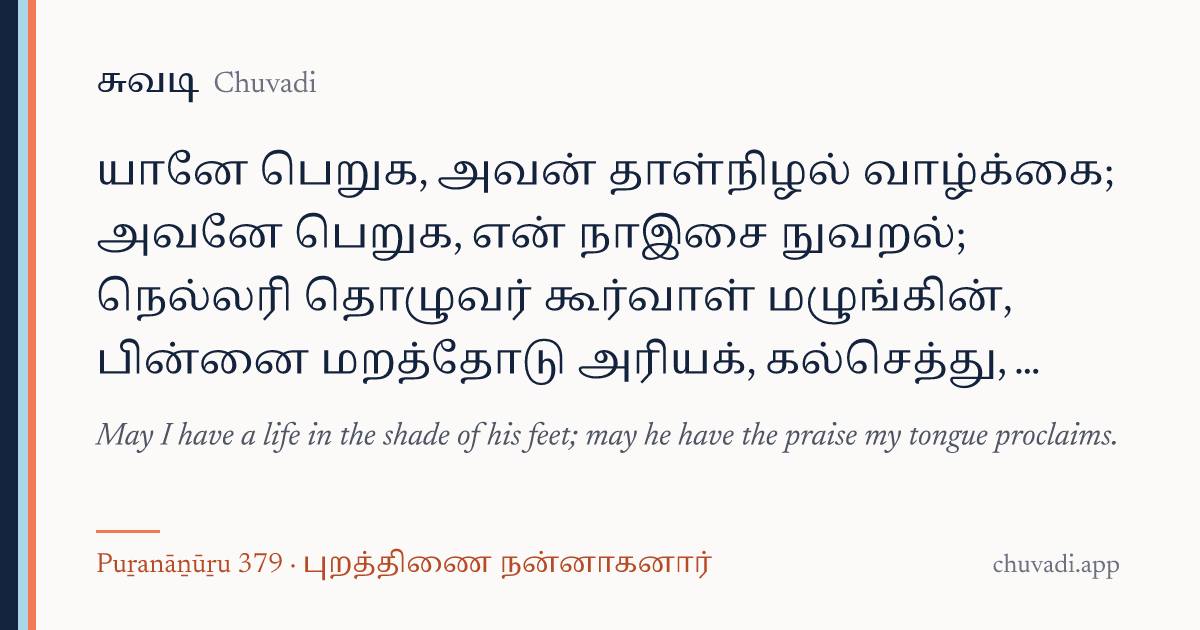
புறநானூறு 379
பாடல் · The poem
Tap a word to see where else it occurs.
பொருள் · Meaning in TamilAI
அவனுடைய திருவடி நிழலில் வாழும் வாழ்க்கையை நான் பெறுவேனாக; என் நாவால் பாடும் புகழை அவன் பெறுவானாக. நெல்லை அறுக்கும் உழவர்களின் கூரிய அரிவாள்கள் மழுங்கிவிட்டால், மீண்டும் வேகமாக அறுப்பதற்காக, சேற்றில் கிடக்கும் ஆமையின் வளைந்த முதுகைக் கல் என்று எண்ணி அதில் தீட்டுவர். அத்தகைய நெல் நிறைந்த நிலங்களை உடைய இலங்கை என்னும் ஊரின் தலைவன் வில்லியாதன்; பெருமானே, நாங்கள் அவனுடைய கிணைப் பறை கொட்டுவோர். “குறுகிய கால்களை உடைய ஆண் பன்றியின் கொழுத்த வெண்ணிணத்தையும், மணமுள்ள நெய்யை உருக்கியும், நாள்தோறும் சோறு கொடுப்பான்; பசியைத் தீர்ப்பதில் எம் தலைவன் வல்லவன்” என்று, பயனின்றி அலையும் வாழ்க்கையை உடைய உன் கிணைவன் ஒருவன் சொன்னான். அதைக் கேட்டதிலிருந்தே என் ஆசை அடங்கவில்லை. வானைத் தொடும் உச்சிகளை உடைய மலைகளைக் கடந்து, தாய் பால் ஊட்டாத குழந்தையைப் போல நான் வந்தேன். அங்கே, செல்வம் நிறைந்த அழகிய மாளிகையிலிருந்து மெல்ல எழும் மணமுள்ள புகை, வரும் மழையின் மூடுபனி போலத் தெருக்களையெல்லாம் மறைக்கிறது; சிறு அரண்களும் ஆழமான அகழியும் நீண்ட மதிலும் உடைய ஊர் அது.
இது பாடாண் திணை; புரவலனைப் புகழ்ந்து பாடுவது. துறை பரிசில்; கொடையை நாடிப் பாடுவது. பாடியவர் புறத்திணை நன்னாகனார்; பாடப்பட்டோன் ஓய்மான் வில்லியாதன். பதினான்காம் அடியின் தொடக்கம் சிதைந்துள்ளது; எட்டாம் அடியில் ‘கொளுங்கண்’ என்பதன் பொருள் உறுதியாகத் தெரியவில்லை.
ஆங்கிலம் · English translationAI
Translation
- May I have a life in the shade of his feet;
- may he have the praise my tongue proclaims.
- When the sharp sickles of the men who reap the paddy grow blunt,
- so that they can reap on again with vigour, they take it for a stone
- and whet them on the curved back of a turtle of the mire —
- lord of Ilaṅkai, whose lands are crowded with paddy,
- we are drummers of Villi Ātaṉ, great one!
- 'The rich white fat of the short-legged boar,
- fragrant ghee melted, and rice day after day he gives;
- he knows well how to end hunger, our father' — so
- your drummer, whose life is a wandering to no purpose, told me,
- and from what I heard alone my longing would not rest.
- Leaving behind the hills whose heads touch the sky,
- I came, I —
- like a little child its mother has not fed — there, to that
- splendid, rich house, where fragrant smoke rising thinly
- like the mist of the coming rain hides the streets altogether,
- to the town of long walls and deep moat ringed with small forts.
What the poem says
A drummer (kiṇaiyaṉ) sings of Ōymāṉ Villi Ātaṉ, lord of Ilaṅkai; the colophon gives the poet as Puṟattiṇai Naṉṉākaṉār. The theme is pāṭāṇ, praise of a patron, and the turai parical, a song that asks for or celebrates a gift. The first two lines state the bargain of patronage plainly: let me live in his shelter, let him have my praise.
His land is so fertile that reapers whose sickles go blunt in the thick paddy whet them on the back of a turtle half sunk in the mud, mistaking it for a stone. The speaker calls himself one of Villi Ātaṉ's drummers and addresses a 'great one' — most naturally the patron himself, though the poem does not make this certain.
A fellow drummer, 'your drummer' who wanders with nothing to show for it, had told him how the chief feeds his bards with boar fat, ghee and daily rice. That report only sharpened his hunger. He crossed the high hills and came like an unfed infant to the town, where the smoke of cooking hangs over the streets like rain mist. Line 14 is damaged at the start; only 'I came, I' survives, and the opening quotation mark there in the edition is hard to account for. In line 8 the word read here as 'rich' (koḷuṅkaṇ, probably for koḻuṅkaṇ) is uncertain.