



புறநானூறு 380
பாடல் · The poem
Tap a word to see where else it occurs.
பொருள் · Meaning in TamilAI
தென்கடலில் கிடைத்த முத்துக்களை அணிந்து, வடமலையில் விளைந்த சந்தனத்தைப் பூசிக்கொண்டு, … கடல் போன்ற படையையும், இனிய புகழையும், வெற்றி தரும் வலிமையையும் உடையவன் அவன்; தென்னவருடைய வலிய வீரன். மேலிருந்து பெய்த மழைநீர் கடலில் பரந்து முத்தாகும்; மணமுள்ள இதழ்களை உடைய குளவியுடன் கூதளம் பின்னிக் கிடக்கும்; … இனிய சுளைகளை உடைய பலாமரங்கள் நிறைந்த நாஞ்சில் நாட்டின் தலைவன் அவன். பகைத்து எதிர்த்து வருவோருக்கு, நினைக்கவும் முடியாத அளவு தொலைவில் இருப்பவன்; நட்போடு வருவோருக்கு, உள்ளங்கை போல அருகில் இருப்பவன். வலிய வேலை உடைய கந்தனின் நல்ல புகழ் அல்ல … மாலை அணிந்த சிறு பிள்ளைகள். அவன் இத்தகையவனாக இருப்பதால், இந்த நாடே வறுமை அடையும் காலம் வந்தாலும், என் சுற்றத்தாரின் துயரம் நீங்கிவிட்டது; அவர்கள் மலர்ந்து மகிழ்ந்துள்ளனர்.
இப்பாடலுக்குத் திணை, துறை, பாடியவர், பாடப்பட்டோர் பற்றிய குறிப்பு இப்பதிப்பில் இல்லை; பாடலைக் கொண்டு நோக்கினால் நாஞ்சில் நாட்டுத் தலைவனைப் புகழும் பாடாண் பாடல் போலத் தோன்றுகிறது. மூன்று, எட்டு, பதின்மூன்றாம் அடிகள் சிதைந்துள்ளன. பன்னிரண்டாம் அடியில் கந்தன் யார் என்பதும், அந்த அடியின் பொருளும் உறுதியாகத் தெரியவில்லை.
ஆங்கிலம் · English translationAI
Translation
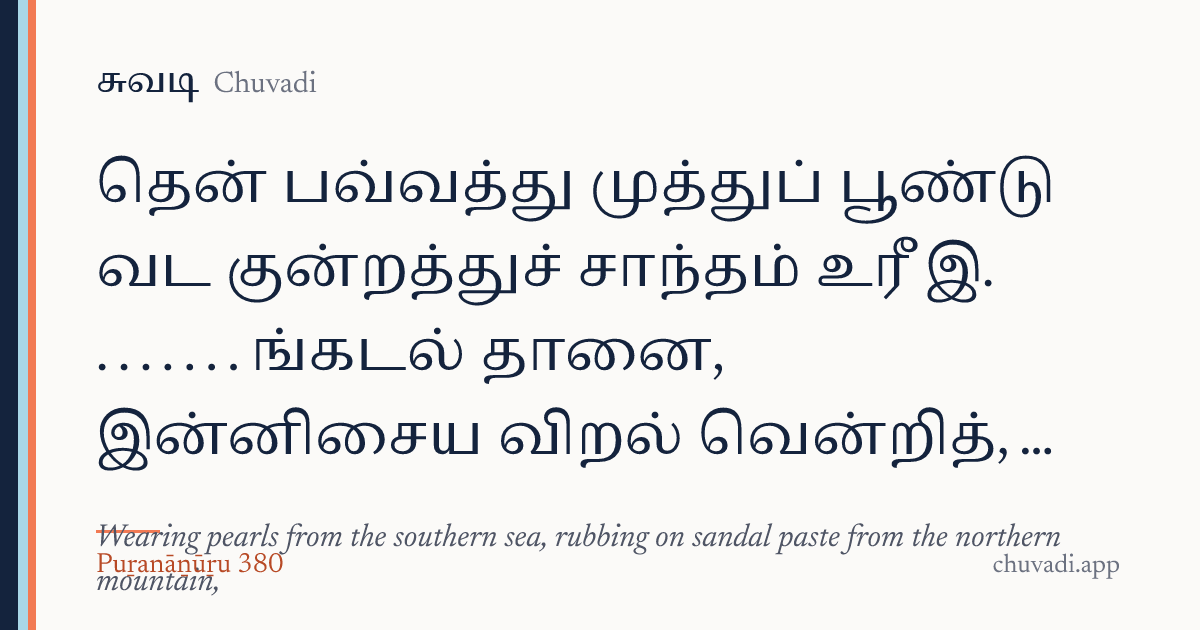
- Wearing pearls from the southern sea,
- rubbing on sandal paste from the northern mountain,
- … with an army like the sea,
- of sweet fame, of mighty victories,
- the strong warrior of the southern kings;
- where rain falling from above spreads in the sea and turns to pearls,
- where kūtaḷam twines together with fragrant-petalled kuḷavi,
- …
- the lord of Nāñcil, with jackfruits of sweet pods;
- to those who meet him in strength, he is far beyond their thought;
- to those who meet him in friendship, near as the palm of the hand;
- not the fair fame of Kantaṉ of the strong spear …
- … the little children with garlands;
- because he is such a man, even if this land
- should fall on a time of want,
- grief has left my kin; they have flowered.
What the poem says
The edition gives no colophon for this poem: no tiṇai, turai, poet or patron. From the text itself it is a song of praise for the lord (porunaṉ) of Nāñcil, a land of jackfruit, who is called the strong warrior of the Teṉṉavar, the southern kings, usually understood as the Pāṇṭiyas. It reads like a pāṭāṇ poem in praise of a patron, but that is an inference.
The opening sets him between south and north: he wears pearls from the southern sea and sandal from the northern hills. His land is one where rain falling into the sea becomes pearls, an old belief about how pearls form, and where hill creepers twine. The central couplet is the clearest part: to enemies he is unreachably distant, to friends as near as one's own palm. Because of him the poet's family no longer grieves, even if the whole land should suffer want; they have 'flowered'.
The text is badly damaged. Lines 3, 8 and 13 have gaps, and line 8 is almost wholly lost. Line 12, 'not the fair fame of Kantaṉ of the strong spear', makes no clear sense as it stands: Kantaṉ may be the god Murukaṉ or a person, and the negative 'alla' may belong to a phrase now lost. These readings are offered with real doubt.