



புறநானூறு 381
பாடல் · The poem
Tap a word to see where else it occurs.
பொருள் · Meaning in TamilAI
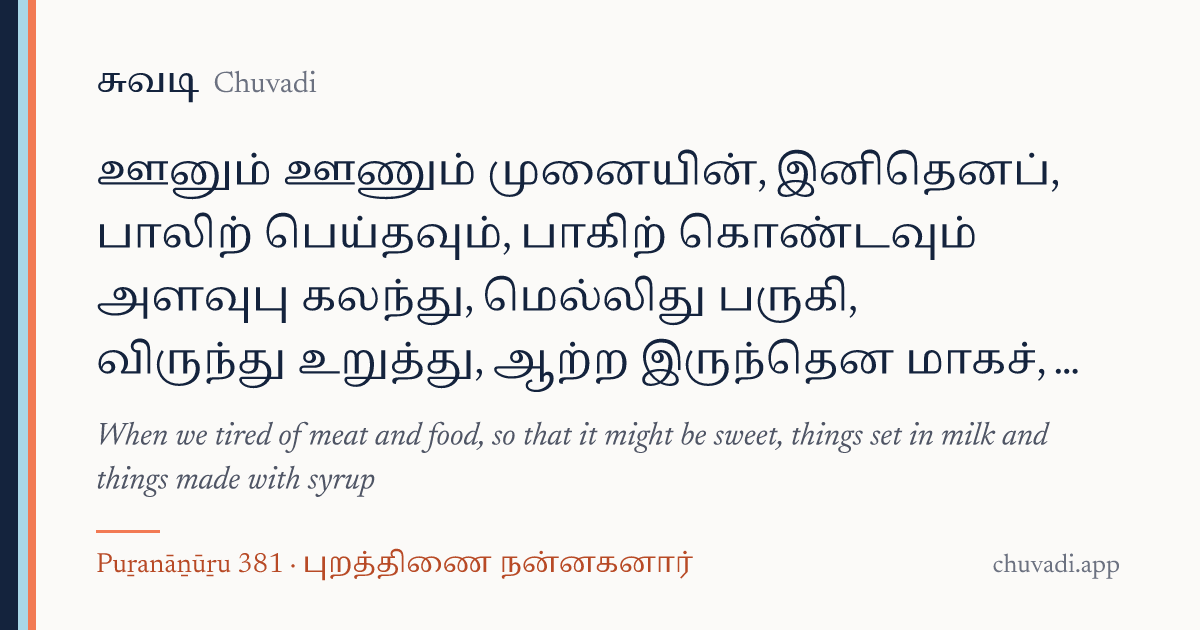
இறைச்சியும் உணவும் தெவிட்டிவிட்டதால், இனிமையாக இருக்கும் என்று பாலில் இட்டவற்றையும் பாகில் செய்தவற்றையும் அளவோடு கலந்து மெல்லப் பருகினோம். அவன் எங்களை விருந்தினராக்கிப் போற்ற, நாங்கள் நெடுநாள் தங்கியிருந்தோம். பின்னர் “பெருமானே, விழாக்கள் நிறைந்த எங்கள் நாட்டுக்குச் செல்லலாமா?” என்று அவனுக்குத் தெரிவித்தோம். அவன் மிகுந்த அன்புடையவன் ஆதலால் எங்களைப் பிரிவதற்கு அஞ்சிச் சொன்னான்: “குலை தள்ளாமல், பழங்கள் பழுத்து உதிர்ந்து, யாருக்கும் பயன் தராத, புதர் மண்டிய பழைய பாழ்நிலத்தில் மழை பெய்தது போன்றது, கொடுக்காத மன்னர்களின் செல்வம். அவர்களுடைய புறவாயிலில் போய் நின்று, கிழிந்த வாரும் உரிந்த தோலும் உடைய தடாரிப் பறையின் தெளிந்த கண்ணில் விரலின் விசையை அடக்கிய எளிய தாளத்தில் கொட்டுவதால் உன் வறுமை எப்படி நீங்கும்? உன் தனிமைத் துயரையும் கலக்கத்தையும் நாங்கள் தீர்ப்போம். ஆகவே, பரந்த நிலத்தில் தானியம் சிதறி அழிந்து, கோடையில் வரும் மழை இடிமுழக்கம் மட்டும் செய்து கடந்துபோன பின்பு, நீ தொலைவில் இருந்தாலும் இங்கே இருந்தாலும், இதைக் கொண்டு எம்மை அறிவாயாக. கிணைவனே, நீ வாழ்க! சிறிது காலம் உன் வழியில் செல்வாயாக.” இவ்வாறு சொன்னவன் எம் தலைவன்; ஒலிக்கும் வெள்ளிய அருவிகளை உடைய வேங்கட நாட்டுத் தலைவன். பெரியோரையும் சிறியோரையும் முறைமாறி ஏற்றிச் செல்லும் அறத்துறைத் தோணியைப் போல, யாரையும் மறவாதவன்; பற்றிய பெரும் பிடியைத் தளர விடாத உறுதியுடையவன்; கரும்பனூரானின் அன்பு மகன் அவன்!
இது பாடாண் திணை; துறை இயன்மொழி, அதாவது தலைவனின் இயல்பையும் செயலையும் எடுத்துச் சொல்வது. பாடியவர் புறத்திணை நன்னகனார்; பாடப்பட்டோன் கரும்பனூர் கிழான். பதினேழு, பதினெட்டாம் அடிகள் கடினமானவை; பஞ்ச காலத்தைக் குறிப்பதாகக் கொண்டோம், ஆனால் அப்பொருள் உறுதியாகத் தெரியவில்லை.
ஆங்கிலம் · English translationAI
Translation
- When we tired of meat and food, so that it might be sweet,
- things set in milk and things made with syrup
- mixed in measure, we drank in gentle sips,
- and he made us his guests, and we stayed on long; then
- 'Shall we go, great one, to our land of festivals?'
- we said, to let him know; and he, being greatly
- full of love, fearing to be parted from us, said:
- 'Never bearing a cluster, its fruits dropping overripe,
- knowing nothing of giving yield, an old waste of tangled thickets —
- like rain poured on that is the wealth
- of kings who do not give; to appear at their back gates,
- with your taṭāri of frayed strap and flaking back,
- beating its clear eye bound with strips of hide,
- in a rhythm of plain beats that holds back the fingers' force —
- how will that drive off your poverty? Your loneliness,
- your bewildered distress, we will end them; and so,
- when grain on the wide earth is scattered and gone, and the summer
- rain has passed with only its sound of thunder,
- whether you are far away or here,
- know us by this; long may you live, drummer!
- For a little while, go on your one way' — so he said, our father,
- lord of the land of Vēṅkaṭam with roaring white waterfalls;
- like the ferry at the ford of charity that carries the great and the small
- each in turn, he never forgets;
- of firm resolve that never loosens its great hold,
- the beloved son of the man of Karumpaṉūr!
What the poem says
A drummer recalls how he took leave of his patron, the chief of Karumpaṉūr (Karumpaṉūr Kiḻāṉ), praised here as lord of the Vēṅkaṭam country. The poet is given as Puṟattiṇai Naṉṉakaṉār. The tiṇai is pāṭāṇ, praise of a patron, and the turai iyaṉmoḻi, a plain statement of the hero's character and deeds.
The bards had been feasted until they tired even of meat and turned to sweet things made with milk and syrup. When they asked to return home, the chief, unwilling to lose them, made a speech (lines 8–21). He compares the wealth of kings who give nothing to rain falling on a barren thicket: it waters nothing. What is the use of drumming at such men's back doors? He promises to end the drummer's distress, and tells him that in a time of drought and failed harvest, wherever he is, he should 'know by this', apparently by this gift or this promise, and come back. Then he lets him go 'for a little while'.
The closing image compares him to the ferry kept at a charity ford, which takes old and young across in turn without leaving anyone out. Lines 17–18 are difficult; the picture of famine and of summer rain that passes with only its thunder is a likely reading, not a certain one. The quotation marks in lines 5–6 of the edition are irregular, and line 6 is hard to construe exactly.