



புறநானூறு 382
பாடல் · The poem
Tap a word to see where else it occurs.
பொருள் · Meaning in TamilAI
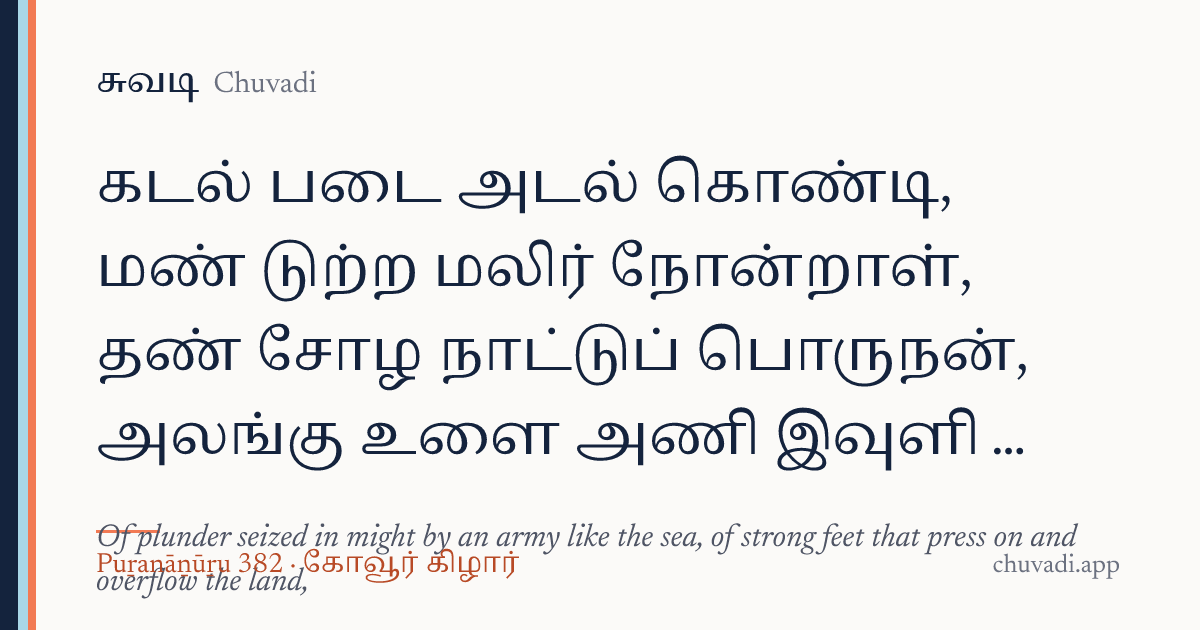
கடல் போன்ற படையின் வலிமையால் கைப்பற்றிய கொள்ளைப் பொருளும், நிலத்தை நெருக்கிப் பரவும் வலிய முயற்சியும் உடையவன்; குளிர்ந்த சோழ நாட்டின் தலைவன்; அசையும் பிடரி மயிரையும் அழகையும் உடைய குதிரைகளை உடையவன்; அந்த நலங்கிள்ளியை விரும்பும் பொருநர் நாங்கள். பிறரைப் பாடிப் பரிசு பெற விரும்ப மாட்டோம்; “அவன் திருவடி வாழ்க!” என்று அவனையே பாடுவோம். நெய் பொரிந்து இறைச்சி வெந்த உணவோடு, பலவகைச் சோற்றையும் இனிய சுவைகளையும் தந்து, வறுமையின் பசித் துன்பத்திலிருந்து நீ முன்பு அனுப்பி வைத்த முதியோரும் அறிஞரும் சிறுவரும், நானும், ஏழு மணிகளோடு … அணிகலன்கள் அணிந்து, கல்வி கேட்ட செவியும் சுவை அறிந்த நாவும் உடையவர்களாய், நிறம் மாறித் தோல் உரித்த பாம்பைப் போல வறுமையை உதறி, கொடுத்து வாழும் நிலையை அடைந்தோம். ஆகவே விரைந்து செல்லும் குதிரைகளை உடைய தலைவனே, எங்களை அனுப்பி வைப்பாயாக! கடலால் சூழப்பட்ட இந்தப் பரந்த உலகம் உன்னுடையது என்பதை எல்லாரும் அறிவர். என்னுடையதோ, தெளிந்த கண்ணை உடைய என் பெரிய கிணைப் பறை. அதன் கண்ணில் கட்டிய மெல்லிய சிறு கோல் அடிக்கும்தோறும் நடுங்குவது போல, உன் பகைவர்கள் கேட்கும்தோறும் நடுங்கும்படி, வெற்றித் தேரை உடையவனே, பிற வேந்தர்களின் அவைகளில் உன்னைப் புகழ்ந்து பாடுவேன்.
இது பாடாண் திணை; துறை கடைநிலை, அதாவது புரவலனின் வாயிலில் நின்று பாடுவது. பாடியவர் கோவூர் கிழார்; பாடப்பட்டோன் சோழன் நலங்கிள்ளி. பத்து முதல் பதினைந்து வரையிலான அடிகள், சிறப்பாகப் பன்னிரண்டாம் அடி, சிதைந்திருக்கலாம்; அவற்றின் பொருள் உறுதியாகத் தெரியவில்லை.
ஆங்கிலம் · English translationAI
Translation
- Of plunder seized in might by an army like the sea,
- of strong feet that press on and overflow the land,
- lord of the cool Cōḻa country,
- with fine horses of tossing plumes,
- Nalaṅkiḷḷi — we are bards who long for him;
- we do not wish to sing of others and gain;
- him we sing, saying 'May his feet flourish!'
- With food where ghee sizzled and meat was cooked,
- and rice of many kinds, of sweet flavours,
- from poverty and the pain of hunger, those you
- sent off in earlier days, the old and wise and the young,
- and I too, with seven gems … wearing fine ornaments,
- with ears for learning and tongues that know taste,
- like a snake that has changed its skin,
- have shed our want, so that our giving prospers;
- so send us on, then, prince of swift horses!
- Yours is this wide world clothed by the sea, as all may know;
- mine — as on my great drum, its clear face like pith,
- the thin, small stick of fine strands bound to its eye
- quivers at every stroke, so your enemies
- will tremble whenever they hear it — I will praise you,
- you of the victorious chariot, in other kings' courts.
What the poem says
Kōvūr Kiḻār sings to the Cōḻa king Nalaṅkiḷḷi in the voice of one of his bards (porunar). The tiṇai is pāṭāṇ, praise of a patron, and the turai kaṭainilai, the bard's song at the king's gate. The bards declare that they want no other patron: they sing only Nalaṅkiḷḷi and bless his feet.
The middle of the poem recalls the king's earlier generosity. The old and the young whom he had sent away fed and rid of hunger, and the speaker with them, have cast off want like a snake shedding its skin. Now the speaker asks to be sent off again. The final lines make the exchange explicit: the sea-girt world belongs to the king; what belongs to the bard is his drum. As the little stick on the drum's face shakes at each stroke, so the king's enemies will shake when they hear his praise sung in their own courts.
Lines 10–15 are difficult and may be corrupt. Line 12 in particular ('seven gems … fine ornaments') cannot be construed with confidence, and the exact link between the feast of lines 8–9 and the people of lines 10–11 is unclear. The translation gives one plausible sense. The image in line 18, a drum face 'like pith' (kiṭai, a light reed), is also uncertain.