



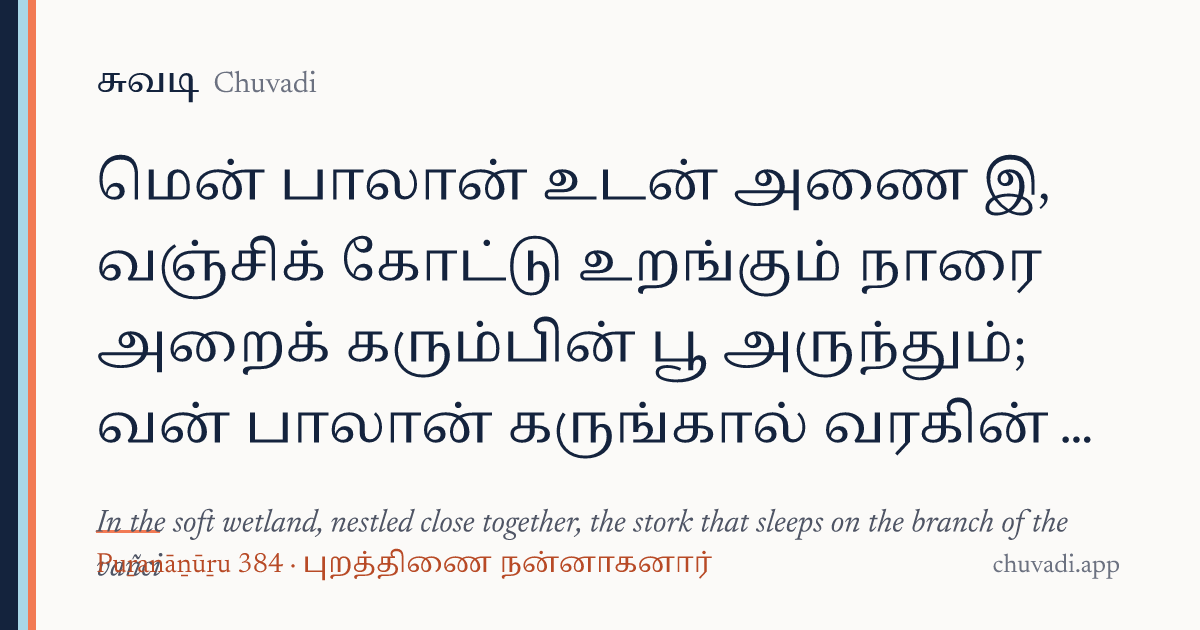
புறநானூறு 384
பாடல் · The poem
Tap a word to see where else it occurs.
பொருள் · Meaning in TamilAI
மென்மையான மருத நிலத்தில், வஞ்சி மரக் கிளையில் துணையோடு ஒட்டி உறங்கும் நாரை, வெட்டிய கரும்பின் பூவைத் தின்னும். வன்மையான புன்செய் நிலத்தில், கரிய தாளை உடைய வரகின் நடுவே உள்ள அழகிய இடத்தில் சிறிய முயல் அஞ்சி ஓட, அருகில் உள்ள கரிய கிளைகளை உடைய இலுப்பை மரத்தின் பூக்கள் உதிரும். விழா இல்லாத நாளிலும் உழவர்களின் கலங்களில் பெரிய கெளிற்று மீன் இறைச்சியோடு ஒளிரும் கள் இருக்கும். … பெருமானே, நாங்கள் கிணை கொட்டுவோர். “நெல் வேண்டாம், பொன் வேண்டாம், தொண்டையை எரிக்கும் கள் வேண்டாம், … வீடு வேண்டாம்” என்று நான் அவை எல்லாவற்றையும் மறுத்தாலும், அவன் கொடுப்பதை நிறுத்தவில்லை. கொழுப்பு மிகுந்த சோற்றோடு, மண்ணும் நாணும்படியான புகழை விரும்பி, நீரும் நாணும்படி நெய்யை வழங்கி எங்களைக் காத்தான் எம் தலைவன். நாங்கள் எப்படி அழிவோம்? “இத்தகையவனை உடையவர்கள்” என்று எங்களை உலகம் சொல்லும். இனி வறட்சிக்காக வெள்ளி எங்கு வேண்டுமானாலும் நிற்கட்டும்! நாங்கள் உண்ட சிறந்த நல்ல கலங்களை அவன் நிறைத்து எங்களை மகிழ்ச்சியில் தள்ளாடச் செய்கிறான். நான் வந்த நாள் மட்டுமே எனக்குத் தெரியும்; அதன் பின் எத்தனை நாள் கழிந்தது என்பதை அறியேன்!
இது பாடாண் திணை. துறை கையறுநிலை என்று குறிக்கப்பட்டுள்ளது; ஆனால் பாடல் இறந்தவருக்காக வருந்துவதன்று, வாழும் புரவலனின் கொடையைப் புகழ்வது, ஆகவே அக்குறிப்பு பொருந்தவில்லை. பாடியவர் புறத்திணை நன்னாகனார்; பாடப்பட்டோன் கரும்பனூர் கிழான். ஒன்பது, பன்னிரண்டாம் அடிகள் சிதைந்துள்ளன; பதினெட்டு முதல் இருபது வரையிலான அடிகளின் பொருள் உறுதியாகத் தெரியவில்லை.
ஆங்கிலம் · English translationAI
Translation
- In the soft wetland, nestled close together,
- the stork that sleeps on the branch of the vañci
- feeds on the flowers of the cut sugarcane;
- in the hard dry land, among the black-stemmed millet,
- as the little hare in its lovely hollow takes fright, close by
- the flowers of the black-branched iruppai drop down;
- though there is no festival, in the ploughmen's bowls
- bright toddy waits, with the flesh of the big keṭiṟu fish;
- … we are drummers, great one!
- Not 'paddy', not 'gold',
- not 'toddy taken to set the throat burning',
- not '… house' — though all of these
- I would refuse, he would not refuse;
- amid rich rice swelling with fat,
- seeking a fame that puts the earth to shame,
- giving ghee that puts water to shame,
- he kept us, our father; how could we come to ruin?
- 'They have such a man,' people say; now, to drought,
- wherever Venus may stand! The splendid
- fine vessels we ate from he fills, and sets us swaying.
- Except for the day I came,
- I do not know how far the days since have gone!
What the poem says
The poet, given as Puṟattiṇai Naṉṉākaṉār, sings once more of the chief of Karumpaṉūr (Karumpaṉūr Kiḻāṉ, compare poem 381). The tiṇai is pāṭāṇ, praise of a patron. The turai is given as kaiyaṟunilai, a lament for the dead, which does not fit: the poem is a joyful account of a living patron's bounty. The label is kept as the edition prints it.
The first part describes the land. In the wet country storks sleep on vañci branches and eat sugarcane flowers; in the dry country iruppai blossoms fall when a hare starts in the millet; even without a festival the ploughmen's bowls hold toddy and fish. The speaker, one of the drummers, then tells how the chief gave without limit. The bard would have said 'no more paddy, no more gold, no more toddy'; the chief would not stop. He poured ghee as freely as water and sought a fame greater than the earth.
So the bard declares himself safe from drought, whatever the omen of Venus (Venus off its course was a sign of failed rain). The last lines are a fine touch: he remembers the day he arrived, but has lost count of the time since. Lines 9 and 12 have gaps, and lines 18–20 are hard to construe; the translation of 'nuṭakkavum' as 'sets us swaying', presumably with drink, is a guess.