



புறநானூறு 385
பாடல் · The poem
Tap a word to see where else it occurs.
பொருள் · Meaning in TamilAI
வெள்ளி தோன்றவும், பறவைகளின் குரல் ஒலிக்கவும், பொழுது புலரும் விடியலில் அவனுடைய பல எருதுகளை வாழ்த்தி, நான் அவனுடைய வாயிலில் தோன்றவும் இல்லை; வேறொருவனுடைய வாயிலில் நின்று கொட்டிய என் அகன்ற கண்ணை உடைய தடாரிப் பறையின் ஒலியைக் கேட்டு அவன் இரக்கம் கொண்டான். நான் வறுமையிலிருந்து நீங்க வேண்டும் என்று விரும்பி, நிலம் தின்றது போலக் கிழிந்து சிதைந்த கந்தலை என் இடுப்பிலிருந்து நீக்கி, வெள்ளை ஆடையை உடுத்தி, என் பசியைப் போக்கினான். காவிரி வந்து சேரும் தாழ்ந்த நீர்வளம் மிகுந்த தோட்டங்களையும், நெல் விளையும் வயல்களையும் உடைய அம்பர் நகரின் தலைவன் அவன். புல்லியினுடைய வலிமை மிக்க வேங்கட மலையில், உயர்ந்த வானிலிருந்து பெய்யும் மழைத்துளிகளை விடப் பல ஆண்டுகள் நல்ல அருவந்தை வாழ்வானாக!
இது பாடாண் திணை; துறை வாழ்த்தியல், அதாவது புரவலனை வாழ்த்துவது. பாடியவர் கல்லாடனார்; பாடப்பட்டோன் அம்பர் கிழான் அருவந்தை. தன் வாயிலுக்கு வராத ஒருவனுக்கும் தானே முன்வந்து கொடுத்தான் என்பதே பாடலின் சிறப்பு. ‘புல்லிய’ என்பதைப் புல்லி என்னும் தலைவனுக்குரிய என்று கொண்டோம்.
ஆங்கிலம் · English translationAI
Translation
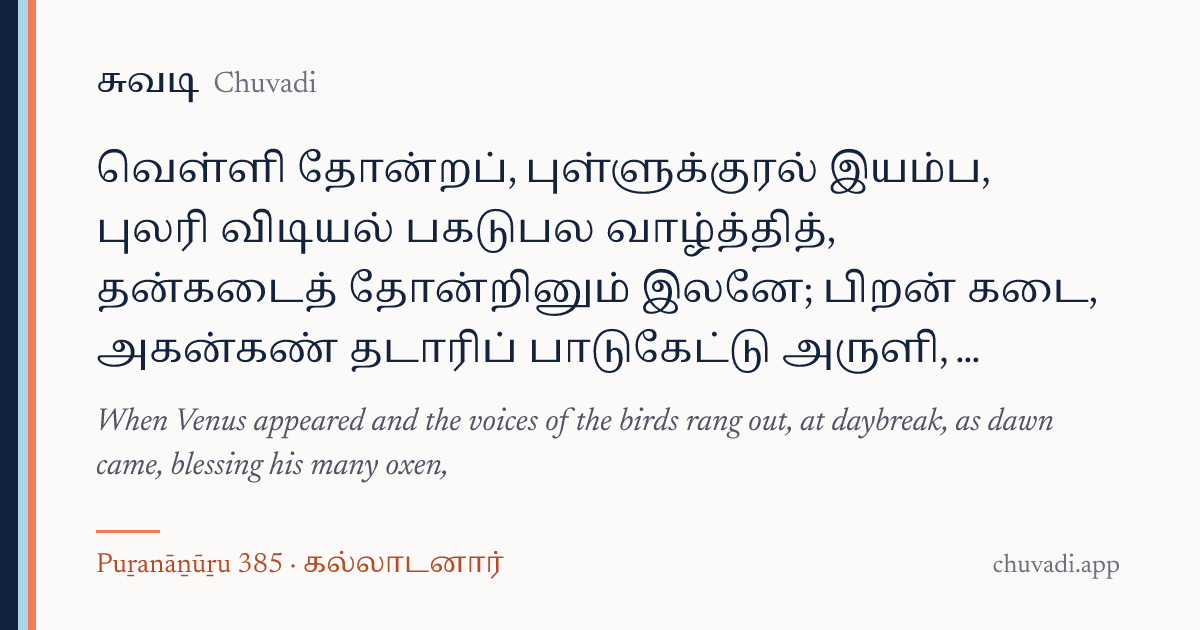
- When Venus appeared and the voices of the birds rang out,
- at daybreak, as dawn came, blessing his many oxen,
- I had not yet even appeared at his own gate; at another's gate
- he heard the sound of my wide-faced taṭāri, took pity,
- wished me to be rid of want, and from my waist
- he took the rag torn as if the earth had eaten it,
- clothed me in white, and drove off my hunger —
- the lord of Ampar, with low-lying gardens the Kāviri reaches,
- and fields where paddy grows.
- May good Aruvantai live — more years than
- the drops falling from the high sky
- on Pulli's Vēṅkaṭam, mountain of might!
What the poem says
Kallāṭaṉār sings of Aruvantai, lord of Ampar on the Kāviri. The tiṇai is pāṭāṇ, praise of a patron, and the turai vāḻttiyal, a song of blessing: the poem ends by wishing the patron more years than there are raindrops on a mountain.
The story is told simply. At dawn the bard was drumming at someone else's gate, not Aruvantai's. Aruvantai heard the drum, took pity on him unasked, took away his rag 'as though the earth had eaten it', dressed him in white and fed him. The point of the poem is that his kindness reached a man who had not even come to him.
Ampar is placed by the Kāviri, among gardens and paddy fields. The final image moves to the north: the countless drops that fall on Vēṅkaṭam. 'Pulliya' is read as 'belonging to Pulli', the name of a chief linked with Vēṅkaṭam in other Sangam poems; the poem gives no more about him.