



புறநானூறு 393
பாடல் · The poem
Tap a word to see where else it occurs.
பொருள் · Meaning in TamilAI
ஓர் ஊரில் நிலைத்துப் பழகாத, பழைய துயர் நிறைந்த வாழ்க்கை எங்களுடையது. சிறியவரும் பெரியவருமான துணைவர்களோடு எங்கள் ஆதரவும் அழிந்துவிட்டதால், குடிதோறும் பாடிச் சென்று மிகவும் வருந்தினோம். “சமைக்கும் ஆசையையே மறந்துவிட்ட எங்கள் பானைகளைத் திறக்கச் செய்யும் கடமை அறிந்தவர்கள் பிற நாடுகளில் இல்லை; வள்ளன்மையோடு எங்களை ஏற்றுக்கொள்வோர் யார்?” என்று எண்ணிய நெஞ்சத்தோடு, உலைப்பானையின் மீதுள்ள ஆசையையே துணையாகக் கொண்டு வந்தோம். உலகம் முழுவதும் ஒருபக்கமாக உன் கீழ் வந்துவிட்டதால், மலர்ந்த மாலையை அணிந்த தலைவனே, உன் நல்ல புகழை நினைத்து வந்தோம். ஈரமான உணவைத் தொடுவதையே கை மறந்துவிட்ட என் பெரிய சுற்றத்தாரின் கடுந்துயரம் நீங்கும்படி, கோடைக்காலப் பருத்தியை மூட்டைகளாக வீடு நிறையத் திணித்து வைத்தது போல, கொழுப்பைக் கிழித்து, காளைகளின் வெண்மையான நிணத்தைத் தந்தருள்வாயாக. உரிய காலத்தில், அப்போது குட்டி ஈன்ற பாம்பின் நாக்கைப் போன்ற என் பழைய கந்தலை முழுதும் நீக்கி, இதழ் விரிந்த பகன்றையின் புதிய மலர் போன்ற அகன்ற மடிப்புகளை உடைய ஆடையை உடுத்தி, செல்வத்தையும் குறையாமல் தருவாயாக, பெருமானே! களங்கமற்ற நிலவு போன்ற பெரிய கிணைப் பறையைத் தெளிவாக ஒலிக்கும்படி கொட்டி, ஆடும் பெண்ணின் இடை போல மெலிந்து, “கோடைக்காலம் ஆனாலும் … காவிரி காக்கும் நல்ல நாட்டின் தலைவனே! தப்பாத வாளை உடைய வளவன் வாழ்க!” என்று உன் பெருமை மிக்க வலிய அடிகளைப் பலமுறை பாடுவோம்.
இது பாடாண் திணை; துறை கடைநிலை. பாடியவர் நல்லிறையனார்; பாடப்பட்டோன் குளமுற்றத்துத் துஞ்சிய சோழன் கிள்ளிவளவன். இரண்டாம் அடியில் ‘கூமை’ என்பதன் பொருள் உறுதியாகத் தெரியவில்லை; இருபத்திரண்டாம் அடி சிதைந்துள்ளது.
ஆங்கிலம் · English translationAI
Translation
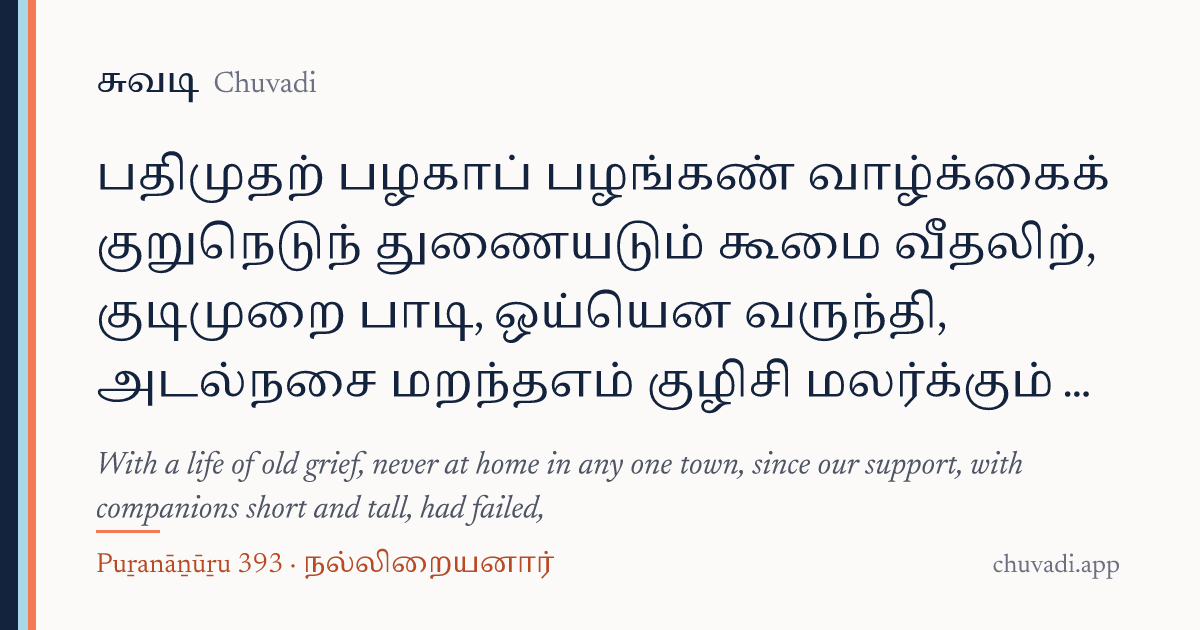
- With a life of old grief, never at home in any one town,
- since our support, with companions short and tall, had failed,
- singing house by house, toiling hard and long,
- 'Our pots have forgotten the wish to cook; who will open them?
- Since in other lands there are none who know their duty,
- who in their generosity will take us in?' — so
- with hearts that pondered, with hope of the cooking pot for company,
- since the whole world had come to one side,
- thinking of your fair fame, lord of the blossoming garland,
- my great dark kin, whose hands have forgotten wet food,
- so that their deep distress may end — tearing rich fat,
- like bales of goods of summer cotton
- stuffed into a house until it is crammed full,
- grant us white fat of bulls; in due time,
- like the tongue of a snake that has newly whelped, my
- age-old rags, take them off altogether,
- and like the fresh flower of the pakaṉṟai opening its blossom,
- clothe me in a broad, folded garment; and wealth also
- grant without fail, great one! Spotless,
- I beat my great drum like the moon so it rings out clear,
- wasted thin like a dancing girl's waist —
- 'Though it be summer, …,
- lord of the good land that the Kāviri keeps!
- May Vaḷavaṉ of the true sword live!' — so
- we will sing again and again of your proud, strong feet.
What the poem says
Nalliṟaiyaṉār sings to the Cōḻa king Kiḷḷi Vaḷavaṉ, called 'he who died at Kuḷamuṟṟam' (also the patron of poems 386 and 397). The tiṇai is pāṭāṇ, praise of a patron, and the turai kaṭainilai, the bard's song at the gate. Speaking for a wandering band, the bard describes their poverty. They belong nowhere, they sing from house to house, and their cooking pots have forgotten what it is to cook. In other lands there is no one who knows the duty of a patron.
Since 'the whole world has come to one side', which seems to mean that all lands are now under this king's sway, they have come to him, thinking of his fame. The request is direct and concrete. Give us white fat, piled like bales of cotton packed into a storehouse. Take away my old rags, compared to the forked tongue of a snake. Dress me in cloth like a fresh pakaṉṟai blossom, and give wealth too. In return they will drum and sing the praise of the Kāviri's lord again and again.
Line 2 is obscure (kūmai is not clearly understood); 'support' is a guess. In line 15 it is unclear why the rags are compared to the tongue of a snake that has just whelped; perhaps for their split, ragged ends. Line 21 seems to describe the bard, or perhaps the drum, as 'wasted thin', and line 22 breaks off in a gap.