



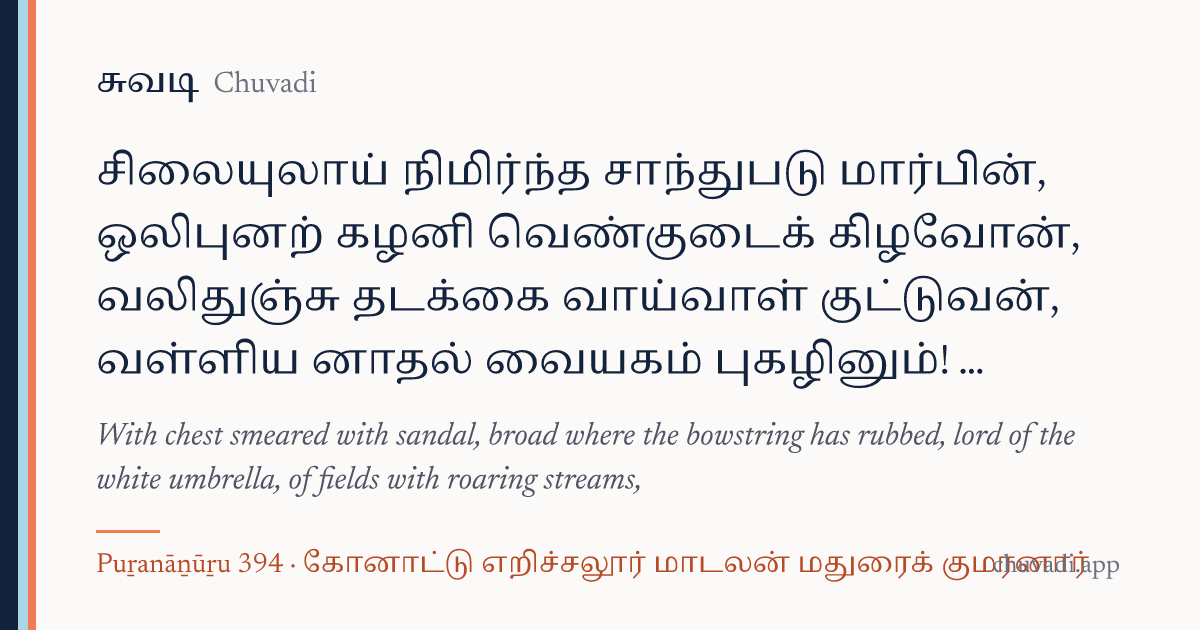
புறநானூறு 394
பாடல் · The poem
Tap a word to see where else it occurs.
பொருள் · Meaning in TamilAI
வில்லின் நாண் உராய்ந்து அகன்ற, சந்தனம் பூசிய மார்பை உடையவன்; ஒலிக்கும் நீர் பாயும் வயல்களையும் வெண்கொற்றக் குடையையும் உடைய தலைவன்; வலிமை உறங்கும் பெரிய கையையும் தப்பாத வாளையும் உடைய குட்டுவன். அவன் வள்ளல் என்று உலகமே புகழ்ந்தாலும், உயர்ந்த சொற்களை உடைய புலவர்களே, அவனிடம் போவதை நினைப்பதைக் கூடத் தவிர்த்துக்கொள்ளுங்கள்! நானும், இருண்ட நிலவில்லாத இரவு கழிந்து பகல் தொடங்கும் விடியலில், என் ஒருகண் பெரிய பறையைத் தெளிவாக ஒலிக்கும்படி கொட்டி, ஒலிக்கும் முரசும் ஓடும் தேரும் உடைய அவன் தந்தையின் வாடாத வஞ்சிப் புகழைப் பாடினேன். உள்ளம் நிறைந்த மகிழ்ச்சியோடு என்னை அருகில் அழைக்க விரும்பி, கொன்றும் சினம் தணியாத, புலால் நாறும் கொம்புகளை உடைய கடுஞ்சின யானை ஒன்றைக் கொடுத்தான். நான் அஞ்சி அதைத் திருப்பிக் கொடுத்தேன். அது சிறியது என்று நான் எண்ணியதாக அவன் உணர்ந்து நாணி, வேறொரு பெரிய களிற்றைக் கொடுத்தான். அன்று முதல், என் பெரிய சுற்றத்தார் பெருந்துயரம் அடைந்தாலும், “தாங்க முடியாத பரிசுகளைத் தருவான்” என்று அஞ்சி, மலைகள் நிறைந்த அவன் நாட்டுக்கு ஒருநாளும் போக மாட்டேன்!
இது பாடாண் திணை; துறை கடைநிலை. பாடியவர் கோனாட்டு எறிச்சலூர் மாடலன் மதுரைக் குமரனார்; பாடப்பட்டோன் சோழிய ஏனாதி திருக்குட்டுவன். வேண்டாம் என்று விலக்குவது போலச் சொல்லி அவன் கொடையின் பெருமையைப் புகழும் நகைச்சுவைப் பாடல் இது. வஞ்சி என்பது போருக்குப் புறப்படும் வீரத்தைப் பாடும் திணை.
ஆங்கிலம் · English translationAI
Translation
- With chest smeared with sandal, broad where the bowstring has rubbed,
- lord of the white umbrella, of fields with roaring streams,
- Kuṭṭuvaṉ of the true sword, in whose large hand strength lies asleep —
- though the whole world praises him as generous,
- take care not to think of going to him, poets of lofty speech!
- I too, at dawn that brings the day, when the dark moonless night had passed,
- beating my one-eyed great drum so it rang out clear,
- of his father, with his drum of booming sound and moving chariot,
- I sang the unfading vañci; and so
- with a heart brimming with joy, wishing me to come near,
- with tusks that reek of flesh, whose rage does not cool after killing,
- a fiercely angry elephant he gave me; afraid,
- I gave it back; then he, thinking that I had judged it
- too small, was ashamed, and another
- great bull elephant he gave; and from that day,
- even if my great dark kin should fall into great grief,
- thinking 'he will give gifts too hard to bear',
- I will never go to his land of hills!
What the poem says
Kōṉāṭṭu Eṟiccalūr Māṭalaṉ Maturaik Kumaraṉār sings of Tirukkuṭṭuvaṉ, a Cōḻa commander with the title Ēṉāti (Cōḻiya Ēṉāti). The tiṇai is pāṭāṇ, praise of a patron, and the turai kaṭainilai, the bard's song at the gate. The poem is praise disguised as a warning. Kuṭṭuvaṉ is famed as generous, but poets should beware of going to him.
The bard explains why. He sang at dawn of the deeds of Kuṭṭuvaṉ's father, a 'vañci' song, vañci being the theme of a king marching out to war. Delighted, Kuṭṭuvaṉ gave him a savage war elephant whose tusks still smelled of the flesh of the slain. The terrified bard handed it back. Kuṭṭuvaṉ assumed the gift had been thought too small, was ashamed, and gave an even larger elephant. So the bard swears he will never go there again, however hungry his family gets: the gifts are too much to handle.
The humour carries the praise. The line about strength 'sleeping' in his hand suggests power at rest, ready to be used. The phrase 'tuṉṉarum parical', 'gifts hard to approach', is the poem's punchline. 'Vāṭā vañci', 'the unfading vañci', may also allude to a known poem or song of that name; the text does not say.