



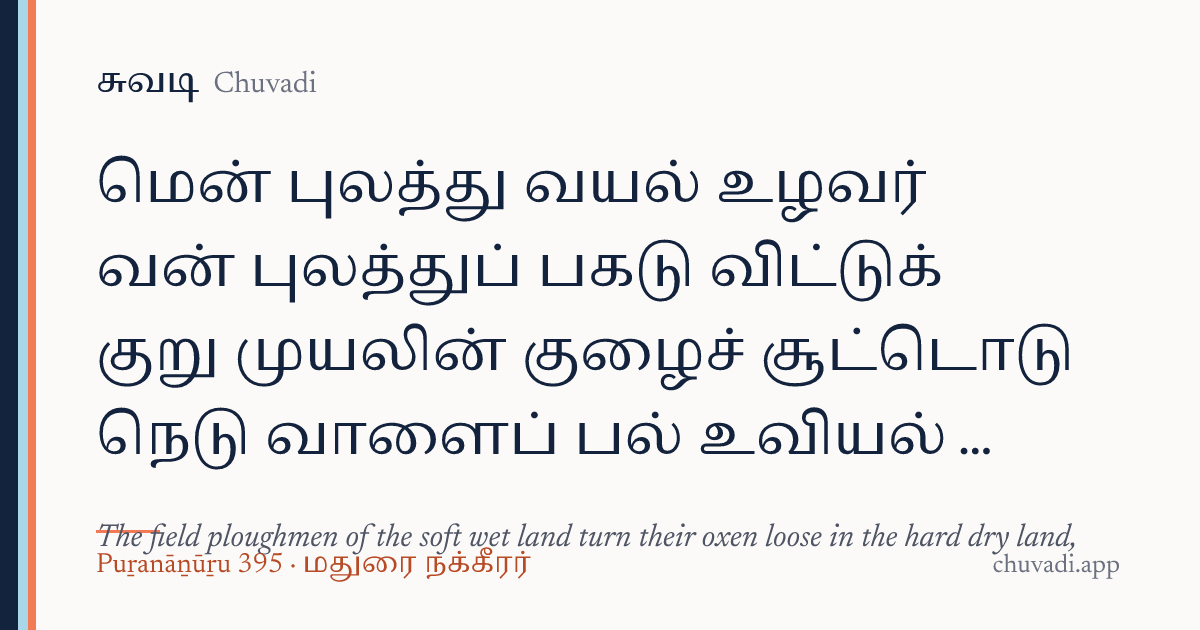
புறநானூறு 395
பாடல் · The poem
Tap a word to see where else it occurs.
பொருள் · Meaning in TamilAI
மென்மையான மருத நிலத்தில் வயலை உழும் உழவர்கள், வன்மையான புன்செய் நிலத்தில் தம் எருதுகளை மேய விட்டு, மென்மையான இறைச்சியை உடைய சிறு முயலின் சுட்ட கறியோடும், நீண்ட வாளை மீனின் பலவகைக் குழம்போடும், பழஞ்சோற்றைத் தெவிட்டும் அளவு உண்டு, புதரில் மலர்ந்த தளவுப் பூவைச் சூடி, தட்டைப் பறையால் பறவைகளை ஓட்டி, அவிழ்ந்த நெல்லால் ஆகிய கள்ளைக் குடிப்பர். வீட்டுக் கோழியின் புதிய கூவலோடு காட்டுக் கோழியின் கடுமையான குரலும் சேர, நீர்க்கோழி எதிர்க்குரல் கொடுக்கும். மூங்கில் போன்ற மென்மையான தோள்களையும் மயில் போன்ற மென்மையான சாயலையும் உடைய பெண்கள் கிளிகளை ஓட்டும் ஒலியால், அகன்ற சேற்றில் உள்ள பறவைகள் எழுந்து பறக்கும். இவ்வாறு பல நல்ல நிலங்களால் அழகுபெற்று, சிறப்பு மிக்க பெருமையுடைய, சிறிய கண்களை உடைய யானைகளைக் கொண்ட, எளிதில் அணுக முடியாத தித்தனின் குறையாத நல்ல புகழை உடைய உறந்தை நகருக்குக் கிழக்கே, நீண்ட கைகளை உடைய வேண்மானின் காவல் மிகுந்த பிடவூர் உள்ளது. பெருமானே, அங்குள்ள அறப்பெயர் பெற்ற சாத்தனின் சுற்றத்தினர் நாங்கள். முன்பு ஒருநாள், நண்பகலில் பாலைவழியைக் கடந்து வருந்தி, கதிரவன் மறைந்து நெடுநேரம் ஆன அடர்ந்த இருள் மாலையில் அவன் வாயிலில் தோன்றி, இனிய குரலை உடைய … கரகரத்த ஒலியுடைய தடாரிப் பறையோடு என் நிலையைச் சொல்லிப் பாடினேன். அங்கே நின்ற என்னைக் கண்டு, அவன் சிறிதும் தாமதிக்கவில்லை; அதிகம் பேசவுமில்லை. அரிய அணிகலன்களைக் கொண்டுவரச் செய்து அருளினான்; “விரைவில்” என்று சொன்னதோடு நில்லாமல் உடனே கொடுத்தான். பொன் போன்ற தன் மனைவியிடம் என்னைக் காட்டி, “இவனை என்னைப் போலவே பேணுவாயாக” என்றான். அன்று முதல் அவனை மறவேன்; பிறரை நினையேன். அகன்ற உலகம் மிகவும் வெப்பத்தால் வாடினாலும், வானில் எரிகள் மிகுதியாகத் தோன்றினாலும், குளத்து மீன்களோடு தாள்களும் புகைந்தாலும், பெரிய வயல்களின் நெல்லில் செய்த கொக்கின் நகம் போன்ற அவலைப் புதிய சுட்ட கறியோடு உண்டு, “ஒரு விளைச்சல் தானா? வெள்ளம் கொண்டுபோகட்டும்!” என்று, இருப்பதும் இல்லாததும் அறியாமல், அங்கே எங்கள் வாழ்வு அமைந்துவிட்டது. அவன் திருவடிகள் வாழ்க!
இது பாடாண் திணை; துறை கடைநிலை. பாடியவர் மதுரை நக்கீரர்; பாடப்பட்டோன் சோழநாட்டுப் பிடவூர் கிழார் மகன் பெருஞ்சாத்தன். இருபத்தைந்தாம் அடி சிதைந்துள்ளது. முப்பத்தெட்டாம் அடியில் ‘விளைவு ஒன்றோ வெள்ளம் கொள்க’ என்பதன் பொருள் உறுதியாகத் தெரியவில்லை; ‘விளைச்சல் வெள்ளம் என்னும் பேரெண் அளவு ஆகுக’ என்றும் கொள்ளலாம்.
ஆங்கிலம் · English translationAI
Translation
- The field ploughmen of the soft wet land
- turn their oxen loose in the hard dry land,
- and with roasts of the small hare with tender meat
- and many stews of the long vāḷai fish,
- they eat old rice until they are weary of it,
- wear flowers of the bush jasmine,
- drive off the birds with a rattle drum,
- and drink toddy of loosened paddy;
- with the fresh call of the house fowl
- and the harsh voice of the forest fowl,
- the water fowl's cry calls in answer;
- with soft shoulders like bamboo,
- the women of soft grace like peacocks
- with their cry as they drive off parrots
- make the birds of the wide mire rise in flight;
- so, adorned by many good lands,
- of great excellence and renown,
- of Tittaṉ, hard to reach, with small-eyed elephants,
- east of Uṟantai, whose fair fame never fades,
- in well-guarded Piṭavūr of the long-armed Vēṇmāṉ,
- we are the people of Cāttaṉ of righteous name, great one!
- The other day, having toiled across the wasteland at noon,
- in the thick dark evening when the rays had long gone,
- I appeared at his gate and sang of my need,
- with my rasping-voiced taṭāri of sweet sound …;
- seeing me standing there,
- he did not linger a moment, nor say very much,
- he willed that rare vessels be brought in kindness,
- and more than saying 'At once', he gave; showing his household's
- golden young lady, 'This man
- cherish as you would me,' he said; and from that day
- I do not forget him, I do not think of others;
- though the wide world should burn greatly,
- though fire should appear thick in the sky,
- though the stalks smoke along with the fish of the ponds,
- with puffed rice like heron's claws from the paddy of great fields,
- eating it with fresh roasted meat,
- 'What is one harvest? Let the floods take it!' — so,
- not knowing what we have and what we lack,
- our life is settled there; long live his feet!
What the poem says
Maturai Nakkīrar sings of Peruñcāttaṉ, son of the lord of Piṭavūr in the Cōḻa country. The tiṇai is pāṭāṇ, praise of a patron, and the turai kaṭainilai, the song at the gate. The first half paints the land. Ploughmen of the wet fields let their oxen graze in the dry uplands and eat hare and vāḷai fish with old rice. Tame and wild fowl call to each other, and girls shoo parrots from the crop and scatter the marsh birds. This land lies east of Uṟantai (Uṟaiyūr), city of Tittaṉ with his elephants. Piṭavūr belongs to Vēṇmāṉ the long-armed. The bard says his people belong to Cāttaṉ.
He then tells his story. He arrived at dusk after a hard noon crossing of the wasteland and drummed at the gate. Cāttaṉ did not keep him waiting or make speeches. He had precious gifts brought at once, then did something more personal: he showed the bard to his wife and told her to look after him 'as you would me'. Since then the bard has thought of no other patron.
The closing lines say that even if the world burns, comets blaze in the sky, and the ponds dry until their fish and stalks smoke, his family eats puffed rice and roast meat without a care, counting nothing. Lines 33–35 describe drought and evil omens; 'fire in the sky' may mean comets or meteors, though the poem does not say which. Line 38 is hard: 'let the floods take it' is one reading of a phrase that may instead mean 'let the harvest be counted in floods'. Line 25 has a gap.