



புறநானூறு 396
பாடல் · The poem
Tap a word to see where else it occurs.
பொருள் · Meaning in TamilAI
கீழே உள்ள நீரில் மீன்கள் திரியும்; மேலே நீர்ப்பரப்பில் கண்களைப் போன்ற மலர்கள் பூக்கும்; உப்பங்கழிகள் சூழ்ந்த விளைவயல்களில் தட்டைப் பறையால் பறவைகளை ஓட்டுவர்; ஆழமான நீர் தேங்கும் மணல் நிறைந்த குளிர்ந்த சோலையில் மெல்லிய பறை ஒலிக்கப் பறவைகள் பறந்தோடும்; அரும்பிலிருந்து வடித்த கள்ளை உடைய வீடுகளில் வாழும் கோசர் இனிய தெளிந்த கள்ளை உண்டு மகிழ்ந்து, இனிய குரவைப் பாட்டைத் தொடர்ந்து பாடுவர். உள்ளத்தில் வலிமை இல்லாதோருக்கு அவன் வலிமை ஆவான்; உறவினர் இல்லாதோருக்கு அவன் உறவினன் ஆவான்; புகழ் நிறைந்த வெற்றி வேலை உடைய வேள் அவன். வளமான நீர் பாயும் வாட்டாற்றின் தலைவன் எழினியாதனின் கிணைப் பறை கொட்டுவோர் நாங்கள், பெருமானே! கொழுத்த இறைச்சித் துண்டுகளின் சுட்ட கறி என்பேனா? வளமான அரும்பிலிருந்து எடுத்த கள் என்பேனா? சிறு முயலின் கொழுப்பைச் சேர்த்த மணமுள்ள நெய்ச்சோறு என்பேனா? கூட்டைத் திறந்து, அளவை மறந்து, அடியிலிருந்து அள்ளி எடுக்கும் உணவு என்பேனா? அவை போன்ற பலப்பல … வருந்தியிருந்த என் பெரிய சுற்றத்தார் உண்டு மீதமிருந்ததையும் நாங்கள் மகிழும்படி கொடுத்தான் எம் தலைவன். எம்மைப் போன்றோரின் செல்வத்துக்கு எல்லை உண்டோ? மழைக்கால வானில் விண்மீன்களின் நடுவே விரிந்த கதிர்களை உடைய வெண்ணிலவு போல, அவனுடைய கலங்காத நல்ல புகழ் விளங்கித் தோன்றுவதாக! நாங்களும் பிறரும் வாழ்த்த, நாள்தோறும் வரிசை வரிசையாக நல்ல அணிகலன்களைக் கொடுத்து, அவனுடைய பாடத்தக்க செல்வம் புகழ் பரவும்படி பெருகுவதாக!
இது பாடாண் திணை; துறை கடைநிலை. பாடியவர் மாங்குடி கிழார்; பாடப்பட்டோன் வாட்டாற்று எழினியாதன். இருபத்தொன்று, இருபத்திரண்டாம் அடிகள் சிதைந்துள்ளன; பத்தொன்பதாம் அடியின் நுட்பமான பொருள் உறுதியாகத் தெரியவில்லை.
ஆங்கிலம் · English translationAI
Translation
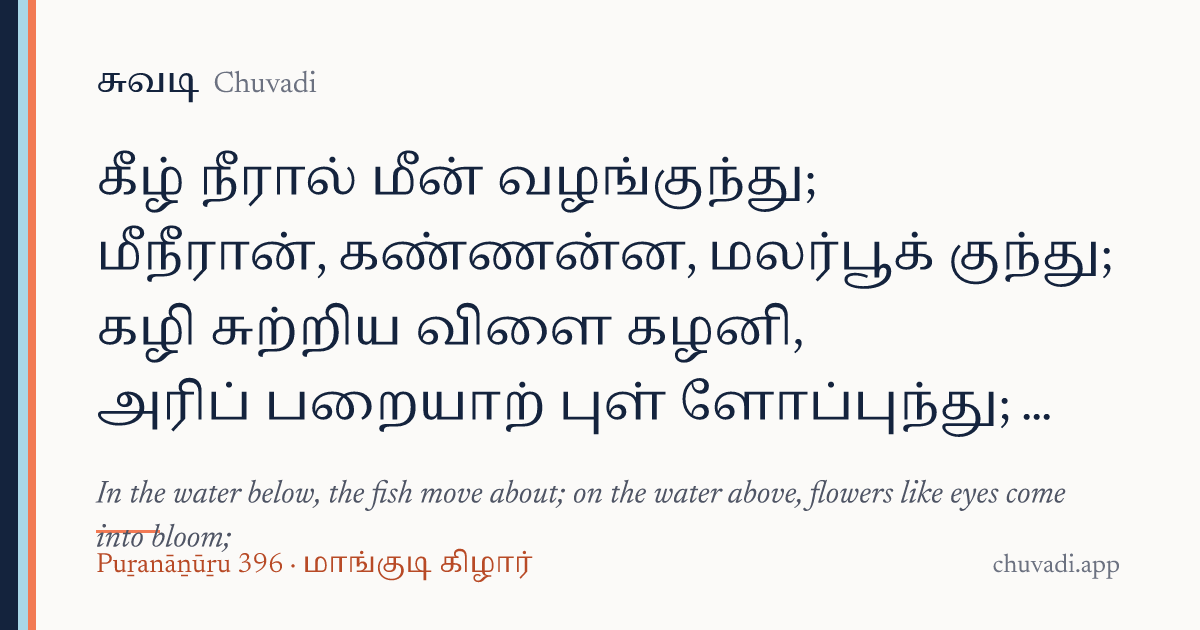
- In the water below, the fish move about;
- on the water above, flowers like eyes come into bloom;
- in the yielding fields ringed by backwaters
- birds are driven off with a rattle drum;
- in the cool grove of sand where the deep water gathers,
- birds fly up at a soft drum;
- the Kōcar in their houses of budding toddy,
- delighting in sweet clear liquor,
- keep up the sweet kuravai dance song;
- to those with nothing in them, he becomes their strength;
- to those with no kin, he becomes their kin,
- the Vēḷ of the victorious spear, laden with fame,
- Eḻiṉi Ātaṉ of Vāṭṭāṟu of rich waters —
- we are his drummers, great one!
- Shall I speak of roasts of fat chunks?
- Shall I speak of toddy from rich buds?
- Shall I speak of rice with fragrant ghee
- into which the fat of the small hare was poured?
- Shall I speak of food scooped out of the granary,
- opened and forgotten, from the very base?
- Such things, many, many …
- … who had suffered,
- my great dark kin ate, and what was left over
- he gave so that we rejoiced, our father;
- is there any limit to the fortune of people like us?
- Amid the stars of the rainy sky,
- like the white moon of spreading rays,
- may his unshaken fame shine out clear!
- While we and others praise him, every day
- giving fine vessels in rows,
- may his wealth worthy of song flow on, so its fame goes far!
What the poem says
Māṅkuṭi Kiḻār sings of Eḻiṉiyātaṉ of Vāṭṭāṟu, a Vēḷ (a chieftain's title) with a victorious spear. The tiṇai is pāṭāṇ, praise of a patron, and the turai kaṭainilai, the song at the gate. The poem opens with the sounds and sights of a watery land. Fish move below the surface and flowers 'like eyes' bloom above it. Rattles and drums scare birds from the fields and groves, and the Kōcar, who appear here simply as villagers drinking toddy, sing the kuravai, a round dance song.
The chief is defined in two lines: strength to the weak, kin to those who have none. The bard then lists what he and his family received in a run of questions, 'shall I speak of…?': roasts, toddy, rice with ghee and hare fat, food scooped from the bottom of the granary. The chief fed them first and then gave them what was left to take away. 'Is there any limit to the fortune of people like us?' he asks.
The poem closes with a blessing: may the chief's fame shine like the moon among the stars of a rainy sky, and may his wealth keep flowing to those who sing him. Lines 21–22 are damaged, and line 19 ('opened and forgotten') is uncertain in detail; it seems to mean stores opened without stint.