



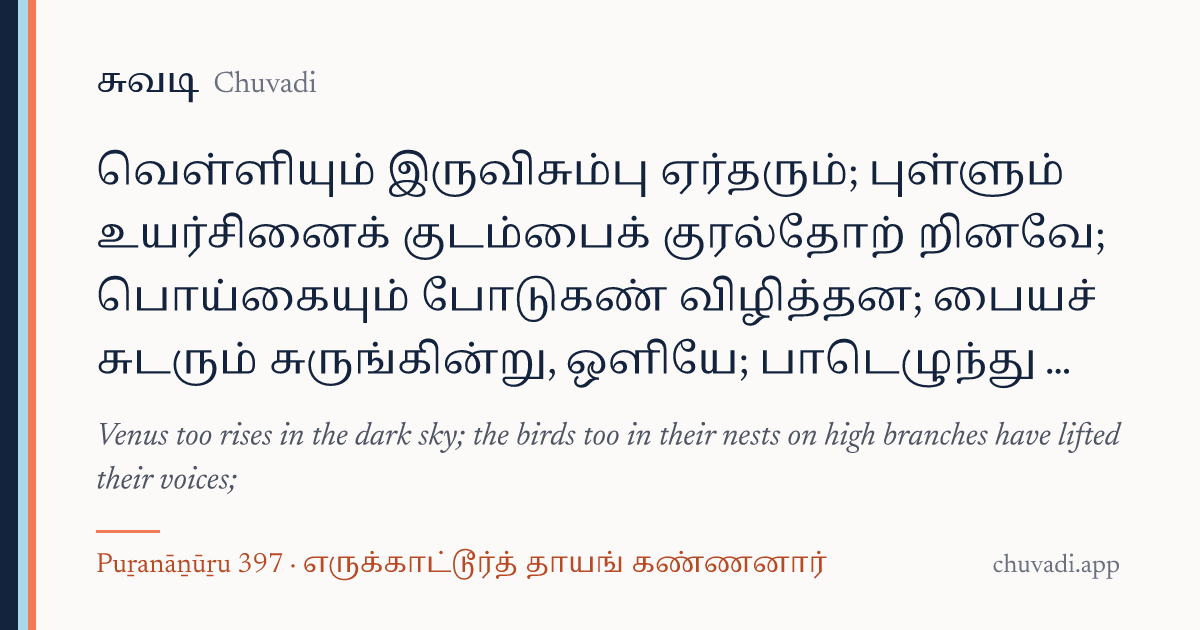
புறநானூறு 397
பாடல் · The poem
Tap a word to see where else it occurs.
பொருள் · Meaning in TamilAI
“வெள்ளியும் இருண்ட வானில் எழுகிறது; பறவைகளும் உயர்ந்த கிளைகளில் உள்ள கூடுகளில் குரல் எழுப்பிவிட்டன; குளங்களும் மலர்க் கண்களைத் திறந்துவிட்டன; விளக்குகளும் மெல்ல ஒளி குறைந்துவிட்டன. ஓசை எழுந்து முழங்கும் முரசோடு வலம்புரிச் சங்கும் ஒலிக்க, இரவு புறங்காட்டி ஓடிய காலையில் தோன்றி, இரும்புப் படைக்கலங்கள் இருளை அகற்றும் காவலுடைய பாசறையில் விடியலின் ஆரவாரத்தைக் கேட்பாயாக! பல கொள்ளைகளைக் கொண்ட, மாலை அணிந்த மார்பை உடையவனே, உறக்கத்திலிருந்து எழுவாயாக!” என்று, தெளிந்த கண்ணை உடைய என் பெரிய கிணைப் பறையை ஒலிக்கும்படி கொட்டி, நெடிய வாயிலில் தோன்றினேன். அதை விரும்பி, “என்னை நினைத்து வந்த பரிசிலன் இவன்” என்று, நெய்யில் பொரித்த தாளிதம் உடைய நீண்ட சுட்ட கறியையும், மணிக்கலம் நிறைந்த மணமுள்ள கள்ளையும், பாம்பின் சட்டை போன்ற உயர்ந்த பூவேலை செய்த ஆடையையும், மழை போன்ற வள்ளன்மையோடு சொரிந்து, வேனில் போன்ற என் வெப்பம் நீங்கும்படி அரிய அணிகலன்களைக் கொடுத்தான். எப்போதும் வயல்களில் பூத்த செந்தாமரை மலர்களும், ஆறு தொழில்களை உடைய அந்தணர் அறம் செய்து எழுப்பிய வேள்வித் தீயும் விளங்கும் நாட்டின் தலைவன்; தப்பாத வாளையும், வெற்றி தரும் வில்லையும், பொன் அணிகலன்களையும் உடைய வளவன் அவன். அலைகள் மோதும் பெருங்கடல் தன் எல்லையைக் கடந்தாலும், சுட்டெரிக்கும் கதிரவன் தென்திசையில் தோன்றினாலும், “என்ன ஆகுமோ” என்று நாங்கள் அஞ்ச மாட்டோம். வெல்லும் வேலால் அரிய போர்களை வெல்லும் ஆற்றல் உடைய அவனுடைய கழல் அணிந்த வலிய அடிகளின் குளிர்ந்த நிழலில் இருக்கிறோம் நாங்கள்!
இது பாடாண் திணை; துறை பரிசில் விடை, அதாவது பரிசு பெற்று விடைபெறுவது; கடைநிலை விடை என்றும் கொள்ளலாம். பாடியவர் எருக்காட்டூர்த் தாயங்கண்ணனார்; பாடப்பட்டோன் குளமுற்றத்துத் துஞ்சிய சோழன் கிள்ளிவளவன். பதிப்பில் ‘கோழன்’ என்று உள்ளது அச்சுப்பிழை. இருபத்திரண்டாம் அடியில் ‘தீவில்’ என்பதன் பொருள் உறுதியாகத் தெரியவில்லை.
ஆங்கிலம் · English translationAI
Translation
- Venus too rises in the dark sky; the birds too
- in their nests on high branches have lifted their voices;
- the pools too have opened the eyes of their flowers; slowly
- the lamps too have dwindled in their light; rising in sound,
- with roaring drums and the blaring of the right-whorled conch,
- appearing at the hour when night has turned its back,
- in the guarded war camp where steel drives off the darkness,
- may you hear the sounds of dawn! You who have won many spoils,
- with garland on your chest, rise from your sleep!' — so
- beating my great drum of clear face so it rang out,
- I appeared at the tall gate; pleased with it,
- 'This is a suppliant who came thinking of me,' he said,
- and long roasts with seasoning, fried soaked in ghee,
- fragrant liquor filling jewelled vessels,
- with fine flowered garments like a snake's cast skin,
- he poured out with a generosity like the rain,
- so that my fever, like the hot season, left me,
- and gave rare vessels; always,
- where red-petalled lotuses bloom in the fields,
- and the brahmins of the six duties, practising dharma, raise
- the fire that shines with them — lord of that land, of the true sword,
- Vaḷavaṉ of golden ornaments, of the bow that brings victory;
- even if the great sea of beating waves should pass its bounds,
- even if the scorching sun should rise in the south,
- we shall not fear, saying 'What now?'; with conquering spear,
- his power overcomes hard battles; of him
- we are in the cool shade of the strong feet with fine anklets!
What the poem says
Erukkāṭṭūrt Tāyaṅkaṇṇaṉār sings to the Cōḻa king Kiḷḷi Vaḷavaṉ, called 'he who died at Kuḷamuṟṟam'. The edition prints 'கோழன்' for 'சோழன்', an evident misprint. The tiṇai is pāṭāṇ, praise of a patron. The turai is given as parical viṭai, the bard's leave-taking after receiving gifts, or alternatively kaṭainilai viṭai, leave-taking at the gate. The poem does recount the gifts, though it says little about departing.
The first nine lines are a dawn song sung at the king's war camp. Venus rises, birds call from their nests, lotus 'eyes' open on the pools, lamps dim, drums and conches sound: rise from sleep, garlanded conqueror. Pleased, the king recognises the drummer as a suppliant 'who came thinking of me'. He showers him like rain with roast meat, fragrant liquor in jewelled cups and garments as fine as a snake's slough. The bard's poverty, his 'fever like the hot season', is cooled.
The king's land is one of lotus fields and of brahmins who tend the sacred fire, 'the six duties' being the traditional tasks of brahmins. The close expresses total trust. Even if the sea overflows its bounds or the sun rises in the south, the bard will not be afraid, because he lives in the cool shade of the king's feet. In line 22 'tīvil' has been read as 'tī vil', 'fierce bow', rendered loosely; the exact sense is uncertain.