



புறநானூறு 399
பாடல் · The poem
Tap a word to see where else it occurs.
பொருள் · Meaning in TamilAI
சமையல் செய்யும் பெண் அளவின்றி அள்ளிய வெண்ணெல்லை, பூண் அணிந்த பருத்த உலக்கையால் குற்றிய அரிசியைக் காடி நிறைந்த வெண்மையான உலைப்பானையில் இட்டு, நிழல் தரும் உயர்ந்த கிளைகளை உடைய மாமரத்தின் இனிய பழத்தின் மணமுள்ள புளிப்பையும், மேலே எழும் வரால் மீனையும் கொம்பு மீனின் கொழுத்த துண்டுகளையும், வயலில் விளைந்த வள்ளைக் கீரையையும், சிறிய கொடியில் காய்த்த பாகற்காயையும், பாதிரியின் முற்றிய மொட்டு அவிழ்ந்தது போலத் தோல் நீக்கி, இனியவற்றோடு கலந்து … மூழ்கும்படி இட்ட முழுதும் மலர்ந்த சோறு. களத்தில் வேலை செய்வோர் கள் மயக்கத்தில் கிடந்தால் பழஞ்சோற்றை உண்பர். அத்தகைய முழங்கும் நீர் பாயும் தோட்டங்களை உடைய காவிரி நாட்டின் தலைவன், அழியாத நல்ல புகழை உடைய கிள்ளிவளவன்; அவனை நினைத்து அவனிடம் செல்வோம் என்பர். நான் போக மாட்டேன், போக மாட்டேன்; பிறர் முகத்தைப் பார்க்க மாட்டேன். நீண்ட மூங்கில் தூண்டிலில் பிடித்த மீனை விற்று, கிணைமகள் சமைத்த பாகற்காய்ப் புளிக்கூழை நேரம் தவறி உண்ணும் உணவுடையவனாய், மனம் அழிந்து ஒரு மூலையில் இருந்தேன். என்ன வியப்பு! இப்போது, “அறவோருள் அறவோன், மறவருள் மறவன், வீரருள் வீரன், பழைய குடியின் வழித்தோன்றல், தன் புகழால் நம்மைக் கவர்ந்தவன்; விரும்பிய அமிழ்தத்தை உண்பாயாக” என்று கேட்டு, எழுந்து புறப்பட்டு, வலிய கோலைக் கழுவி, வார் அவிழ்ந்து கிடந்த தெளிந்த கண்ணை உடைய என் பெரிய கிணைப் பறைக்குப் புதிய வார்ப் போர்வையை இறுக்கிக் கட்டி, அளவற்ற புகழ்மாலைகள் ஒலிக்கும்படி சுற்றிக் கொட்டினேன். தெய்வத்துக்குப் படைத்த உணவையும் விலக்கியது என்று தொட மாட்டேன். “விரைந்து செல்லும் வண்டியைச் சேற்றில் இழுத்தும் தளராத வலிய தோள்களை உடைய ஓர் எருது தான் நான் விரும்பி வந்தது” என்றேன். நான் அதை முழுதும் விரும்பிக் கேட்டு முடிப்பதற்குள்ளே, அன்றே நிறையக் கொடுத்தான்; வானில் விண்மீன்கள் பூத்தது போன்ற அழகிய பல பசுக்கூட்டத்தை வண்டியோடு தந்தான், சிறப்பாக ஒலித்து இழியும் அருவியையும் வானைத் தொடும் உயர்ந்த சிகரங்களையும் உடைய தோன்றி மலையின் அரசன்!
இது பாடாண் திணை; துறை பரிசில் விடை. பாடியவர் ஐயூர் முடவனார்; பாடப்பட்டோன் தாமான் தோன்றிக்கோன். பாடலின் கருத்தோட்டம் தெளிவாக இல்லை; பதின்மூன்றாம் அடி கிள்ளிவளவனிடம் செல்லும்படி பிறர் சொன்னதா, புலவரே சென்றதா என்பதும், இருபத்தாறாம் அடியின் பொருளும் உறுதியாகத் தெரியவில்லை. எட்டாம் அடி சிதைந்துள்ளது.
ஆங்கிலம் · English translationAI
Translation
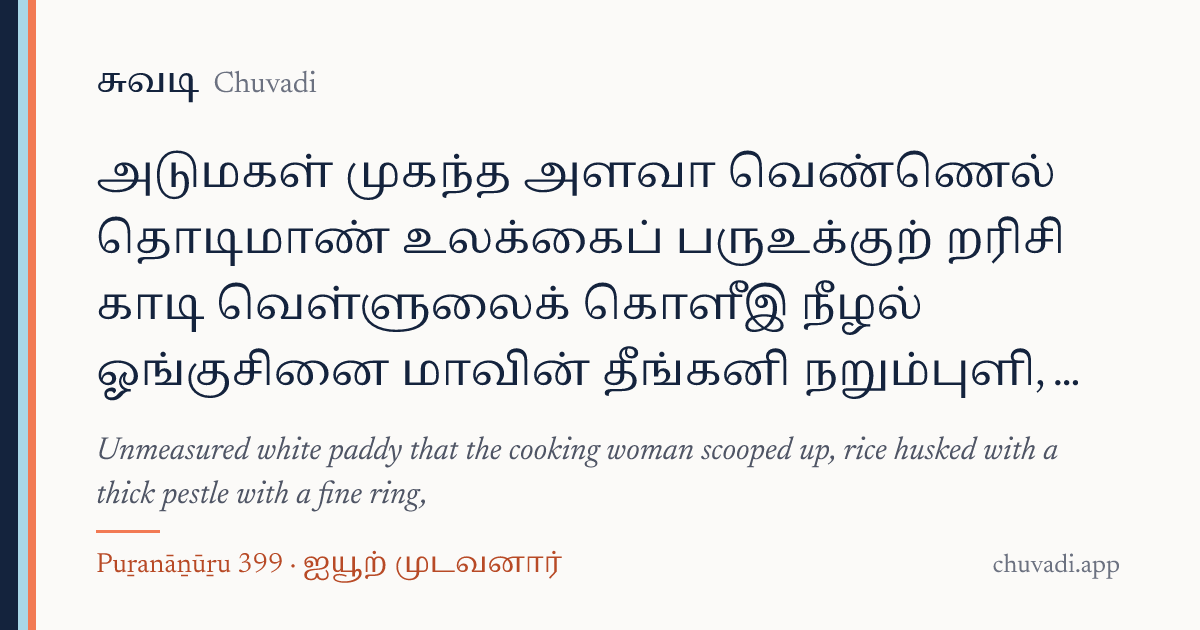
- Unmeasured white paddy that the cooking woman scooped up,
- rice husked with a thick pestle with a fine ring,
- set on the white pot of sour rice water; with, from the shade
- of a high-branched mango, the fragrant sourness of its sweet fruit,
- rich chunks of the rising varāl and of horned fish,
- vaḷḷai from the field, bitter gourd of slender vine,
- like the ripe buds of the pātiri bursting into bloom,
- its skin removed, mixed with sweet …,
- boiled rice poured in to cover, fully burst open —
- when the threshing-floor workers lie at ease in drunken joy,
- they eat the old rice; in that garden land of roaring waters,
- the lord of the Kāviri, of undying fair fame,
- Kiḷḷi Vaḷavaṉ — let us think of him and go to him;
- I will not go, I will not go; I will not look to other faces;
- selling the fish caught on a long bamboo line,
- the sour gruel of bitter gourd the drummer's wife cooked,
- I take my food at no fixed hour; in ruin,
- I sat in a corner; and what now! Now,
- 'Righteous among the righteous, warrior among warriors,
- fighter among fighters, descendant of the ancient ones,
- he has won us by his fame; eat the nectar of your longing' — so
- rising up, passing on, washing my strong stick,
- my great drum of clear face that had lain with loosened straps
- I fitted with a new covering of thongs drawn tight,
- and beat it round so that my countless garlands of praise rang out;
- even food set aside for a god, as forbidden, I would not touch;
- 'A bullock with strong shoulders that never tires in the mire under a swift chariot
- is what I wished for and came,' I said;
- before I had even fully set my wish on one, that very day
- he gave fully, then; like the stars
- blossoming in the sky, a herd of many fine cattle
- he gave along with a carriage; in splendour,
- where the waterfall comes down with a murmur,
- the king of Tōṉṟi with high peaks touching the sky!
What the poem says
Aiyūr Muṭavaṉār sings of Tāmāṉ Tōṉṟikkōṉ, king of the hill country of Tōṉṟi, named in the last line. The tiṇai is pāṭāṇ, praise of a patron, and the turai parical viṭai, the bard's leave-taking after the gift. The poem's sequence of thought is hard to follow, and the following is one reading.
It opens with a rich meal from the Kāviri delta: rice cooked with mango, varāl fish, vegetables and gourd, eaten by threshing-floor workers lazy with drink. This is the land of the Cōḻa Kiḷḷi Vaḷavaṉ, and line 13 seems to voice the common advice, 'let us go to him'. The bard refuses: he will not go, will not look to anyone else's face. He lives poorly, selling fish, eating the sour gruel his wife cooks and sitting in a corner in despair.
Then comes news, or a summons, praising someone as righteous among the righteous and a warrior among warriors, one who 'has won us by his fame'. Most naturally this is Tōṉṟikkōṉ. The bard restrings his slack drum and goes to sing. He asks only for one strong bullock that can pull a cart through mud. Before he has finished asking, the king gives him a herd of cattle 'like stars in the sky' and a carriage.
Line 8 has a gap. Line 13 might instead mean that the bard did go to Kiḷḷi Vaḷavaṉ, and the epithets of lines 19–21 might belong to either king; the poem does not make this clear. Line 26 is obscure.