



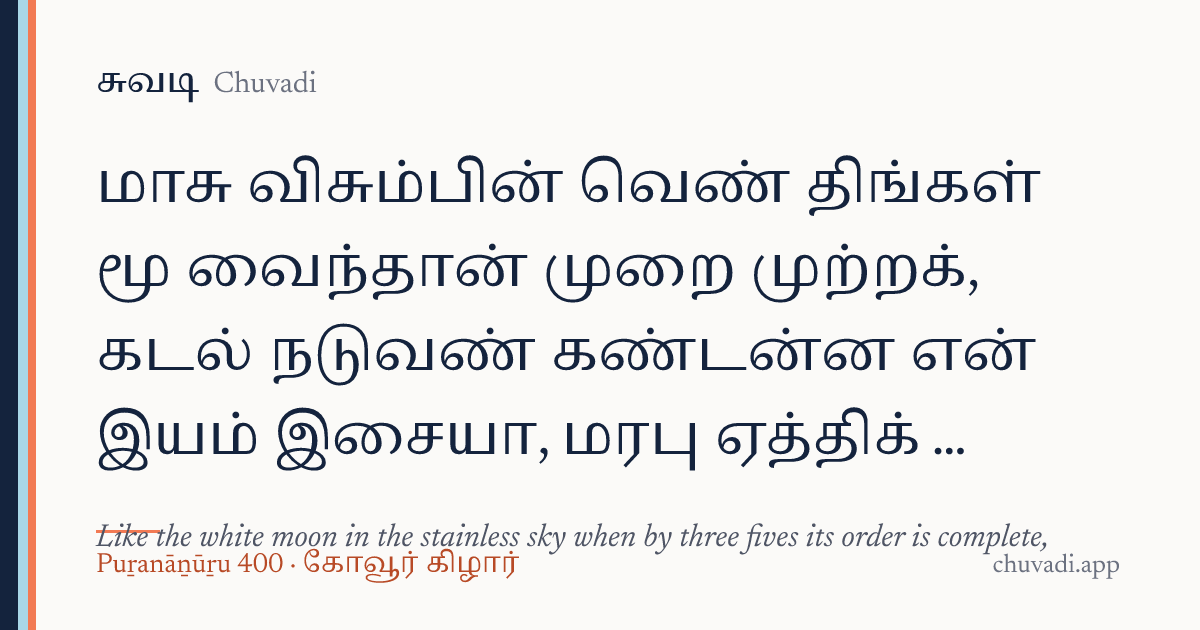
புறநானூறு 400
பாடல் · The poem
Tap a word to see where else it occurs.
பொருள் · Meaning in TamilAI
களங்கமற்ற வானில், மூன்று ஐந்து நாள்களில், அதாவது பதினைந்து நாள்களில் முறைப்படி நிறைவுபெற்று, கடலின் நடுவே தோன்றும் வெண்ணிலவு போன்ற என் பறையை ஒலித்து, அவன் மரபைப் போற்றி, இரவின் கடைசிப் பொழுதில் அவன் வாயிலில் தோன்றினேன். பலர் உறங்கும்போதும் தான் உறங்காமல், உலகைக் காக்கும் உயர்ந்த கொள்கை உடைய எம் தலைவன் என் தெளிந்த கிணையின் குரலைக் கேட்டான். கேட்டதோடு அவன் ஆசை அடங்கவில்லை. பழைய கந்தலை என் இடுப்பிலிருந்து நீக்கி, மிகப் பெரிய சிறப்பும் பெருமையும் உடைய நல்ல அணிகலன்களை … என் இடுப்பை நோக்கி ஆடையும் அளித்தான். அங்கே நாரால் வடிகட்டிய கள்ளை நாள்தோறும் உண்டு மகிழ்ச்சியில் ஊர் தள்ளாடும். அந்த ஊரில் பழகி வாழ்ந்ததால் காலம் கழிந்ததையே அறியேன். அவன் தன் பகைவர்களை விரட்டுவது மட்டுமன்றி, தன்னைச் சேர்ந்தவர்களின் பசி என்னும் பகையை விரட்டுவதிலும் வல்லவன். … மறவர்கள் நிறைந்த … கல்வி நிறைந்த வேள்விகளின் தூண்களில், பெரிய கழியிலிருந்து இறங்கி வரும் ஆரவாரமுடைய கப்பல்கள், தெளிந்த நீர்ப்பரப்பில் ஆற்றின் வழியைச் சீர்செய்து செலுத்தப்பட்டு, துறைதோறும் கட்டப்படும் நல்ல ஊர்களை உடைய, தங்கி வாழ்வதற்கு வளம் நிறைந்த நாட்டின் தலைவன் அவன்!
இது பாடாண் திணை; துறை இயன்மொழி. பாடியவர் கோவூர் கிழார்; பாடப்பட்டோன் சோழன் நலங்கிள்ளி. இது நூலின் இறுதிப் பாடல். பன்னிரண்டு, பதினெட்டாம் அடிகள் சிதைந்துள்ளன; இருபத்தொன்றாம் அடியின் பொருள் உறுதியாகத் தெரியவில்லை.
ஆங்கிலம் · English translationAI
Translation
- Like the white moon in the stainless sky
- when by three fives its order is complete,
- seen in the middle of the sea — my
- drum I sounded, praising his line,
- appearing at his gate in the last watch of night;
- while many slept, he did not sleep,
- of high resolve to guard the world;
- he heard it, our father, the voice of my clear drum;
- and even from that hearing his wish would not rest:
- removing the age-old rags from my side,
- fine vessels of great splendour and pride,
- …,
- a garment he gave, looking to my waist;
- the town sways in the daily joy of toddy strained through fibre;
- I knew no passing of time as I grew at home in the town;
- not only driving off his own enemies, for those who come to him
- he is able to drive off the enemy hunger too;
- … full of warriors …
- to the sacrificial post of rites full of learning,
- the roaring ships that come down the great backwater,
- having cleared a river path through the expanse of clear water,
- are tied at every landing — of good towns,
- he is the lord of a land rich to dwell in!
What the poem says
The last poem of the anthology is by Kōvūr Kiḻār and praises the Cōḻa king Nalaṅkiḷḷi (compare poem 382). The tiṇai is pāṭāṇ, praise of a patron, and the turai iyaṉmoḻi, a statement of the patron's nature. The bard came to the gate in the last watch of night with his drum, round and white like the full moon of the fifteenth day rising over the sea, and sang the king's lineage.
The king was awake while everyone else slept, because he takes his duty of guarding the world seriously. He heard the drum, and hearing was not enough: he took away the bard's rags, gave him fine vessels and clothing, and kept him so long in a town where toddy flows daily that the bard lost track of time. He drives off his enemies, and he drives off hunger too, 'the enemy of those who come to him'.
The poem ends at the king's harbour towns, where great ships come down the backwater and are moored at every landing to the sacrificial posts of learned rites. The image joins trade and religious learning in a single prosperous land. Lines 12 and 18 are damaged, and line 21 ('cleared a river path') is a tentative reading. Line 14 has no stated subject; 'the town' is supplied from context.