



புறநானூறு 42
பாடல் · The poem
Tap a word to see where else it occurs.
பொருள் · Meaning in TamilAI
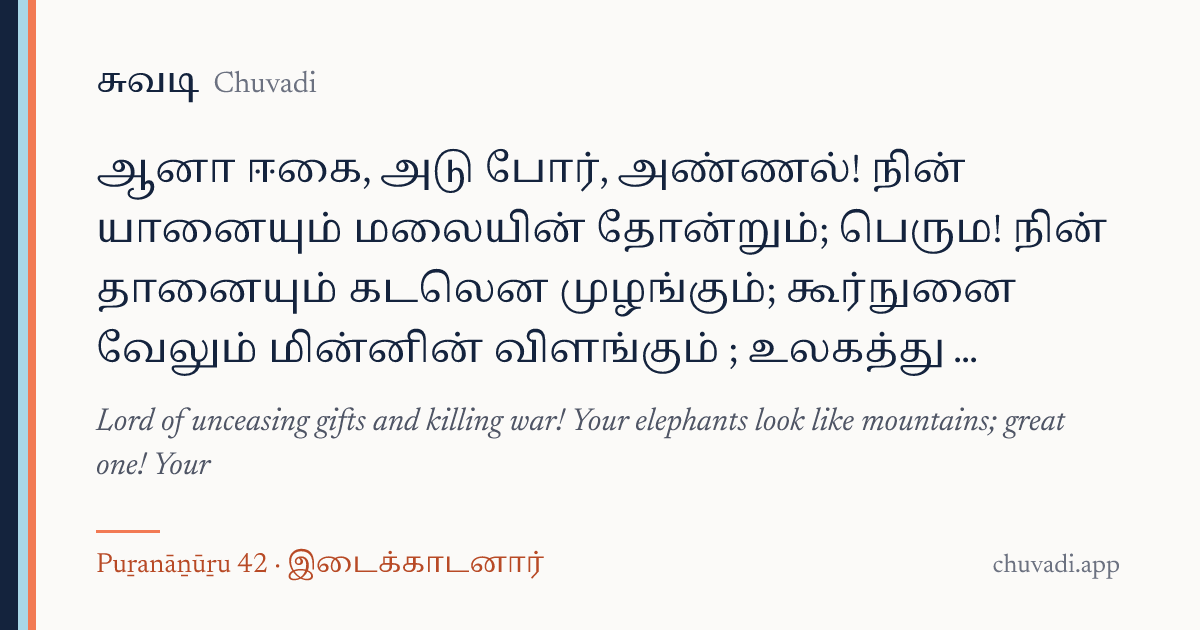
குறையாத கொடையும் கொல்லும் போரும் உடைய தலைவனே! உன் யானைகள் மலைகளைப் போலத் தோன்றுகின்றன, பெருமானே! உன் படை கடலைப் போல முழங்குகிறது; கூர்மையான முனையுடைய வேல்கள் மின்னலைப் போல ஒளிர்கின்றன. உலகத்து அரசர்களின் தலைகள் நடுங்கும் ஆற்றல் உனக்கு உள்ளதால், உன் ஆட்சி குற்றமற்றது; அது புதியதும் அன்று. குளிர்ந்த வெள்ளநீரின் ஆரவாரம் அல்லாமல், துன்புற்று 'வளவா, இதை நீக்குவாயாக, நீ வாழ்க!' என்று உன்னிடம் முறையிடும் போர்முனை ஆரவாரத்தைக் கனவிலும் அறியாமல், புலி காக்கும் குட்டிகளைப் போல, தளராத செங்கோலால் நீ காக்க, உன் நாடு பெருவலிமையும் புதுவளமும் உடையதாக ஆனது. நெல் அறுப்போர் கீழ்மடையில் பிடித்த வாளை மீனும், உழவர் கொழுமுனையில் புரட்டி எடுத்த ஆமையும், கரும்பு வெட்டுவோர் கரும்பிலிருந்து எடுத்த தேனும், பெருந்துறையில் நீர் எடுக்கும் பெண்கள் பறித்த குவளை மலரும் கொண்டு, வன்புலத்திலிருந்து விருந்தினராக வரும் உறவினர்களுக்கு விருந்து செய்யும் மென்புல ஊர்களையுடைய நல்ல நாட்டின் தலைவனே! மலையிலிருந்து இறங்கிப் பெருங்கடலை நோக்கி நிலத்தின் மேல் ஓடும் பல ஆறுகளைப் போல, புலவர்கள் எல்லோரும் உன்னை நோக்கி வந்துள்ளனர். நீயோ, மருந்தில்லாத கோடரியைச் சுழற்றிப் பிறரை வருத்தும் கூற்றுவன் சினந்தது போன்ற வலிமையோடு, பகைவர்களாகிய இரு வேந்தர்களின் நாடுகளை நோக்கியுள்ளாய்.
இது வாகைத் திணை, அரசவாகைத் துறை: அரசனின் வெற்றிச் சிறப்பைக் கூறுவது. பாடியவர் இடைக்காடனார்; பாடப்பட்டோன் சோழன் குளமுற்றத்துத் துஞ்சிய கிள்ளிவளவன். வன்புலம் என்பது வறண்ட மேட்டுநிலம், மென்புலம் என்பது நீர்வளமுள்ள வயல்நிலம். பகைவரான இரு வேந்தர்களின் பெயர்கள் பாடலில் இல்லை.
ஆங்கிலம் · English translationAI
Translation
- Lord of unceasing gifts and killing war! Your
- elephants look like mountains; great one! Your
- army roars like the sea; your sharp-pointed
- spears flash like lightning; in the world
- you have the power that makes kings' heads tremble, and so
- your rule is free of flaw; nor is that anything new;
- apart from the clamour of cool floodwater, never in pain
- crying 'Take it away, long life to you, Vaḷavaṉ!' to you,
- never knowing even in dreams the clamour the battlefront brings,
- like cubs that a tiger guards,
- under your sceptre that never weakens, as you guard them,
- it has become rich in great strength and fresh plenty; the reapers'
- vāḷai fish taken at the lower sluice, the ploughmen's
- turtles turned up gleaming by the ploughshare, the cane-cutters'
- honey taken from the sugarcane, at the great bathing ghāṭs
- the kuvaḷai lilies plucked by women fetching water,
- for kin from the hard country who come as guests they make a feast:
- chief of the good land of soft-country settlements!
- Like the many rivers that come down from the mountains and, toward the great sea,
- run down over the face of the earth,
- all poets have turned toward you;
- you, whirling the cureless axe so that they suffer,
- with a strength like that of Death in rage,
- have turned toward the lands of the two enemy kings.
What the poem says
Iṭaikkāṭaṉār praises Cōḻaṉ Kiḷḷivaḷavaṉ in a victory poem (vākai, turai aracavākai, the excellence of a king). The poem holds two faces of the king in balance: the protector of his own people and the terror of his enemies.
It opens with the usual signs of power: elephants like mountains, an army roaring like the sea, spears like lightning. Then it turns inward to his country. His people hear no clamour but that of the floodwater; they never have to cry to him in distress, and never know battle even in their dreams. They are like tiger cubs under the tiger's guard.
The middle lines give a lively picture of Cōḻa abundance. Reapers catch vāḷai fish at the sluices, ploughmen turn up turtles, cane-workers gather honey from sugarcane, and women fetching water pick kuvaḷai lilies. With all this they feast their relatives who come from the 'hard country', the dry upland, to visit them in the 'soft country' of wet fields.
The ending sets two movements side by side. All poets turn to him as rivers run from the hills to the sea; and he, with a strength like Death swinging his cureless axe, turns toward the lands of the two rival kings. Those kings are not named, though 'the two' presumably means the other crowned kings of the Tamil country.