



புறநானூறு 43
பாடல் · The poem
Tap a word to see where else it occurs.
பொருள் · Meaning in TamilAI
நிலத்தில் வாழ்வோரின் துன்பம் தீர்வதற்காக, சுட்டெரிக்கும் கதிர்களையுடைய ஞாயிற்றின் வெம்மையைத் தாங்கி, காற்றையே உணவாகக் கொண்டு, ஞாயிற்றோடு சுற்றிவரும் ஒளிரும் சடையுடைய முனிவர்களும் வியக்கும்படி, வளைந்த சிறகும் கூரிய நகமும் உடைய பருந்தின் குறியிலிருந்து தப்பி, தன்னிடம் அடைக்கலம் புகுந்த குறுநடைப் புறாவின் சாவுக்கு அஞ்சித் துலாக்கோலில் ஏறிய, எல்லையற்ற கொடையுடைய வலியோனின் வழித்தோன்றலே! பகைவரை வென்ற வலிமை மிக்க செல்வமுடைய, தேர் வழங்கும் வள்ளல் கிள்ளியின் தம்பியே! நீண்ட அம்புகளையுடைய வில்வீரர்களின் தலைவனே! விரைந்த குதிரைகளையுடைய கொடைவள்ளலே! எனக்கு ஓர் ஐயம் இருந்தது. 'ஆத்திமாலை அணிந்த உன் முன்னோர் எல்லோரும் பார்ப்பனர் வருந்தும் செயல்களைச் செய்ததில்லை; இது உனக்குத் தகுமோ?' என்று வெறுப்புடன் சொன்னேன். நான் உனக்குச் செய்த பிழையை நீ வருத்தமாகக் கொள்ளவில்லை; மாறாக, நீயே பிழை செய்தவன் போல மிகவும் நாணினாய். 'தமக்குப் பிழை செய்தவரைப் பொறுத்துக் கொள்ளும் பெருமை இக்குடியில் பிறந்தவர்களுக்கு எளிது' என்று காட்டினாய், காணத்தக்க வலிமையுடையவனே! ஆகவே பிழை செய்தவன் நானே! பெருகி வரும் இனிய நீரையுடைய காவிரி மணல்மேடுகளில் குவித்த மணலைவிடப் பல ஆண்டுகள் உன் வாழ்நாள் சிறப்பதாக!
இது வாகைத் திணை, அரசவாகைத் துறை என்று குறிக்கப்பட்டுள்ளது; ஆனால் இங்குப் புகழப்படுவது போர்வெற்றி அன்று, பொறுமை என்னும் பண்பு. பாடியவர் தாமப்பல் கண்ணனார்; பாடப்பட்டோன் சோழன் நலங்கிள்ளியின் தம்பி மாவளத்தான். இருவருக்கும் இடையே நடந்த நிகழ்ச்சி என்ன என்பதைப் பாடல் சொல்லவில்லை; அது சூதாட்டத்தில் நடந்த பிணக்கு என்று மரபு கூறுகிறது.
ஆங்கிலம் · English translationAI
Translation
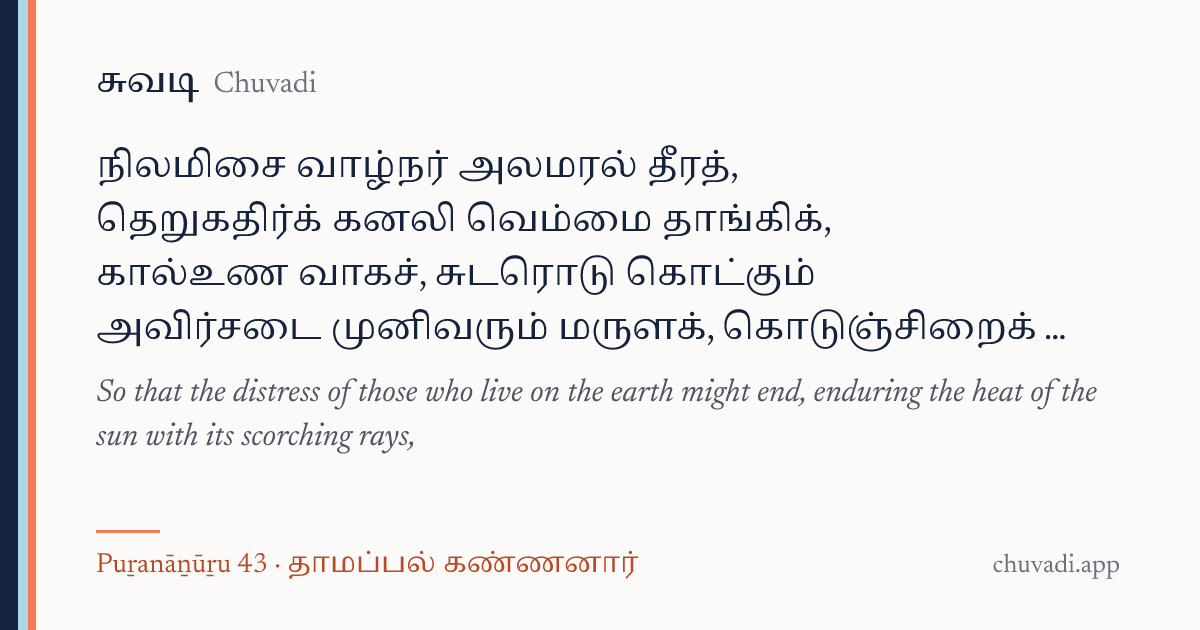
- So that the distress of those who live on the earth might end,
- enduring the heat of the sun with its scorching rays,
- with wind for food, wheeling along with the sun,
- even the sages with shining matted locks were astonished; when, fleeing
- the aim of the curved-winged, sharp-clawed hawk,
- the short-stepping dove came into his keeping,
- he feared for its death and entered the scales:
- descendant of that strong one of boundless giving!
- Younger brother of Kiḷḷi, generous with chariots,
- whose fortune is full of the strength that overcame his foes! Chief of the warriors
- with long-shafted bows! Generous-handed prince
- of swift horses! I had a doubt:
- 'All your forebears, wearing well-made garlands of ār,
- never did what would hurt the Brahmins; and this —
- is it fitting for you?' So I spoke, in contempt,
- and though you did not resent the wrong I did you,
- you were deeply ashamed, as if it were you who had erred;
- 'the noble one who bears with those who wrong him —
- for those born in this line it comes easily': this
- you showed, mighty one worth beholding! And so
- it is I who erred! May your life be long,
- more than the sand piled on the dunes
- by the Kāviri of sweet water as it rises in flood!
What the poem says
Tāmappal Kaṇṇaṉār addresses Māvaḷattāṉ, the younger brother of Cōḻaṉ Nalaṅkiḷḷi. The colophon puts it under vākai, victory, with the turai aracavākai, the excellence of a king; the label fits only loosely, since the excellence praised is not military but the virtue of forbearance.
The poem begins with the familiar Cōḻa ancestor who, to save a dove fleeing a hawk, entered the scales himself, astonishing even the ascetics who live on air beside the sun. The prince is then praised as the brother of the generous Kiḷḷi and a leader of archers.
The heart of the poem is an apology. Something has happened between them; the poem does not say what. The poet, apparently himself a Brahmin, rebuked the prince harshly: 'Your ancestors never hurt Brahmins; is this fitting for you?' Instead of taking offence, the prince was ashamed, as though he had been the wrongdoer, and so showed that people of his line bear patiently with those who wrong them. Seeing this, the poet admits that the fault was his own. Tradition links the poem to a quarrel over a game of dice, but the poem itself gives no such detail.
It ends with the common blessing: may the prince live more years than the grains of sand the flooded Kāviri piles on its banks.