



புறநானூறு 46
பாடல் · The poem
Tap a word to see where else it occurs.
பொருள் · Meaning in TamilAI
நீ புறாவின் துன்பத்தைத் தீர்த்ததோடு மட்டுமன்றி வேறு பல துன்பங்களையும் நீக்கியவனின் வழித்தோன்றல். இவர்களோ, அறிவுப்புலத்தை உழுது வாழும் புலவர்களின் வறுமைத் துன்பத்துக்கு அஞ்சி, தம்மிடம் உள்ளதைப் பகிர்ந்து உண்ணும் குளிர்ந்த நிழல் போன்ற குடியில் பிறந்தவர்கள். யானையைக் கண்டு அழுத அழுகையையும் மறந்து, மன்றத்தை மருண்டு பார்க்கும் சிறிய குடுமித் தலையுடைய இச்சிறுவர்கள், இதுவரை அறியாத புதிய துன்பத்தில் வருந்துகின்றனர். என் சொல்லைக் கேட்டாய்; இனி நீ விரும்பியதைச் செய்!
இது வஞ்சித் திணை, துணை வஞ்சித் துறை: போரின் இடையே புலவர் இடையிட்டுப் பேசுவது. பாடியவர் கோவூர் கிழார்; பாடப்பட்டோன் சோழன் குளமுற்றத்துத் துஞ்சிய கிள்ளிவளவன். இச்சிறுவர்கள் மலையமானின் மக்கள் என்றும், யானையால் மிதிக்கப்பட இருந்தனர் என்றும் மரபு கூறுகிறது; பாடல் யாருடைய பெயரையும் சொல்லவில்லை. 'புலனுழுது உண்மார்' என்பதைப் புலவர் என்று கொண்டோம்; உழவர் என்றும் கொள்ள இடமுண்டு. எட்டாம் வரியில் உள்ள 'கெட்டனை' என்பதைக் 'கேட்டனை' எனக் கொண்டோம்.
ஆங்கிலம் · English translationAI
Translation
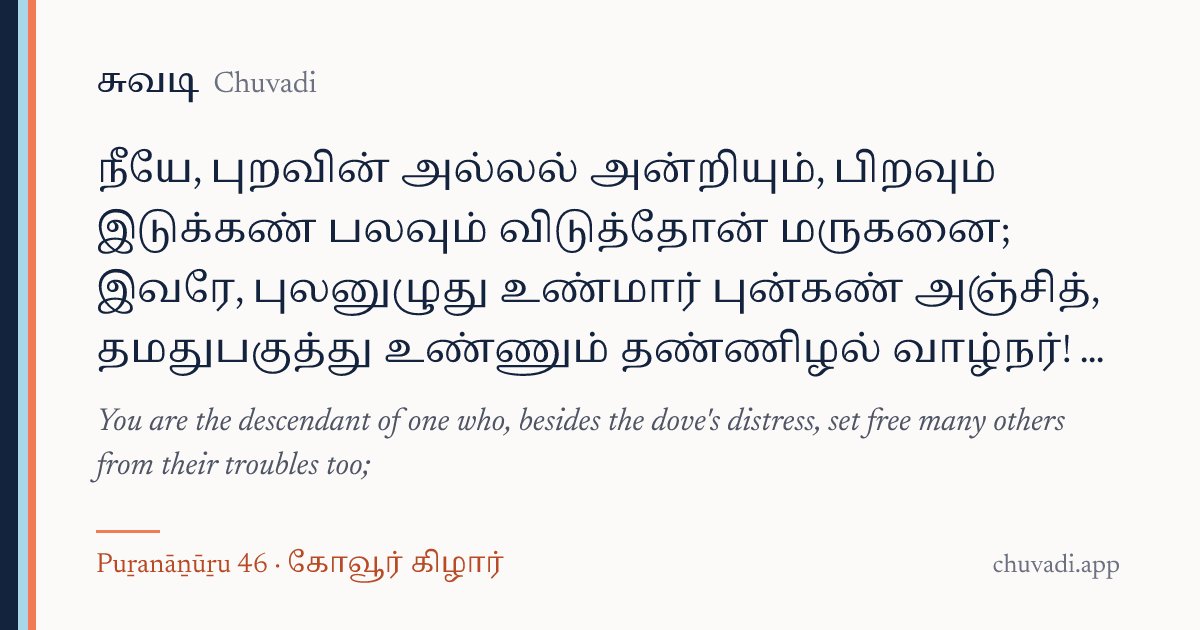
- You are the descendant of one who, besides the dove's distress,
- set free many others from their troubles too;
- these are children of those who, fearing the hardship of men who plough the field of learning,
- share what is theirs and eat, people who live in cool shade!
- Having forgotten the crying they cried when they saw the elephant,
- the little boys with tufted heads, staring bewildered at the hall,
- are suffering a grief that is new to them;
- now that you have heard me, do as you wish!
What the poem says
Kōvūr Kiḻār pleads with Cōḻaṉ Kiḷḷivaḷavaṉ for the lives of some small boys. The tiṇai is vañci and the turai tuṇai vañci, a poet's intervention in the course of war.
The poem gives the situation only by hints. The king is reminded that he descends from the ruler who saved the dove and relieved many others in distress. The children before him come of a family who, out of concern for the hardship of poets, those who 'plough the field' of learning, shared what they had with them: a generous house that gave cool shade. Now the little boys, who at first cried at the sight of the elephant, have stopped crying and stare in confusion at the assembly; this is a sorrow they have never known. Having said this, the poet leaves the choice to the king.
The phrase புலனுழுது உண்மார் in line 3 is taken here as 'those who live by ploughing the field of knowledge', that is, poets; it might also mean farmers. Tradition says the boys were the sons of the chieftain Malaiyamāṉ and were about to be trampled by an elephant; the poem names no one and says only that an elephant was there. In line 8 the edition's கெட்டனை is read as கேட்டனை 'you have heard'.