



புறநானூறு 47
பாடல் · The poem
Tap a word to see where else it occurs.
பொருள் · Meaning in TamilAI
வள்ளல்களை நாடி, பறவைகளைப் போலப் பறந்து சென்று, 'நீண்டவை' என்று எண்ணாமல் பல பாலைவழிகளைக் கடந்து, பயிற்சி பெறாத நாவால் தம்மால் இயன்ற அளவு பாடி, பெற்றதைக் கொண்டு மகிழ்ந்து, சுற்றத்தாருக்கு உண்பித்து, சேர்த்து வைக்காமல் உண்டு, மனம் சுருங்காமல் வாரி வழங்கி, தமக்கு உரிய மதிப்புக் கிடைக்காதபோது மட்டும் வருந்தும் இந்தப் பரிசில் வாழ்க்கை, பிறர்க்குத் தீங்கு செய்வதை அறியுமோ? அறியாது. தன் தகுதியால் பகைவர் நாணும்படி தலைநிமிர்ந்து சென்று, அங்கே இனிதாக வாழ்வது அல்லாமல் வேறொன்றும் அறியாது. ஆனாலும், உயர்ந்த புகழுடன் இவ்வுலகை ஆளும் செல்வத்தைப் பெற்ற உங்களைப் போன்ற பெருமிதமும் அதற்கு உண்டு.
இது வஞ்சித் திணை, துணை வஞ்சித் துறை: பகைமைச் சூழலில் புலவர் இடையிட்டுப் பேசுவது. பாடியவர் கோவூர் கிழார்; பாடப்பட்டோன் காரியாற்றுத் துஞ்சிய நெடுங்கிள்ளி. பகைவர் பக்கத்திலிருந்து வந்த புலவர் ஒருவர் ஒற்றர் என்று ஐயுறப்பட்டபோது இது பாடப்பட்டது என்பது மரபு; பாடல் அதைச் சொல்லவில்லை. 'வடியா நாவின்' என்பதன் பொருள் உறுதியாகத் தெரியவில்லை. நான்காம் வரியில் உள்ள 'மகழ்ந்தும்' என்பதை 'மகிழ்ந்தும்' எனக் கொண்டோம்.
ஆங்கிலம் · English translationAI
Translation
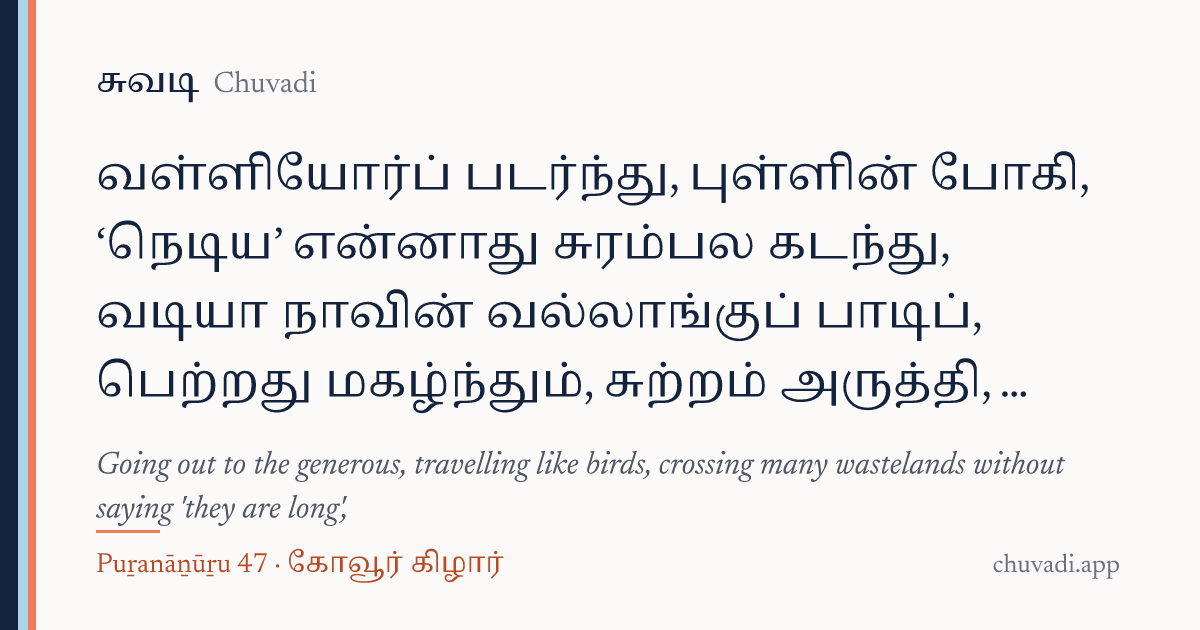
- Going out to the generous, travelling like birds,
- crossing many wastelands without saying 'they are long',
- singing as well as they can with untutored tongues,
- rejoicing in what they receive, feeding their kin,
- eating without hoarding, giving freely without holding back,
- grieving only for want of honour, this gift-seeker's life —
- does it know how to do harm to others? It does not; in its own way,
- shaming those who are hostile, it goes with head held high,
- and lives sweetly there, and nothing more; yet, high in fame,
- like you who have won the wealth of ruling the earth,
- it has a pride of its own.
What the poem says
Kōvūr Kiḻār speaks to Cōḻaṉ Neṭuṅkiḷḷi, 'who died at Kāriyāṟu', in defence of the wandering poet's life. The tiṇai is vañci, with the turai tuṇai vañci, a poet's intervention during a conflict.
The poem describes the poet's way of living. Poets go to generous patrons like birds flying to fruiting trees, crossing long wastelands; they sing as best they can, are glad of whatever they get, feed their families, eat without saving and give without holding back. The one thing that pains them is a lack of honour shown to them. Such a life, the poet asks, knows nothing of harming anyone. It walks proudly, embarrassing its detractors, and simply lives on. Yet it has a dignity equal to that of kings who rule the earth.
The poem is plainly a reply to some suspicion against a poet, but it does not say what the suspicion was or who the poet was. Tradition holds that a poet visiting from the enemy side had been taken for a spy and was about to be killed; this comes from outside the poem. Line 3's வடியா நாவின் may mean 'untutored tongue' or 'tongue that never fails'. In line 4 the edition's மகழ்ந்தும் is read as மகிழ்ந்தும் 'rejoicing'.