



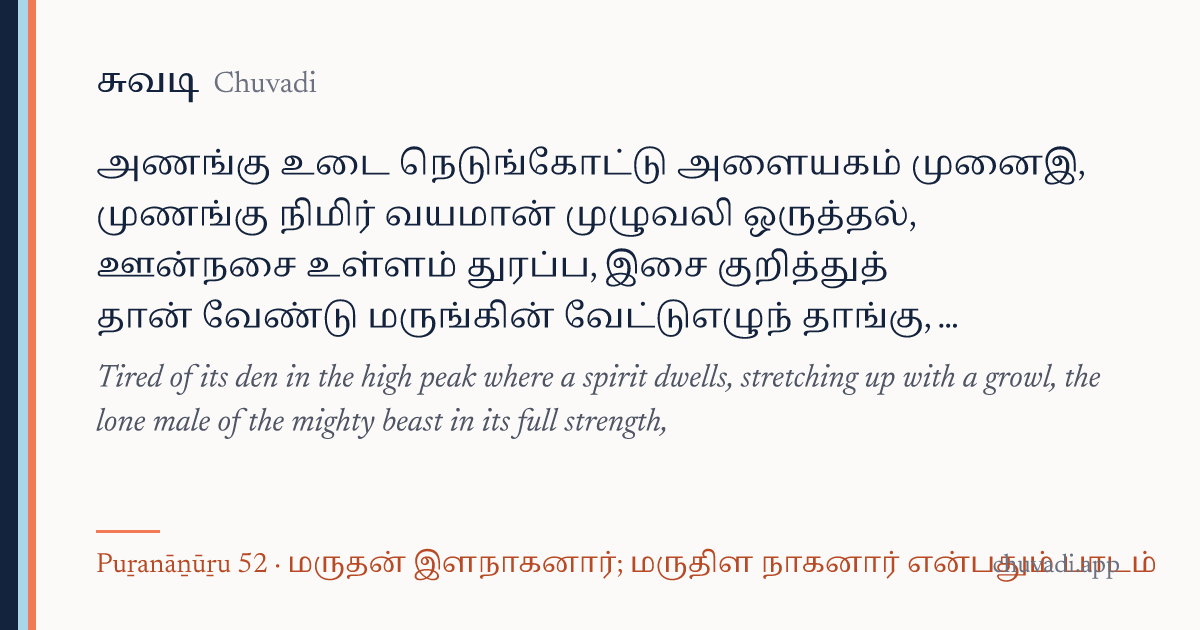
புறநானூறு 52
பாடல் · The poem
Tap a word to see where else it occurs.
பொருள் · Meaning in TamilAI
தெய்வம் உறையும் உயர்ந்த மலைச்சிகரத்தின் குகையில் இருந்து வெறுப்படைந்து, முணங்கி உடலை நிமிர்த்தும் முழுவலிமையுடைய ஆண்புலி, இறைச்சியை விரும்பும் உள்ளம் தூண்ட, ஓசையைக் குறிவைத்துத் தான் விரும்பிய திசையில் வேட்டைக்கு எழுவது போல, வடநாட்டு மன்னர்கள் வாடும்படி கொல்லும் எண்ணத்துடன் எழுந்த, கொடிய வெம்போரும் நன்கு அமைந்த தேரும் உடைய வழுதியே! இதுவே நீ எண்ணியதானால், இப்பரந்த நிலத்தில் இரங்கத்தக்கவர் யார்? ஊர்தோறும் மீன் சுடும் புகையால் புலால் நாற்றம் வீசும் நீண்ட கொடிகள் வயலருகே உள்ள மருதமரத்தின் வளைந்த கிளைகளில் படரும் பெருவளத்தை விட்டு நீங்கி, இனி ஆரவாரம் நிறைந்த கோவிலின் தெய்வம் தன் தூணை விட்டு நீங்க, பலியிடுவது நின்று போன பாழடைந்த பொதுமன்றத்தில், நரைத்த முதியவர்கள் காய்களை நகர்த்தி நகர்த்திக் குழிந்து போன சூதாட்டப் பலகையின் அழகிய கட்டங்கள் நிறையும்படி, பல புள்ளிகளையுடைய காட்டுக்கோழிகள் முட்டையிடும் காடாக மாறி அழியும் நாட்டை உடையவர்களே இரங்கத்தக்கவர்!
இது வாகைத் திணை, அரசவாகைத் துறை: அரசனின் வெற்றிச் சிறப்பைக் கூறுவது. பாடியவர் மருதன் இளநாகனார்; மருதிள நாகனார் என்றும் பாடம் உண்டு. பாடப்பட்டோன் பாண்டியன் கூடகாரத்துத் துஞ்சிய மாறன் வழுதி. வடநாட்டு மன்னர்கள் யார் என்று பாடல் சொல்லவில்லை. மூன்றாம் வரியில் உள்ள 'இசை' என்பதை ஓசை என்று கொண்டோம்; புகழ் என்றும் கொள்ள இடமுண்டு.
ஆங்கிலம் · English translationAI
Translation
- Tired of its den in the high peak where a spirit dwells,
- stretching up with a growl, the lone male of the mighty beast in its full strength,
- driven by a heart that longs for flesh, marking the sounds,
- rises to hunt wherever it wishes to go:
- so, to make the northern kings wither, intent on slaughter,
- Vaḻuti of cruel, fierce war, with well-built chariots!
- If this is what you have resolved, on the wide earth
- who are those to be pitied? In every town
- the long vine that smells of fish from the smoke of roasting fish
- twines round the bending branches of the marutu by the fields;
- leaving behind such great, fine plenty, now,
- when the god of the festive shrine has abandoned his pillar,
- in the ruined hall where offerings have ceased,
- in the fine squares of the dice board worn hollow by grey old men
- as they moved their pieces, many-spotted
- forest fowl will lay their eggs, filling them;
- it is those whose land will turn to forest and die!
What the poem says
Marutaṉ Iḷanākaṉār (or Marutiḷanākaṉār) praises Pāṇṭiyaṉ Māṟaṉ Vaḻuti, the same king as the previous poem. The tiṇai is vākai and the turai aracavākai, the excellence of a king; but much of the poem is a picture of the ruin that his victory will bring.
It opens with a tiger (vayamāṉ, 'the strong beast') stirring in its mountain cave, haunted by a spirit, stretching and growling, then setting out to hunt wherever hunger leads. So the king sets out to make the northern kings wither. The poem does not name these kings.
Then the poet asks: if this is your plan, who on earth is to be pitied? The answer is the people of the enemy country. Now their towns are rich; the smell of roasting fish clings to the vines that twine over the marutu trees by the fields. Soon the god will leave his shrine, the common hall will fall to ruin with no offerings, and wild fowl will lay their eggs in the hollows that the old men's dice pieces wore into the game board. The land will become forest.
The detail of the dice board is a vivid sign of how a community's ordinary life disappears. The word இசை in line 3 is taken here as 'sound' (the tiger listening for prey); it could also mean 'fame' if applied to the king, but the simile favours the first reading.