



புறநானூறு 53
பாடல் · The poem
Tap a word to see where else it occurs.
பொருள் · Meaning in TamilAI
முதிர்ந்த சிப்பிகளிலிருந்து வந்த முத்துக்கள் நிறைந்த நீண்ட மணல்பரப்பும், ஒளிவீசும் மணிகளால் கண்ணைக் கூசச்செய்யும் மாளிகைகளும் உடைய, ஒளிரும் வளையல் அணிந்த மகளிர் மேடைகளில் விளையாடும் புகழ் விளங்கும் விளங்கில் என்னும் ஊரின் துன்பத்தை அழித்த, போர்க்களத்தைக் கைப்பற்றும் யானைகளும் விரைந்த குதிரைகளும் உடைய பொறையனே! உன் புகழை விரித்துச் சொன்னால் அது மேலும் விரிகிறது; சுருக்கிச் சொன்னால் ஏதாவது விடுபடுகிறது. மயங்கிய நெஞ்சுடைய எங்களைப் போன்றவர்களுக்கு உன் புகழை முழுமையாக அடைவது ஒருபோதும் இயலாது. ஆனாலும், சிறந்தவர்கள் பிறந்த இந்தப் பரந்த உலகத்தில் 'நாங்கள் வாழ மாட்டோம்' என்று சொல்வதும் அரிது. 'தளராமல் செறிவான செய்யுள்களைச் செய்த செம்மையான நாவும், நிறைந்த கேள்வியறிவும், விளங்கும் புகழும் உடைய கபிலன் இன்று இருந்தால் நன்றாக இருக்கும்' என்று நீ சொன்னாய். உன் வெற்றிக்கு ஏற்ற சிறப்புகளுக்குப் பொருந்தும்படி, நீ பகைவரை வென்றதை அவன் உறுதியாகப் பாடியிருப்பான்.
இது வாகைத் திணை, அரசவாகைத் துறை: அரசனின் வெற்றிச் சிறப்பைக் கூறுவது. பாடியவர் பொருந்தில் இளங்கீரனார்; பாடப்பட்டோன் சேரமான் மாந்தரஞ்சேரல் இரும்பொறை. விளங்கில் ஊருக்கு வந்த துன்பம் என்ன என்பதைப் பாடல் சொல்லவில்லை. 'வாழேம் என்றலும் அரிதே' என்னும் வரி செறிவாக உள்ளது; பாடாமல் வாளா இருக்க முடியாது என்பதே அதன் கருத்தாகத் தோன்றுகிறது. 'ஆடு கொள் வரிசை' என்னும் தொடரின் பொருளும் உறுதியாகத் தெரியவில்லை.
ஆங்கிலம் · English translationAI
Translation
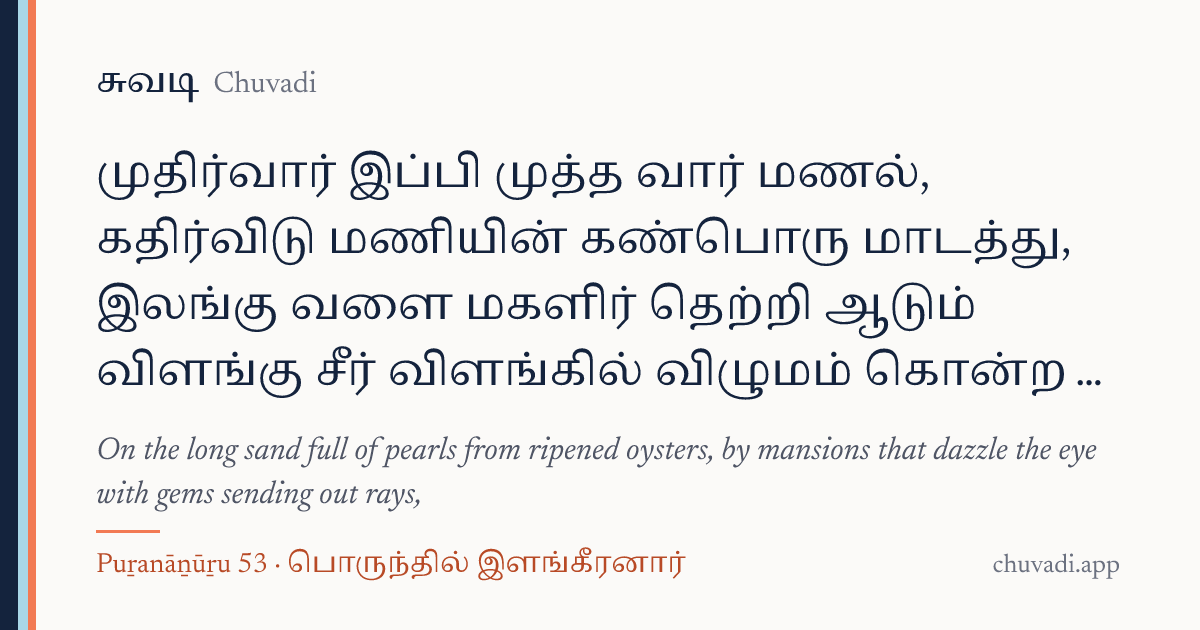
- On the long sand full of pearls from ripened oysters,
- by mansions that dazzle the eye with gems sending out rays,
- women with shining bangles play on the raised platforms
- in Viḷaṅkil of bright renown — you who ended its distress,
- with elephants that hold the battlefield, with swift horses, Poṟaiyaṉ!
- If one spreads it out, it grows wider; if one sums it up, something is left out;
- for people like us with bewildered hearts, by no means
- can your fame be grasped whole, ever;
- yet in this wide, flowering world where the illustrious were born,
- to say 'we will not go on living' is hard as well; 'Unfaltering,
- with a fine tongue that made close-knit verse,
- rich in learning, Kapilaṉ of shining fame —
- if he were alive today, how good it would be!' you said; your
- honours that mark your victories he would have matched,
- singing, surely, your conquest of your enemies.
What the poem says
Poruntil Iḷaṅkīraṉār addresses Cēramāṉ Māntarañcēral Irumpoṟai. It is filed under vākai, victory, with the turai aracavākai, a king's excellence, though much of it is about the difficulty of praising him.
The poem opens with the king's deed at Viḷaṅkil, a town by the sea with pearl-strewn sand and gem-bright mansions, where women play on the raised platforms. The king 'ended its distress', presumably by lifting a threat to it; the poem does not say what the threat was.
The poet then confesses that his fame is too large: spread it out and it grows, condense it and something is lost; people of muddled mind cannot grasp it. Still, the poet says, it is hard to say 'we will not go on living' in a world where great men have been born; the line is compressed, and seems to mean that one cannot simply give up and fall silent. The king, it appears, had said that he wished Kapilaṉ were alive, the great poet famous for his learning and his tightly made verse. The poet agrees: Kapilaṉ would indeed have sung the king's victories in a way worthy of the honours he bestows.
The turn is graceful and modest, and it also tells us that Kapilaṉ was remembered as the poet of an earlier generation. The phrase ஆடு கொள் வரிசை in line 14 is taken as 'the honours that go with victory', though it could refer to the king's rewards to poets.