



புறநானூறு 55
பாடல் · The poem
Tap a word to see where else it occurs.
பொருள் · Meaning in TamilAI
உயர்ந்த மலையைப் பெருவில்லாக்கி, பாம்பை நாணாகப் பூட்டி, ஒரே அம்பால் மூன்று கோட்டைகளையும் அழித்து, பெருவலிமை உடைய தேவர்களுக்கு வெற்றியைத் தந்த, கறை படிந்த கழுத்தையுடைய இறைவனின் அழகிய தலையில், பிறைநிலவுக்குக் கீழே நெற்றியில் விளங்கும் ஒற்றைக் கண்ணைப் போல, வேந்தர்களுள் மேம்பட்டு நிற்கும் பூமாலை அணிந்த மாறனே! கடுஞ்சினம் கொண்ட கொல்லும் யானைகளும், விரைந்து செல்லும் செருக்குடைய குதிரைகளும், நீண்ட கொடிகளையுடைய உயர்ந்த தேர்களும், நெஞ்சுரம் உடைய போரை விரும்பும் வீரர்களும் என்னும் நான்கும் ஒருசேரச் சிறந்திருந்தாலும், அரசின் வெற்றிக்கு அடிப்படை சிறந்த அறநெறியே. ஆகவே, 'நம்மவர்' என்பதற்காகச் செங்கோலை வளைக்காமல், 'பிறர்' என்பதற்காக அவர்களின் நற்பண்புகளை மறுக்காமல், ஞாயிற்றைப் போன்ற கொடிய வலிமையுடைய ஆண்மையும், திங்களைப் போன்ற குளிர்ந்த பெருமென்மையும், மழை பொழியும் வானத்தைப் போன்ற வள்ளன்மையும் என்னும் மூன்றையும் உடையவனாகி, இல்லாதவர்களின் வறுமைத் துயரம் நீங்கும்படி, பெருந்தகையே, நீ நீடு வாழ்வாயாக! ஆழ்ந்த நீரும், வெண்ணுரை அலைகள் மோதும் கரையும் உடைய செந்திலில், நெடுவேள் நிலைபெற்ற அழகிய அகன்ற துறையில், கடுங்காற்று குவித்துச் சேர்த்த வரிவரியான மணல்மேடுகளின் மணலை விடப் பல ஆண்டுகள் வாழ்வாயாக!
இது பாடாண் திணை, செவியறிவுறூஉத் துறை: அரசனுக்குப் புலவர் நேரடியாக அறிவுரை சொல்வது. பாடியவர் மதுரை மருதன் இளநாகனார்; பாடப்பட்டோன் பாண்டியன் இலவந்திகைப் பள்ளித் துஞ்சிய நன்மாறன். முதல் வரிகள் முப்புரத்தை எரித்த சிவபெருமானைக் குறிக்கின்றன; நெடுவேள் என்பது முருகன். 'இல்லோர் கையற' என்னும் தொடரை 'இல்லாதவரின் துயரம் நீங்க' என்று கொண்டோம்; அதன் பொருள் முற்றிலும் தெளிவாக இல்லை.
ஆங்கிலம் · English translationAI
Translation
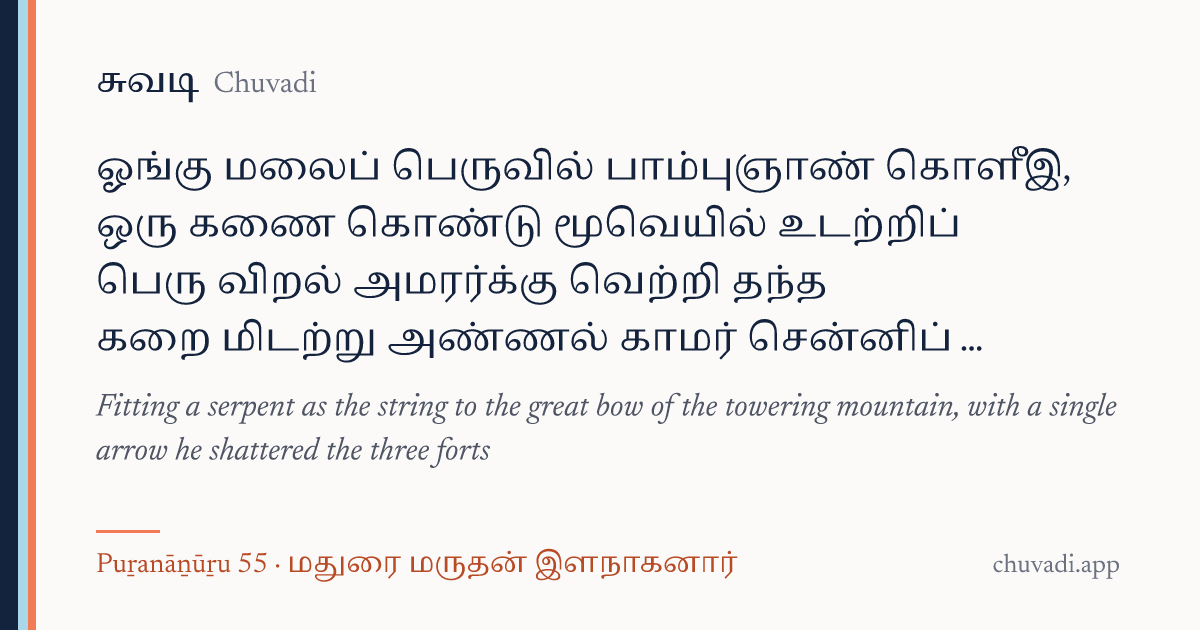
- Fitting a serpent as the string to the great bow of the towering mountain,
- with a single arrow he shattered the three forts
- and gave victory to the immortals of great might —
- the lord of the dark-stained throat; on his lovely head,
- like the single eye that shines on the forehead beneath the crescent,
- Māṟaṉ of the flowered garland, you stand above all kings!
- Killing elephants of fierce rage,
- spirited horses of swift pace,
- tall chariots with long banners,
- bold warriors with stout hearts who delight in war: though
- these four together are excellent, it is the excellent
- path of virtue that is the root of a kingdom's victory;
- so, not bending your sceptre because 'they are ours',
- not denying their merits because 'they are others',
- with a manliness of fierce strength like the sun,
- with a cool and gentle grace like the moon,
- with a generosity like the sky's rain, these three
- possessing, so that the needy are freed from want,
- may you live long, great one! In Centil of deep waters,
- where white-crested breakers pound,
- where Neṭuvēḷ abides, on its lovely wide shore,
- gathered and heaped by the fierce wind,
- more than the sand of the rippled dunes!
What the poem says
Maturai Marutaṉ Iḷanākaṉār addresses Pāṇṭiyaṉ Naṉmāṟaṉ, 'who died in the Ilavantikai pavilion'. It is a pāṭāṇ poem with the turai ceviyaṟivuṟūu, advice spoken to a king.
The opening is an elaborate comparison. The god with the dark-stained throat, Śiva, made a mountain his bow and a serpent its string, and with one arrow destroyed the three forts, winning victory for the gods. As the single eye on his forehead, beneath the crescent moon, stands out on his head, so Naṉmāṟaṉ stands out among kings.
Then the counsel. A king's army has four parts, elephants, horses, chariots and foot-soldiers, and the poet lists them. But however fine these are, a kingdom's victory rests on righteousness. So the king should never bend justice for his own people or deny the merits of outsiders. He should have three qualities: courage fierce as the sun, gentleness cool as the moon, and generosity like the rain.
The blessing at the end places the poem in Pāṇṭiya country: may he live more years than the grains of sand heaped by the wind at Centil, the seashore where Neṭuvēḷ, that is Murukaṉ, has his shrine. Line 18's இல்லோர் கையற is taken as 'so that the poor lose their helplessness', a slightly forced but common way of reading it.