



புறநானூறு 56
பாடல் · The poem
Tap a word to see where else it occurs.
பொருள் · Meaning in TamilAI
வெற்றிக்காகக் காளைக்கொடியை உயர்த்திய, நெருப்பைப் போல ஒளிரும் சடையும், எவராலும் தடுக்க முடியாத மழுவும், நீலமணி போன்ற கழுத்தும் உடையவனும்; கடலில் வளரும் புரிசங்கைப் போன்ற வெண்ணிற உடலும், கொல்லும் கொடிய கலப்பையும், பனைக்கொடியும் உடையவனும்; புதிதாகக் கழுவிய அழகிய நீலமணியைப் போன்ற உடலும், வானளாவ உயர்ந்த கருடக்கொடியும் உடைய வெற்றியை விரும்புபவனும்; அழகிய மயிலைக் கொடியாக உயர்த்திய, தோல்வியறியா வெற்றியுடைய, பிணிமுகம் என்னும் யானையை ஊர்தியாகக் கொண்ட செந்நிறத்தானும் ஆகிய, உலகத்தைக் காக்கும் வலிமையும் குன்றாத நல்ல புகழும் உடைய நால்வருள்ளும், தடுக்க முடியாத சினத்தில் நீ கூற்றுவனை ஒத்திருக்கிறாய்; வலிமையில் வெண்ணிறத்தோனை ஒத்திருக்கிறாய்; புகழில் இகழ்வோரை அழிப்பவனை ஒத்திருக்கிறாய்; எண்ணியதை முடிப்பதில் முருகனை ஒத்திருக்கிறாய். இவ்வாறு ஒவ்வொருவரையும் ஒவ்வொரு வகையில் ஒத்திருப்பதால், உனக்கு எங்கும் அரியது என்று ஏதேனும் உண்டோ? ஆகவே, இரவலர்க்கு அரிய அணிகலன்களைக் குறைவின்றி வழங்கி, யவனர் நல்ல கலங்களில் கொண்டுவந்த குளிர்ந்த மணமுள்ள மதுவை, ஒளிரும் வளையல் அணிந்த மகளிர் பொன்னால் செய்த அழகிய கிண்ணங்களில் ஏந்தி நாள்தோறும் ஊட்ட, மிக மகிழ்ந்து இனிதாக வாழ்வாயாக, உயர்த்திய வாளையுடைய மாறனே! அழகிய அகன்ற வானத்தின் அடர்ந்த இருளை நீக்கும் வெங்கதிர் ஞாயிற்றைப் போலவும், மேற்குத் திசையில் தோன்றும் குளிர்ந்த கதிர்களையுடைய திங்களைப் போலவும், உலகம் உள்ள அளவும் நீ நிலைபெற்று வாழ்வாயாக!
இது பாடாண் திணை, பூவை நிலைத் துறை: அரசனைத் தெய்வங்களோடு ஒப்பிட்டுப் புகழ்வது. பாடியவர் மதுரைக் கணக்காயனார் மகனார் நக்கீரனார்; மதுரை மருதன் இளநாகனார் என்றும் பாடம் உண்டு. பாடப்பட்டோன் பாண்டியன் இலவந்திகைப் பள்ளித் துஞ்சிய நன்மாறன். பாடல் தெய்வங்களின் பெயர்களைச் சொல்லாமல் அடையாளங்களால் சிவன், பலராமன், திருமால், முருகன் ஆகியோரைக் குறிக்கிறது. இருபத்து நான்காம் வரியில் உள்ள 'போல்வும்' என்பதைப் 'போலவும்' எனக் கொண்டோம்.
ஆங்கிலம் · English translationAI
Translation
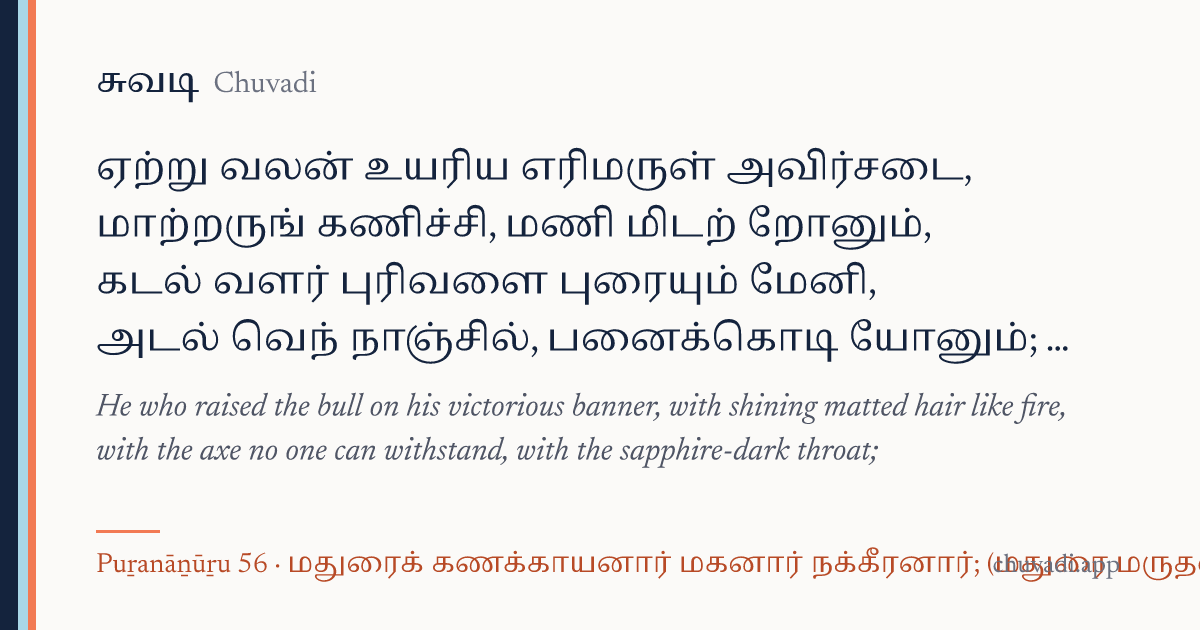
- He who raised the bull on his victorious banner, with shining matted hair like fire,
- with the axe no one can withstand, with the sapphire-dark throat;
- he whose body is like the twisted conch that grows in the sea,
- with the fierce, killing plough and the palmyra banner;
- he whose body is like a fine sapphire newly polished,
- with the bird banner that rises to the sky, eager for victory;
- he who raised the jewelled peacock, of unfailing victory,
- who rides the Piṇimukam, the shining red one: so,
- of these, with the strength that guards the world in its time,
- of unfading good fame, the four,
- you are like Death in fury no one can turn back;
- you are like the White One in strength;
- you are like the slayer of scorners in fame;
- you are like Murukaṉ, for you achieve what you intend;
- since you are like each of them in their own way, anywhere
- is anything too hard for you? And so,
- giving rare treasures to suppliants without stint,
- the cool, fragrant wine that the Yavanas brought in fine jars,
- held up in cups of worked gold, every day
- as women with bright bangles pour it for you, rejoicing greatly,
- live on sweetly so! Māṟaṉ of the lifted sword!
- Like the lord of hot rays who drives away
- the thick darkness of the lovely wide sky, and, in the west,
- like the moon of cool rays,
- may you stand and endure, along with the world!
What the poem says
Nakkīraṉār, son of Maturaik Kaṇakkāyaṉār (another reading gives Maturai Marutaṉ Iḷanākaṉār), sings to Pāṇṭiyaṉ Naṉmāṟaṉ. The tiṇai is pāṭāṇ and the turai pūvai nilai, a kind of praise in which the king is likened to gods.
The first ten lines describe four gods by their emblems without naming them, though the attributes make clear who is meant: the god with the bull banner, fiery matted hair, the axe and the dark throat (Śiva); the white-bodied god with the plough and palmyra banner (Balarāma, the 'White One'); the sapphire-bodied god with the bird (Garuḍa) banner (Tirumāl); and the red god with the peacock who rides the elephant Piṇimukam (Murukaṉ). These four guard the world.
The king resembles each: Śiva in fury, Balarāma in strength, Tirumāl in fame, Murukaṉ in always accomplishing what he sets out to do. So nothing is beyond him. The poet therefore urges him to give rare treasures freely to suppliants, and to enjoy the cool, scented wine the Yavanas bring in fine jars, poured daily into golden cups by women with bright bangles. 'Yavanas' were foreign traders from the west; the poem says only that they brought the wine.
The poem closes with a wish that he may last as long as the sun and the moon. In line 11 Śiva's fury is compared to Kūṟṟu, Death; in line 24 the edition's போல்வும் is read as போலவும் 'and like'.