



புறநானூறு 57
பாடல் · The poem
Tap a word to see where else it occurs.
பொருள் · Meaning in TamilAI
திறமை இல்லாதவர்களானாலும் திறமையுடையவர்களானாலும், உன்னைப் புகழ முற்படுவோர் அனைவருக்கும் நீ திருமாலைப் போன்றவன், சொல்லுக்கு அடங்காத சிறப்பும் புகழும் உடைய மாறனே! உன்னிடம் சொல்ல ஒன்று என்னிடம் உண்டு; அது என்னவென்றால்: நீ பிறருடைய நாட்டைக் கைப்பற்றும்போது, அவர்கள் நாட்டில் கதிர்கள் சாய்ந்த வயல்களை உன் இளைய வீரர்கள் கொள்ளையிடட்டும்; அகன்ற இடமுடைய பெரிய ஊர்களை நெருப்பு அழிக்கட்டும்; மின்னல் நிமிர்ந்தது போன்ற ஒளிரும் உன் நீண்ட வேல் பகைவரைக் கொன்றால் கொல்லட்டும்; ஆனால் எப்படியாயினும் அவர்களுடைய காவல் மரங்களை வெட்டுவதை மட்டும் தவிர்! அவை உன் உயர்ந்த நல்ல யானைகளைக் கட்டும் தறிகளாகப் பயன்படமாட்டா.
இது வஞ்சித் திணை, துணை வஞ்சித் துறை: பகைநாட்டின் மேல் படையெடுக்கும் அரசனிடம் புலவர் இடையிட்டுப் பேசுவது. பாடியவர் காவிரிப்பூம்பட்டினத்துக் காரிக்கண்ணனார்; பாடப்பட்டோன் பாண்டியன் இலவந்திகைப் பள்ளித் துஞ்சிய நன்மாறன். பதினோராம் வரியில் உள்ள 'நெடுதல்' என்பதை 'நெடுநல்' எனக் கொண்டோம். காவல் மரத்தை வெட்டக் கூடாது என்பதற்குச் சொல்லப்படும் காரணத்தின் நுட்பம் உறுதியாகத் தெரியவில்லை.
ஆங்கிலம் · English translationAI
Translation
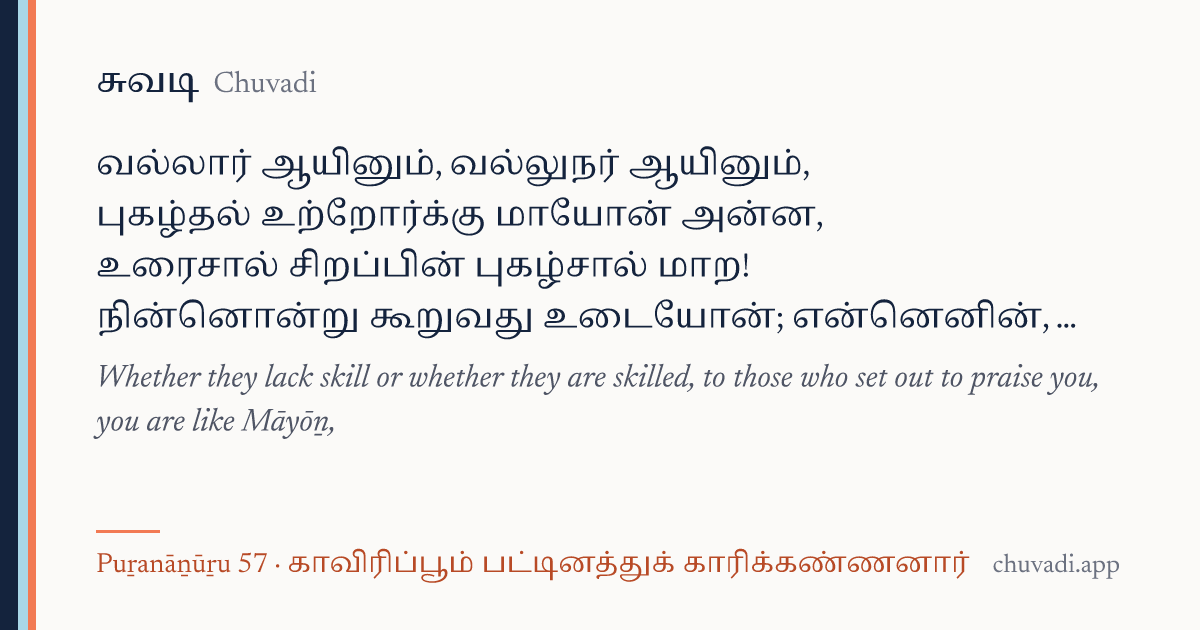
- Whether they lack skill or whether they are skilled,
- to those who set out to praise you, you are like Māyōṉ,
- Māṟaṉ of renown, with an excellence worthy of all words!
- I have one thing to say to you; and what is it?
- You, when you take the lands of others, in their country
- let your young men plunder the fields of drooping grain;
- let fire consume their great towns with wide spaces;
- let your long, gleaming spear, like lightning shooting up,
- kill your enemies, if it will kill; but at all costs
- spare their guarded trees from the axe! For your
- tall, fine elephants they will not serve as tethering posts.
What the poem says
Kāvirippūmpaṭṭiṉattuk Kārikkaṇṇaṉār addresses Pāṇṭiyaṉ Naṉmāṟaṉ while he is invading another king's land. The tiṇai is vañci, the invasion of enemy country, with the turai tuṇai vañci, a poet's intervention in the course of war.
The opening is a compliment: to everyone who praises him, skilled poet or not, the king is like Māyōṉ (Tirumāl), gracious to all.
Then the request. The poet does not ask him to stop the war. Let his soldiers seize the ripe fields; let fire destroy the enemy's towns; let his spear kill his enemies if it must. But he must not cut down their kaṭimaram, the guarded trees that a ruler protected as emblems of his power. The reason given in the last line is practical, even teasing: those trees will not make tethering posts strong enough for his great elephants. Felling the guardian tree was the usual way to humiliate a defeated king (compare poem 36); the poet asks the king to refrain.
In line 11 the edition's நெடுதல் is read as நெடுநல் 'tall and fine'. The exact force of the closing reason is not certain; it may also mean that the trees are unworthy of such use.