



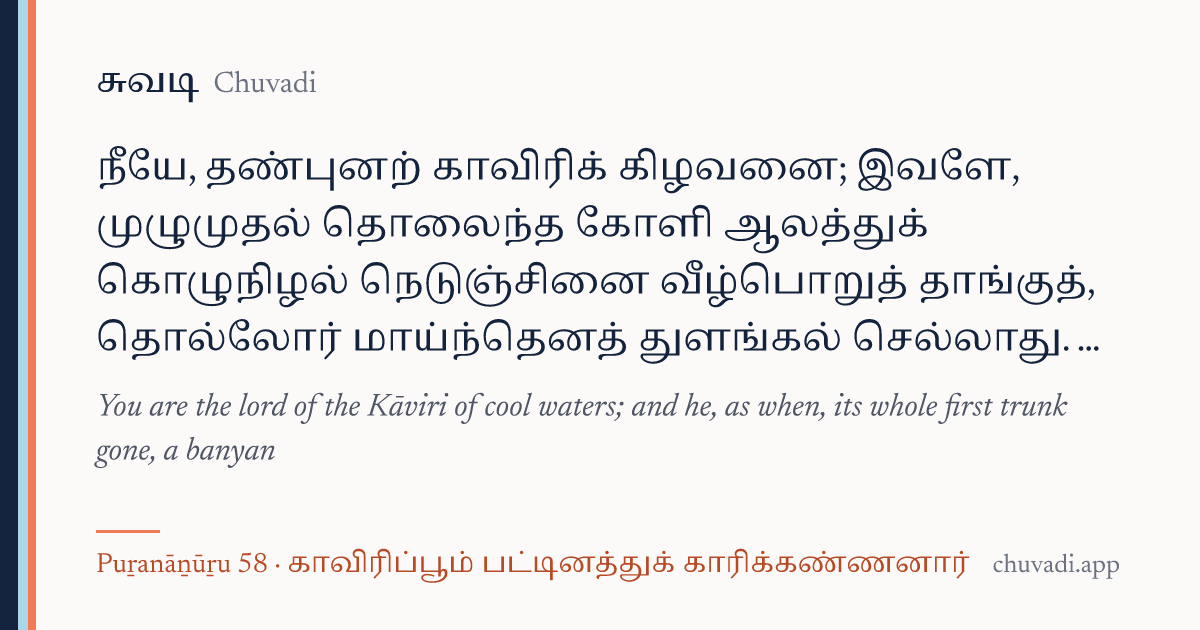
புறநானூறு 58
பாடல் · The poem
Tap a word to see where else it occurs.
பொருள் · Meaning in TamilAI
நீ குளிர்ந்த நீரையுடைய காவிரியின் தலைவன். இவனோ, முழு அடிமரமும் அழிந்து போன ஆலமரத்தை, அதன் கொழுத்த நிழலுடைய நீண்ட கிளைகளிலிருந்து இறங்கிய விழுதுகள் தாங்குவது போல, முன்னோர் இறந்துபோனாலும் தளராமல், நல்ல புகழுடைய பழைய குடியை நடுக்கமின்றிக் காத்து நிற்பவன்; இளையவனானாலும் பாம்பையும் அதன் கிளையையும் தாக்கும் அச்சம் தரும் இடியைப் போலச் செருக்குடையவர்களைப் பொறுக்காத, போரில் சிறந்த பஞ்சவர்களின் காளை போன்றவன். நீ அறம் நிலைபெற்ற உறந்தையின் வீரத் தலைவன். இவனோ, நெல்லும் நீரும் எல்லோருக்கும் எளிதாகக் கிடைப்பவை என்பதால், மலையில் விளையும் சந்தனத்தையும் கடல் அலைகள் தரும் முத்தையும் கொண்டு, முழங்கும் மூன்று முரசுகளோடு ஆளும், தமிழ் நிறைந்த கூடல் நகரின் குளிர்ந்த செங்கோல் வேந்தன். பால்நிற உடலும் பனைக்கொடியும் உடையவனும், நீலநிற உடலும் சக்கரமும் உடையவனும் ஆகிய இரு பெருந்தெய்வங்களும் ஒன்றாக நிற்பது போல, அச்சம் தரும் அழகிய தோற்றத்தோடு விளங்கும் நீங்கள் இவ்வாறு இருப்பதைவிட இனியது வேறு உண்டோ? இன்னும் கேளுங்கள்; உங்கள் புகழ் வாழ்வதாக! ஒருவருக்கொருவர் உதவுங்கள். நீங்கள் இருவரும் ஒன்றுபட்டு நிற்கும் நிலையிலிருந்து மாறாமல் இருந்தால், ஒலிக்கும் அலைகளையுடைய கடலை ஆடையாக உடுத்த வளமான இப்பெருநிலம் உங்கள் கைக்கு வருவது பொய்யாகாது. ஆகவே, நல்லவர்களைப் போலவும், அன்புடையவர்களைப் போலவும், முன்னோர் சென்ற வழியில் செல்பவர்களைப் போலவும், உங்கள் நட்பு அன்பு நெஞ்சத்தோடு அமையட்டும். மீண்டும் மீண்டும் வென்று, போர்க்களத்தில் உங்கள் வேல்கள் உயர்க! வளைந்த வரிகளையுடைய புலியின் வடிவாகச் செதுக்கிய, தொலைவில் விளங்கும் பொறிச்சின்னம், ஆழ்ந்த நீரில் வாழும் கெண்டை மீனோடு சேர்ந்து, பிறருடைய மலைகள் நிறைந்த நாடுகளின் உச்சிகளில் பொறிக்கப்படுவனவாக!
இது பாடாண் திணை, உடனிலைத் துறை: இரு வேந்தர் ஒன்றுகூடி இருப்பதைப் பாடுவது. பாடியவர் காவிரிப்பூம்பட்டினத்துக் காரிக்கண்ணனார்; பாடப்பட்டோர் சோழன் குராப்பள்ளித் துஞ்சிய பெருந்திருமாவளவனும் பாண்டியன் வெள்ளியம்பலத்துத் துஞ்சிய பெருவழுதியும். புலி சோழரின் சின்னம், கெண்டை மீன் பாண்டியரின் சின்னம். ஆறு, ஏழாம் வரிகளில் உள்ள 'அருநரை', 'பெருநரை' என்னும் சொற்களின் பொருள் உறுதியாகத் தெரியவில்லை; 'மூன்று முரசு' என்பதற்குப் பாடல் விளக்கம் தரவில்லை. முதல் வரியில் உள்ள 'இவளே' என்பதை 'இவனே' எனக் கொண்டோம்.
ஆங்கிலம் · English translationAI
Translation
- You are the lord of the Kāviri of cool waters; and he,
- as when, its whole first trunk gone, a banyan
- is held up by the roots let down from its long branches of rich shade,
- though his elders have died, he has not wavered,
- but holds his ancient house of good fame firm and unshaken,
- young though he is, like the thunder that strikes the serpent and its kin,
- the dread thunder, not bearing the proud,
- is the bull of the Pañcavar, glorious in war; you
- are the warrior lord of Uṟantai where virtue rests; and he,
- since rice and water are easy for everyone,
- with sandal from the hills and pearls from the waves,
- ruling together with the three drums of booming voice,
- is the cool-sceptred king of Kūṭal full of Tamil;
- the one with the milk-white body and the palmyra banner,
- and the one with the dark-blue body who bears the wheel: so,
- as these two great gods stand together,
- shining with an awesome look that brings fear,
- since you are thus, could anything be sweeter?
- Hear more still; may your fame live long!
- Each of you, help the other; if you two
- never turn from standing together, this
- rich great earth, girdled by the sea of roaring waves,
- coming into your hands will not prove false;
- therefore, as good men do, as loving men do,
- as men who keep to the path the ancients walked,
- let your union be one of loving hearts; winning and winning,
- may your spears stand high on the field of slaughter; may the curve-striped
- tiger's far-shining emblem, carved and set in place,
- with the keṇṭai fish of deep waters engraved beside it,
- crown the hill-filled lands of others!
What the poem says
Kāvirippūmpaṭṭiṉattuk Kārikkaṇṇaṉār addresses two kings at once: Cōḻaṉ Perunthirumāvaḷavaṉ, 'who died at Kurāppaḷḷi', and Pāṇṭiyaṉ Peruvaḻuti, 'who died at Veḷḷiyampalam'. The tiṇai is pāṭāṇ and the turai uṭaṉilai, 'standing together': a poem on two kings united.
The poet speaks to the Cōḻa and points to the Pāṇṭiya. The Cōḻa is lord of the Kāviri and of Uṟantai, 'where virtue rests'. The Pāṇṭiya, though young, has held his ancient house steady after his elders died, as a banyan whose main trunk has gone is held up by its own aerial roots; he is like thunder that strikes a serpent with all its brood, and a 'bull of the Pañcavar' (a name of the Pāṇṭiyas). He rules Kūṭal (Maturai), city of Tamil, rich in mountain sandal and sea pearls as well as the rice and water everyone has.
Together the two kings look like the two great gods standing side by side, the white god with the palmyra banner (Balarāma) and the dark god with the wheel (Tirumāl). Then comes the advice: help each other, never break apart, and the whole sea-girdled earth will surely be yours. Let the Cōḻa tiger and the Pāṇṭiya fish be carved together on the hills of other kings' lands.
Lines 6–7 are compressed and the sense of அருநரை and பெருநர் is uncertain. Line 12's 'three drums' is not explained in the poem. In line 1 the edition prints இவளே 'she'; it is read as இவனே 'he', since the Pāṇṭiya king is meant.