



புறநானூறு 59
பாடல் · The poem
Tap a word to see where else it occurs.
பொருள் · Meaning in TamilAI
முத்துமாலை தொங்கும் அழகிய ஒளிரும் மார்பும், முழந்தாள் வரை நீண்ட பெரிய கைகளும் உடைய, பெருமை மிக்க வழுதியே! அன்போடு கொடுப்பதில் நீ உண்மையாகவே வல்லவன்! பெருமானே, நீ பொய்யை அறியாதவன். உன் பகைவர்களுக்கு, எப்போதும் கொடிய சினம் தணியாமல் கடலின் மேல் எழுந்து வரும் ஞாயிற்றைப் போன்றவன் நீ; எங்களைப் போன்றவர்களுக்கோ, குளிர்ந்த திங்களைப் போன்றவன்.
இது பாடாண் திணை, பூவை நிலைத் துறை: அரசனைச் சிறந்த பொருள்களோடு ஒப்பிட்டுப் புகழ்வது; இங்கே ஞாயிறும் திங்களும் ஒப்புமைகள். பாடியவர் மதுரைக் கூலவாணிகன் சீத்தலைச் சாத்தனார்; பாடப்பட்டோன் பாண்டியன் சித்திரமாடத்துத் துஞ்சிய நன்மாறன். 'தேற்றாய் பொய்யே' என்பதைப் 'பொய்யை நீ அறியாய்' என்று கொண்டோம்; வேறு பொருளும் கொள்ள இடமுண்டு.
ஆங்கிலம் · English translationAI
Translation
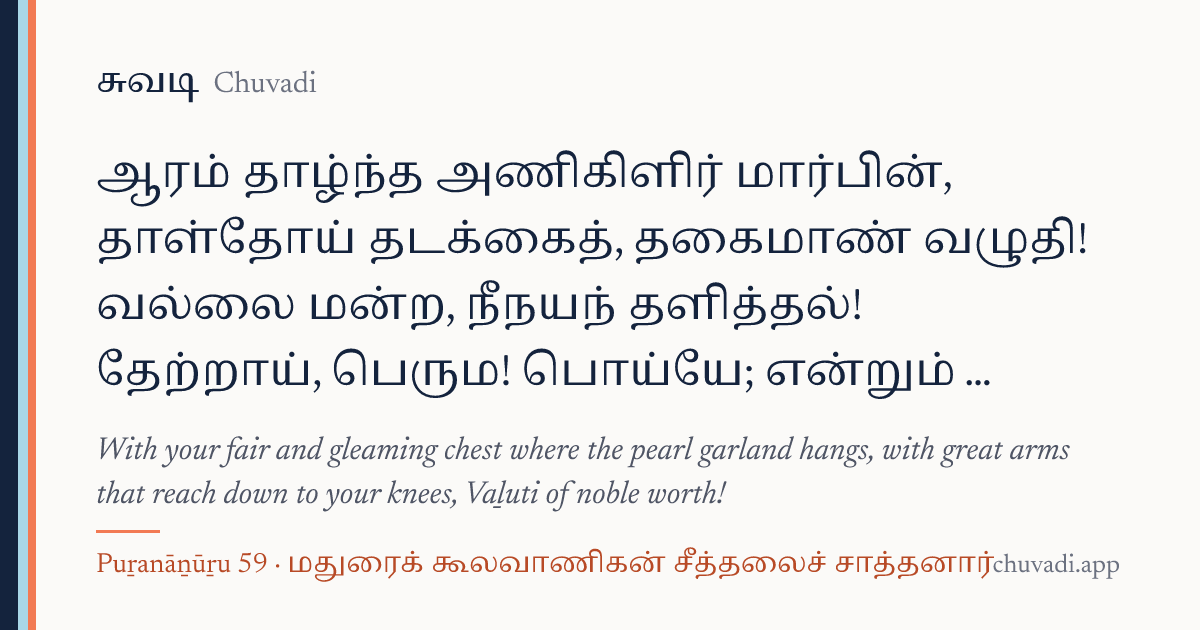
- With your fair and gleaming chest where the pearl garland hangs,
- with great arms that reach down to your knees, Vaḻuti of noble worth!
- You are surely skilled at giving with love!
- Falsehood, great one, you do not know; always
- never cooling your burning rage, rising as you ride over the sea,
- you are like the sun to your enemies;
- you are like the moon to people like us.
What the poem says
Maturaik Kūlavāṇikaṉ Cīttalaic Cāttaṉār, 'the grain merchant of Maturai', praises Pāṇṭiyaṉ Naṉmāṟaṉ, 'who died in the Cittiramāṭam'. The colophon gives pāṭāṇ with the turai pūvai nilai, a form of praise that likens the king to something divine or great; here the comparison is to the sun and the moon.
The poem is short and balanced. It begins with the king's physical splendour: a gleaming chest hung with a pearl necklace, and long arms that reach his knees, a traditional sign of greatness. He is generous and knows no deceit.
The closing pair of images gives the poem its point. To his enemies he is the sun that rises out of the sea with unrelenting heat; to poets and dependants like the speaker he is the cool moon. The same king is felt very differently according to which side one stands on.
Line 4's தேற்றாய் பொய்யே is read as 'you do not know falsehood'. It could also be heard as the poet saying that any charge against the king is false; the first reading fits the praise better.