



புறநானூறு 60
பாடல் · The poem
Tap a word to see where else it occurs.
பொருள் · Meaning in TamilAI
கடலின் நடுவில் தோன்றும் மீன்படகின் விளக்கைப் போல, செம்மீன் மின்னும் பரந்த வானத்தின் உச்சியில் நின்ற முழுநிலவைக் கண்டு, காட்டில் வாழும் மயில்களைப் போலப் பாலைவழியின் தொடக்கத்தை அடைந்திருந்த, சில வளையல்களை அணிந்த விறலியும் நானும் மிக விரைந்து அதைப் பலமுறை வணங்கினோம் அல்லவா? கடற்கரைக் கழியில் விளைந்த உப்பை அள்ளி மலைநாட்டுக்குக் கொண்டு செல்லும் ஆரக்கால் வண்டி சேற்றில் ஆழ்ந்தபோது அதை இழுத்து வெளியே கொண்டுவரும் வலிமையும் பொறுமையும் உடைய காளையைப் போன்றவன் எம் தலைவன்; வெற்றி முழங்கும் முரசும் தவறாத வாளும் உடைய வளவன். வெயிலை மறைப்பதற்காக ஏந்திய, அச்சம் தரும் சிறப்புடைய, மாலை சூட்டிய அவனுடைய வெண்கொற்றக்குடையை அந்நிலவு ஒத்திருந்ததால்தான் அப்படி வணங்கினோம்!
இது பாடாண் திணை, குடை மங்கலத் துறை: அரசனின் வெண்கொற்றக் குடையைப் புகழ்வது. பாடியவர் உறையூர் மருத்துவன் தாமோதரனார்; பாடப்பட்டோன் சோழன் குராப்பள்ளித் துஞ்சிய பெருந்திருமாவளவன். 'செம்மீன்' என்பது எந்த விண்மீன் என்று பாடல் சொல்லவில்லை.
ஆங்கிலம் · English translationAI
Translation
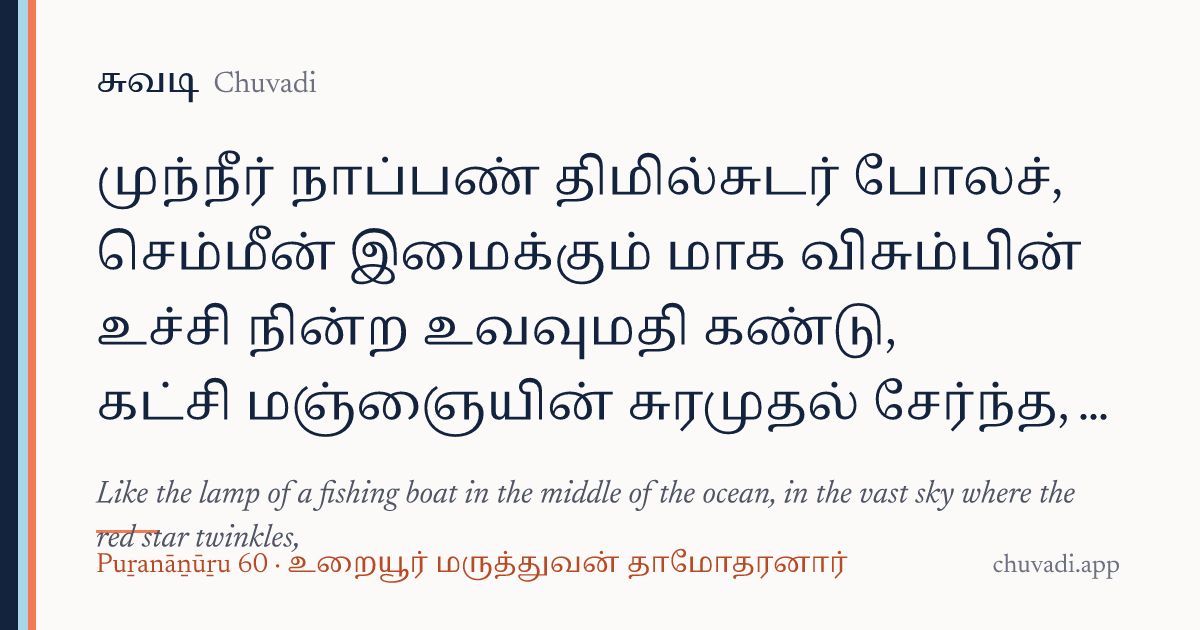
- Like the lamp of a fishing boat in the middle of the ocean,
- in the vast sky where the red star twinkles,
- seeing the full moon that stood at the zenith,
- like peacocks of the forest, having reached the edge of the wasteland,
- the viṟali with her few bangles and I, in great haste,
- did we not worship it, many times over? — Seaside
- salt from the backwaters they load and carry to the hill country;
- pulling the spoked cart out where it has sunk deep,
- like a strong, enduring ox is our lord,
- Vaḷavaṉ of the true sword and the drum that thunders victory;
- with its awesome splendour, held to keep off the sun,
- his garlanded white parasol it resembles — that is why!
What the poem says
Uṟaiyūr Maruttuvaṉ Tāmōtaraṉār, 'the physician', sings to Cōḻaṉ Perunthirumāvaḷavaṉ. The tiṇai is pāṭāṇ and the turai kuṭai maṅkalam, praise of the king's royal parasol, the white umbrella that stood for his protective rule.
The poem is a small scene from a journey. The poet and a viṟali, a woman singer of his troupe, reach the edge of a wasteland at night. They look up and see the full moon high in the sky, among the twinkling stars, shining like a fishing boat's lamp in the middle of the sea. Like forest peacocks, they hurry to bow to it, again and again.
Why worship the moon? The answer is held back to the last line: because it looks like the king's white parasol, garlanded and splendid, raised to shade his people. Between question and answer the poet places a rural image for the king himself: he is like the strong ox that hauls the salt-merchants' cart out of the mud when its spoked wheels sink on the road from the coast to the hills. The king is the one who pulls his people through.
The 'red star' (செம்மீன்) in line 2 is not identified in the poem; it may simply be a bright reddish star or planet.