



புறநானூறு 62
பாடல் · The poem
Tap a word to see where else it occurs.
பொருள் · Meaning in TamilAI
வந்து தாக்கும் முன்படையைத் தாங்கி நின்றபின், இருவரில் யார் போரில் வெல்ல முடியும்? அங்கே போரிட்டு வீழ்ந்த வீரர்களின் புண்களைத் தொட்டு, இரத்தம் படிந்து சிவந்த கைகளால் தங்கள் கூந்தலைத் தடவிக்கொண்டு, ஒளிரும் நிறமுடைய பேய்ப் பெண்கள், மீண்டும் மீண்டும் அடிக்கப்படும் மெதுவான பறையின் தாளத்துக்கு ஆடுகின்றனர். பருந்துகள் தின்னும்படி வீழ்ந்த படைகளோடு, போரில் சினந்து, போர் முறைப்படி பாய்ந்த வீரம் மிக்க வேந்தர்கள் தாங்களே இறந்தனர்; அவர்களின் குடைகள் சாய்ந்தன; புகழ்பெற்ற சிறப்புடைய முரசுகள் ஓசை அடங்கின. பல நூறாக அடுக்கி நின்ற பலவகை மக்கள் கூட்டம் இடமில்லாமல் நெருங்கியிருந்த அகன்ற பாசறையில், களத்தைக் கைக்கொள்ள ஒருவரும் இல்லாமல், அச்சம் தரும்படி எல்லாரும் ஒன்றாக வீழ்ந்தனர்; இதுவே இந்தப் போர்! அவர்களின் மனைவியரும் பச்சை இலை உணவை உண்ணாமல், குளிர்ந்த நீரில் மூழ்காமல், கணவரின் மார்பைத் தழுவி அங்கேயே அடங்கினர். வாடாத மலர்மாலையும் இமைக்காத கண்களும் உடைய, நறுமணத்தையே உணவாகக் கொள்ளும் தேவர்களும், பெறுவதற்கு அரிய தம் உலகம் நிறையும்படி மிகுதியாக விருந்தினரைப் பெற்றனர். உங்கள் புகழ் விளங்குவதாக!
இது தும்பைத் திணை, அதாவது போர்க்களத்தைப் பாடுவது; துறை தொகை நிலை, இரு படைகளும் ஒருசேர அழிந்த நிலையைக் கூறுவது. பாடியவர் கழாத்தலையார்; பாடப்பட்டோர் சேரமான் குடக்கோ நெடுஞ்சேரலாதனும், சோழன் வேற்பஃறடக்கைப் பெருவிறற்கிள்ளியும். 'அனந்தல் பறை' என்பதன் சரியான பொருள் உறுதியாகத் தெரியவில்லை; மெதுவான தாளமுடைய பறை எனக் கொண்டோம்.
ஆங்கிலம் · English translationAI
Translation
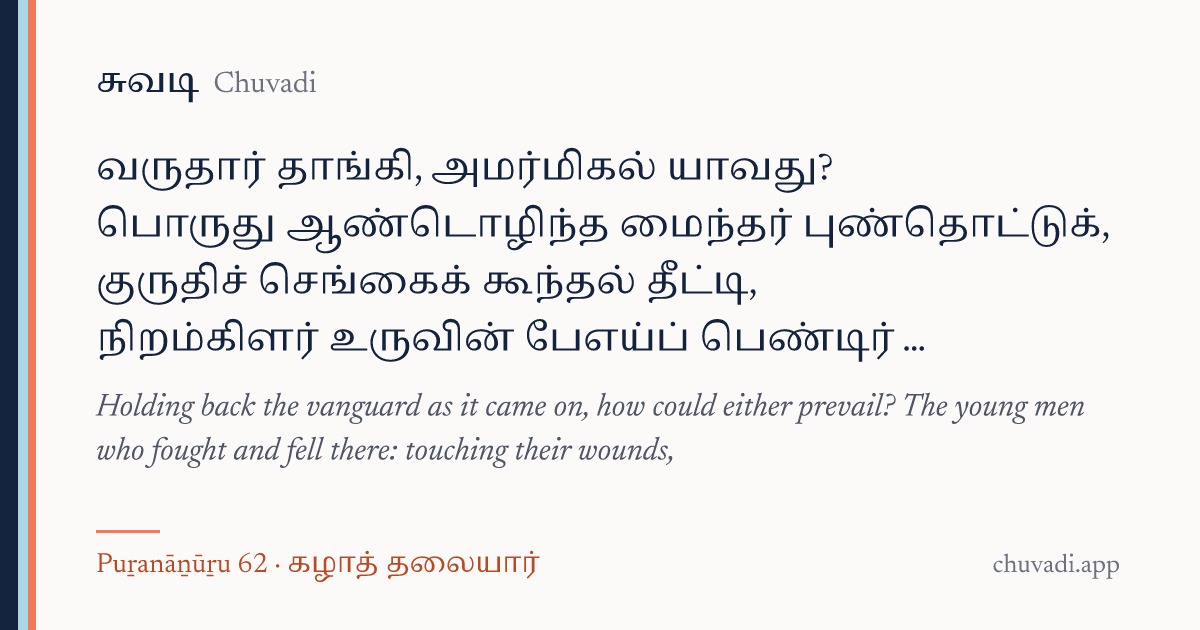
- Holding back the vanguard as it came on, how could either prevail?
- The young men who fought and fell there: touching their wounds,
- with hands made red by the blood, smoothing their hair,
- the demon women, their bodies a blaze of colour,
- sway to the measure of the slow drum struck and struck again;
- with their armies on which the kites have fed, raging in the fight,
- the kings of fierce war who charged as the rule of battle bids
- have themselves perished; their umbrellas have toppled;
- the drums of famous distinction have fallen still;
- the many hundreds, ranked in their different crowds,
- who thronged till there was no room in the broad camp,
- with no one left to take the field, in a terrible way,
- have fallen all together: such is this battle! And the wives,
- who will not eat green leaves, will not plunge into cold water,
- have settled there, close against their husbands' breasts.
- Those of unwithering flowers and unblinking eyes,
- whose food is fragrance, they too, in full measure,
- filling their hard-won world,
- have gained guests! May your fame flourish!
What the poem says
Kaḻāttalaiyār addresses two kings who have destroyed each other in a single battle: the Cēra Kuṭakkō Neṭuñcēralātaṉ and the Cōḻa Vēṟpaḵṟaṭakkaip Peruviṟaṟkiḷḷi, both named in the colophon. The tiṇai is tumpai, the poetry of battle itself, and the turai tokai nilai describes a field where both sides fall together, with no victor left to claim it.
The opening question sets the tone: when each held the other's advance, what winning could there be? The poet then lays out the field: demon women dabbing the dead men's wounds and dressing their hair with bloody hands, dancing to the drum; kites feeding on the armies; royal umbrellas fallen and drums silent; a vast, crowded camp left with no one to take possession of it. The wives refuse the widow's diet of greens and the ritual bath and instead lie on their husbands' breasts, which reads as their dying with them.
The last lines turn grimly ironic. The gods, described by their traditional marks of unfading garlands, unblinking eyes and food of fragrance, have gained a crowd of guests in their heaven. 'May your fame flourish' is both a blessing and a bitter close.
Line 5 (anantal paṟai, a drum of slow or drowsy beat) is not entirely clear.