



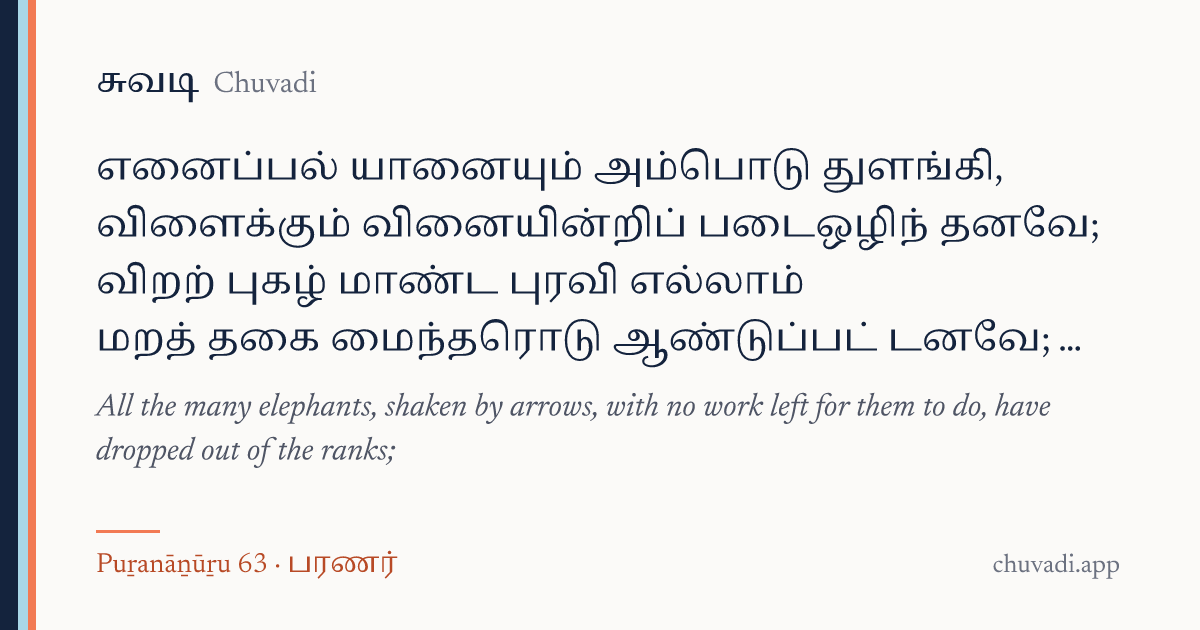
புறநானூறு 63
பாடல் · The poem
Tap a word to see where else it occurs.
பொருள் · Meaning in TamilAI
பலவகையான யானைகள் எல்லாம் அம்புகளால் நிலைகுலைந்து, செய்வதற்குச் செயல் ஏதும் இல்லாமல் படைவரிசையிலிருந்து நீங்கின. வெற்றியும் புகழும் மிக்க குதிரைகள் எல்லாம் வீரம் நிறைந்த வீரர்களோடு அங்கேயே வீழ்ந்தன. தேரில் ஏறி வந்த சான்றோர்கள் எல்லாம் கேடயங்கள் தங்கள் கண்களை மறைக்க, ஒருசேர இறந்தனர். வாரால் இறுக்கிக் கட்டப்பட்டு நன்கு செய்யப்பட்ட, மயிர் நீக்காத தோலால் ஆன முரசுகள், சுமந்து செல்வார் ஒருவரும் இல்லாததால், இருந்த இடத்திலேயே ஓசை அடங்கிக் கிடக்கின்றன. சந்தனம் பூசிய மார்பில் நீண்ட வேல்கள் பாய்ந்ததால், வேந்தர்களும் போரிட்டுக் களத்திலேயே மாண்டனர். இனி என்ன ஆகுமோ அவர்களின் நாடு? வயல்களில், ஆம்பல் தண்டால் செய்த வளையல் அணிந்த கைகளையுடைய பெண்கள் பசுமையான அவலை வாய் நிறைய உண்டு, குளிர்ந்த நீரில் பாய்ந்து விளையாடும், வளம் என்றும் குறையாத ஊர்களையுடைய, அழகாகப் பரந்து கிடக்கும் அவர்களின் அகன்ற நாடு இனி என்ன ஆகும்?
இதுவும் தும்பைத் திணை; துறை தொகை நிலை, இரு பக்கப் படைகளும் வேந்தர்களும் ஒருசேர அழிந்ததைக் கூறுவது. பாடியவர் பரணர்; பாடப்பட்டோர் சோழன் வேற்பஃறடக்கைப் பெருவிறற்கிள்ளியும் சேரமான் குடக்கோ நெடுஞ்சேரலாதனும். போர்க்களத்தின் அழிவைக் கூறிய பின், புலவர் போரில் தொடர்பில்லாத நாட்டு மக்களின் எதிர்காலத்தை எண்ணி வருந்துகிறார்.
ஆங்கிலம் · English translationAI
Translation
- All the many elephants, shaken by arrows,
- with no work left for them to do, have dropped out of the ranks;
- all the horses, of proven might and fame,
- have fallen there together with their valiant riders;
- all the noble men who came carried on chariots
- have perished together, their shields covering their eyes;
- the drums with hair on their faces, tight-laced and finely made,
- having no one to bear them, have stayed where they were, silenced;
- as long spears plunged into chests smeared with sandal paste,
- the kings too, fighting, have ended on the field; and now
- what will become of it? Where in the fields
- women with bangles of water-lily stalk on their arms
- cram their mouths with fresh-pounded rice and leap into cool water,
- in its settlements where plenty never fails,
- that lovely, spreading, wide country of theirs?
What the poem says
Paraṇar sings over the same battle as the previous poem, in which the Cōḻa Vēṟpaḵṟaṭakkaip Peruviṟaṟkiḷḷi and the Cēra Kuṭakkō Neṭuñcēralātaṉ both fell. It too is tumpai, battle poetry, with the turai tokai nilai, the mutual destruction of both armies.
The poem is built as a roll-call of loss, each line ending in a flat statement that something is gone: the elephants useless and out of the line, the horses dead with their riders, the chariot warriors fallen with their shields across their faces, the great drums with no one left to carry them, and at last the two kings themselves, speared through their sandal-smeared chests.
Then the poet looks away from the field to the countryside the kings ruled. He pictures ordinary pleasures: village girls with water-lily stalks twisted into bangles, stuffing their mouths with fresh flattened rice and jumping into cool water, in a land of unfailing plenty. The closing question, what will become of that land now, leaves the cost of the battle with those who did not fight it.
'Their' in the last line is plural, so the land seems to be that of both kings.