



புறநானூறு 64
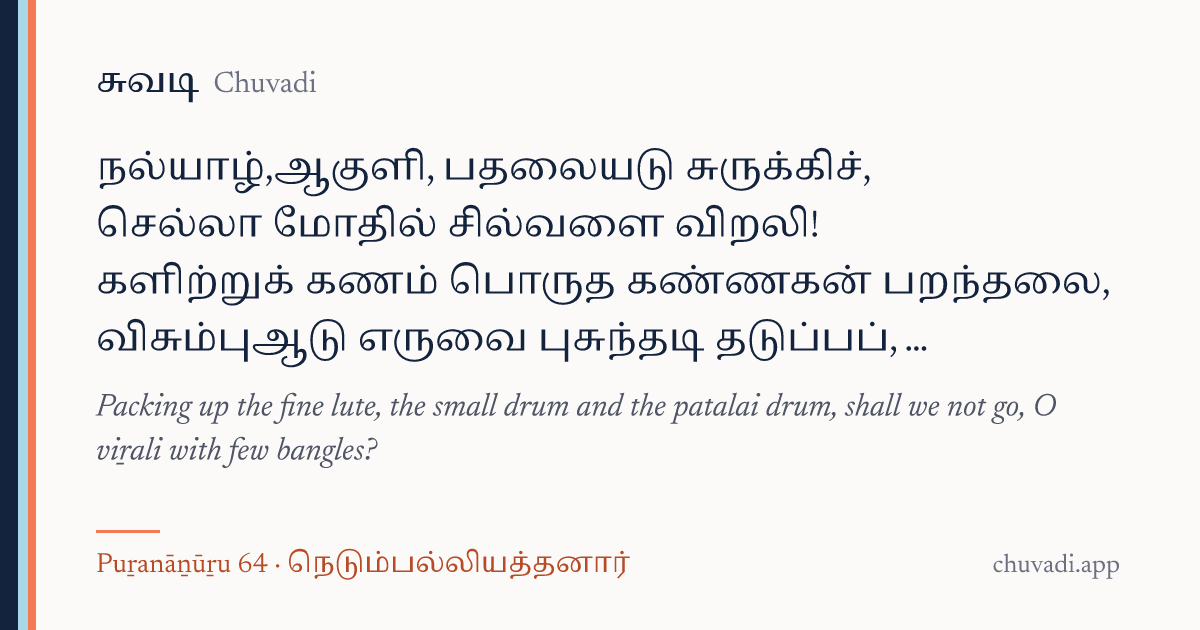
பாடல் · The poem
Tap a word to see where else it occurs.
பொருள் · Meaning in TamilAI
சில வளையல்களையே அணிந்த விறலியே! நல்ல யாழையும் ஆகுளி என்னும் சிறுபறையையும் பதலை என்னும் பறையையும் கட்டிக்கொண்டு செல்வோமா? யானைக் கூட்டங்கள் மோதிய அகன்ற போர்க்களத்தில், வானில் சுற்றும் கழுகுகள் பசுமையான தசையில் தங்கியிருக்க, பகைவரின் நாட்டிலேயே தங்கியிருக்கும் பெருமையும் சிறப்பும் மிக்க குடுமி என்னும் அரசனைக் கண்டு, நீர் மிகுந்த கூழை இனி விட்டுவிட்டு வருவதற்காக நாம் செல்வோமா?
இது பாடாண் திணை, புரவலனைப் புகழ்வது; துறை விறலியாற்றுப்படை, கொடையாளனிடம் செல்லும் வழியை விறலிக்குக் காட்டுவது. பாடியவர் நெடும்பல்லியத்தனார்; பாடப்பட்டோன் பாண்டியன் பல்யாகசாலை முதுகுடுமிப் பெருவழுதி. 'புசுந்தடி' என அச்சில் இருப்பதைப் 'பசுந்தடி' எனக் கொண்டோம்.
ஆங்கிலம் · English translationAI
Translation
- Packing up the fine lute, the small drum and the patalai drum,
- shall we not go, O viṟali with few bangles?
- On the wide battlefield where herds of tuskers clashed,
- where the vultures that wheel in the sky are held by fresh flesh,
- the one of great and noble distinction who has settled in the land of his enemies,
- Kuṭumi the king, seeing him,
- so that we may come away leaving behind our watery gruel?
What the poem says
The colophon gives this to Neṭumpalliyattaṉār, singing of the Pāṇṭiya king Palyākacālai Mutukuṭumip Peruvaḻuti, 'of the many sacrificial halls'. The tiṇai is pāṭāṇ, praise of a patron, and the turai viṟali āṟṟuppaṭai, a guiding poem in which a poet directs a viṟali, a woman singer and dancer of the bardic troupe, to a generous patron.
The speaker urges the viṟali to fold up their instruments, the lute, the small ākuḷi drum and the patalai drum, and set out for the battlefield where the king Kuṭumi is camped deep in enemy land, a field where elephant herds have fought and vultures gorge on fresh meat. Seeing him will mean an end to their thin, watery gruel. The contrast between the bards' poverty and the king's wealth is the usual engine of the āṟṟuppaṭai. (Project Madurai's text opens with nine lines that repeat puram.326; they are left out here.)
In line 4 the edition prints pucuntaṭi; the reading taken is pacuntaṭi, fresh flesh.