



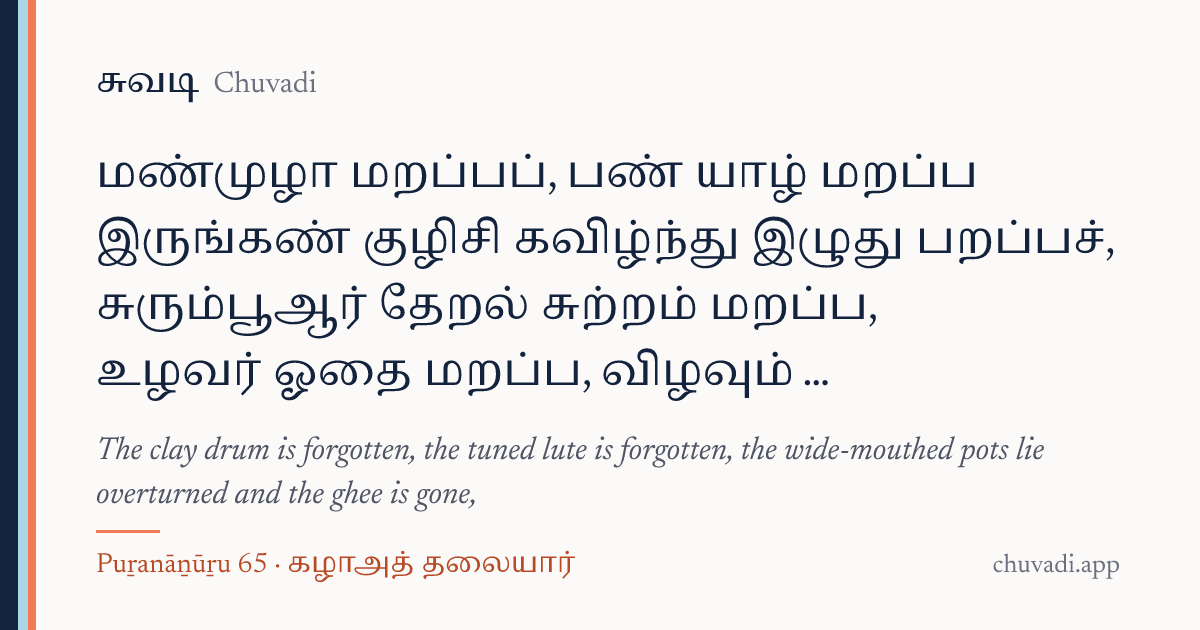
புறநானூறு 65
பாடல் · The poem
Tap a word to see where else it occurs.
பொருள் · Meaning in TamilAI
மண் பூசிய முழவின் ஓசையை மக்கள் மறந்தனர்; பண்ணோடு இசைக்கும் யாழையும் மறந்தனர்; அகன்ற வாயுடைய பானைகள் கவிழ்ந்து கிடக்க, நெய் இல்லாமல் போனது; வண்டுகள் மொய்க்கும் கள்ளைச் சுற்றத்தார் மறந்தனர்; உழவர்களின் ஆரவார ஓசை மறைந்தது; அகன்ற நிலத்தில் உள்ள சிற்றூர்கள் விழாக்களையும் மறந்தன. முழுநிலவு வந்த பெரிய நாளின் மாலையில், இரண்டு ஒளிச்சுடர்களான கதிரவனும் நிலவும் ஒன்றையொன்று நோக்கி நிற்க, அவற்றுள் ஒரு சுடர் துயரமான மாலையில் மலைக்குப் பின்னே மறைவது போல, தன்னைப் போன்ற ஒரு வேந்தன் முன்னிருந்து குறிவைத்து எறிந்த வேலால் முதுகில் பட்ட புண்ணுக்கு நாணி, வீரப் பண்புடைய அரசன் வாளுடன் வடக்கு நோக்கி உண்ணாநோன்பு இருந்தான். இங்கே, கதிரவன் ஒளிரும் பகல் பொழுதுகள் முன்பு போல் கழிவதில்லை!
இது பொதுவியல் திணை; துறை கையறுநிலை, ஒருவர் மறைந்ததால் செயலற்று வருந்தும் நிலை. பாடியவர் கழாஅத்தலையார்; பாடப்பட்டோன் சேரமான் பெருஞ்சேரலாதன். புறப்புண், அதாவது முதுகில் படும் புண், வீரனுக்கு இழிவு எனக் கருதப்பட்டதால் அரசன் வடக்கிருந்து உயிர் விட்டான். புண்ணை உண்டாக்கிய வேந்தனின் பெயர் இப்பாடலில் இல்லை.
ஆங்கிலம் · English translationAI
Translation
- The clay drum is forgotten, the tuned lute is forgotten,
- the wide-mouthed pots lie overturned and the ghee is gone,
- the kinsmen have forgotten the toddy the bees swarm on,
- the shouts of the ploughmen are forgotten, and festivals too
- the little villages of the wide land have forgotten;
- as at the hour of the great day when the full moon has come,
- the two lights face each other, and one light
- sinks behind the hill in the sorrowful evening,
- so, ashamed of the wound in his back from the spear a king like himself
- aimed at him and threw, the king of warrior worth
- has sat facing north with his sword. Here
- the daylight of the sun does not pass as days once did!
What the poem says
Kaḻāttalaiyār mourns the Cēra king Peruñcēralātaṉ, who, wounded in the back in battle, chose to die by sitting facing north (vaṭakkiruttal), the ritual fast unto death of the Sangam warrior. The tiṇai is potuviyal, the general category, and the turai kaiyaṟunilai is the grief of those left helpless by a death.
The first five lines show a whole country falling still: no drums or lute music, cooking pots upturned, no toddy shared among kin, no ploughmen's calls, no village festivals. The central image is precise and striking. On the night of the full moon the sun and moon stand face to face across the sky, and then the sun sinks behind the hills; so one of two equal kings has gone down. The wound was struck by 'a king like himself', an equal rival, and was aimed from the front, but it is a wound in the back that the king cannot bear, since such a wound was thought shameful for a warrior.
The final line says that the days no longer pass as before: time itself feels altered. The rival king is not named here; the next poem (puram.66) speaks of a king who sat facing north after a back wound at Veṇṇi, and tradition links the two poems.