



புறநானூறு 66
பாடல் · The poem
Tap a word to see where else it occurs.
பொருள் · Meaning in TamilAI
அகன்ற கரிய கடலில் மரக்கலங்களைச் செலுத்தி, காற்றின் இயக்கத்தையே தன் ஆணைக்கு உட்படுத்திய வலிமையாளனின் வழித்தோன்றலே! மதம் கொண்டது போல நடக்கும் யானைகளையுடைய கரிகால் வளவனே! படையெடுத்துச் சென்று போரில் வென்று, உன் வலிமை எல்லாருக்கும் தெரியும்படி வெற்றி பெற்றவனே! ஆரவாரமும் வளமும் மிக்க வெண்ணிப் போர்க்களத்தில், உலகில் பெரும் புகழை அடைந்து, முதுகில் பட்ட புண்ணுக்கு நாணி வடக்கு நோக்கி உண்ணாநோன்பு இருந்தவன் உன்னைவிட நல்லவன் அல்லவா?
இது வாகைத் திணை, வெற்றியைப் பாடுவது; துறை அரச வாகை, அரசனின் வெற்றியைக் கூறுவது. பாடியவர் வெண்ணிக் குயத்தியார் (வெண்ணிற் குயத்தியார் என்றும் பாடம் உண்டு); பாடப்பட்டோன் சோழன் கரிகாற் பெருவளத்தான். வென்றவனைப் புகழ்ந்தபடியே, மானத்துக்காக உயிர்விட்ட தோற்ற அரசனை அவனைவிடச் சிறந்தவன் என்கிறார் புலவர். அந்த அரசனின் பெயர் இப்பாடலில் சொல்லப்படவில்லை.
ஆங்கிலம் · English translationAI
Translation
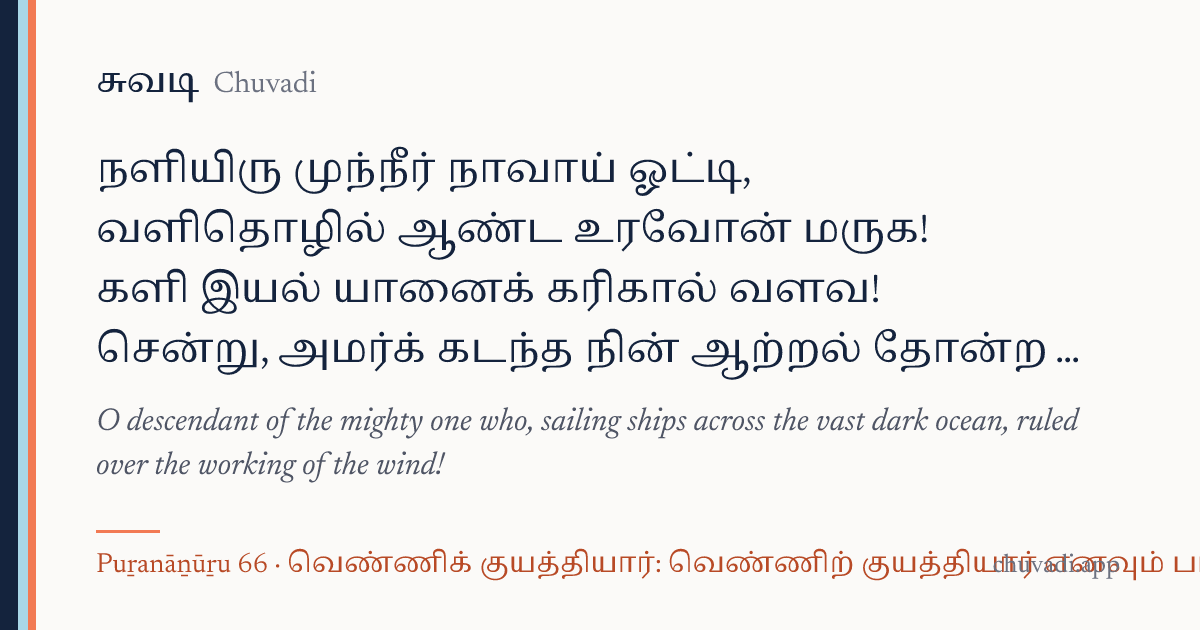
- O descendant of the mighty one who, sailing ships across the vast dark ocean,
- ruled over the working of the wind!
- O Karikāl Vaḷavaṉ of elephants that move as if in rut!
- You who went and won the war so that your strength was plain to see,
- victor, is he not a better man than you,
- he who at the battlefield of Veṇṇi, rich and full of clamour,
- won great fame in the world
- and, ashamed of the wound in his back, sat facing north?
What the poem says
The poet, named in the colophon Veṇṇik Kuyattiyār (with the variant Veṇṇiṟ Kuyattiyār), 'the potter woman of Veṇṇi', speaks directly to the Cōḻa king Karikāl Peruvaḷattāṉ after his victory at Veṇṇi. The tiṇai is vākai, victory, and the turai arasa vākai is the victory of a king.
She opens with full royal praise: Karikāl is descended from an ancestor who sent ships across the ocean and 'ruled the work of the wind', made the winds serve his sailing; he has elephants that move with a heady, rutting gait; he has proved his strength by marching out and winning. Then comes the turn that makes the poem famous. Is not the defeated king better than you? That king, wounded in the back at Veṇṇi, felt the shame of it and sat facing north to die, and by doing so won great fame in the world.
The poem honours the victor and yet gives the higher praise to the vanquished man's sense of honour. The defeated king is not named here; the previous poem (puram.65) mourns the Cēra Peruñcēralātaṉ in the same terms, and tradition links the two.