



புறநானூறு 68
பாடல் · The poem
Tap a word to see where else it occurs.
பொருள் · Meaning in TamilAI
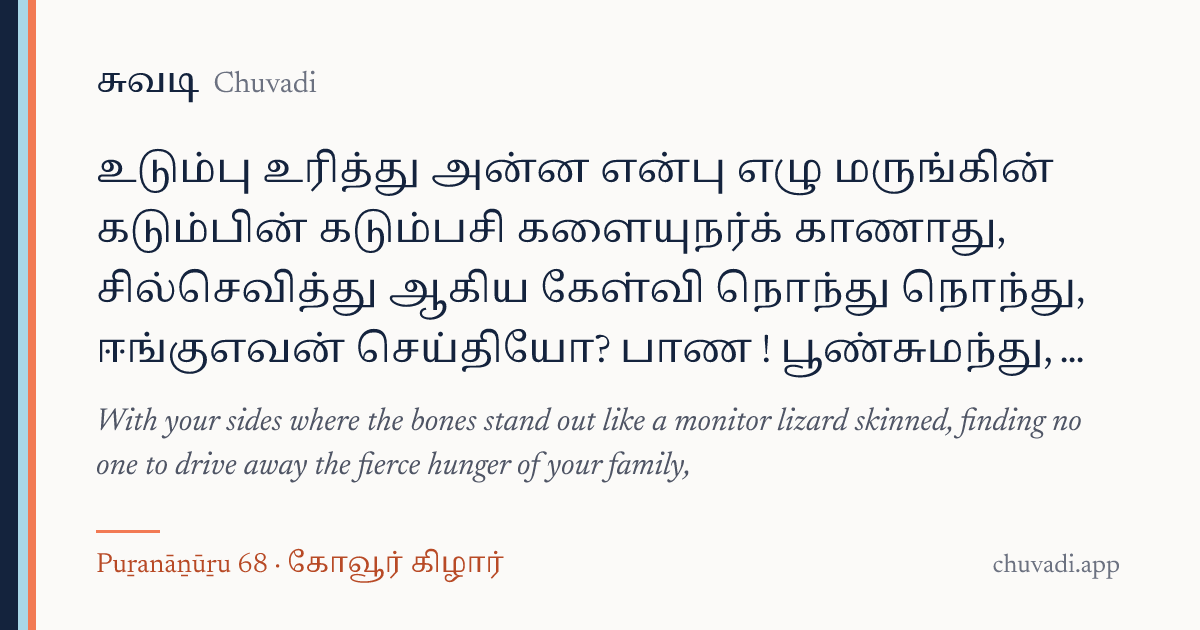
பாணனே! தோல் உரித்த உடும்பைப் போல எலும்புகள் வெளியே தெரியும் விலாப்புறங்களுடன், உன் சுற்றத்தாரின் கொடிய பசியைப் போக்குபவர் ஒருவரையும் காணாமல், சிலரே கேட்கும்படி ஆன உன் கல்வியை எண்ணி எண்ணி நொந்துகொண்டு, இங்கே என்ன செய்கிறாய்? அணிகலன்களைச் சுமந்த, அழகிய அகன்ற, செம்மையான வரிகளுடைய மார்பை உடையவன்; மென்மையால் பெண்களுக்குப் பணிவான்; வலிமையால் ஆண்களை அடக்குவான்; பெருமை நிறைந்த சிறந்த தலைவன். பிறந்த குழந்தைக்குத் தானே பால் சுரக்கும் தாயின் முலை போலப் பெருகி வரும் காவிரியின், மரங்களைச் சாய்க்கும் மிகுந்த நீர், எல்லா மக்களையும் காக்கும் நல்ல நாட்டின் தலைவன் அவன். உள்நாட்டுப் பகை ஒருவழியாக முடிந்துவிட்டதால், தீய நிமித்தம் உடைய பகைவர்மேல் அவன் எங்களை ஏவுவதில்லை; ஆகவே 'நாங்கள் சாவோம்' என்று, அவனை விட்டு நீங்காத வீரர்கள் தங்கள் பருத்த தோள்களைத் தட்டுகின்றனர். மெல்லிய பறை ஒலிக்கும் அழகிய தேர்கள் செல்லும் தெருவில், கடுமையான கள்ளைக் குடிப்பவர்களின் நடுங்கும் கைகள் சிந்திய மணமுள்ள சேற்றில் புரண்ட, அணி இல்லாத தலையுடைய யானை, உயர்ந்த நகரத்தின் எல்லைக்குள் ஒலிக்கும் முழவின் ஓசையைக் கேட்டு நிற்கும். அத்தகைய உறந்தையில் இருக்கிறான் அத்தலைவன். நீ அவனிடம் சென்றால், பிறருடைய வாயிலை மறக்கும்படி அவன் உனக்குக் கொடுப்பான்!
இது பாடாண் திணை; துறை பாணாற்றுப்படை, வறுமையுற்ற பாணனைக் கொடையாளனிடம் வழிகாட்டி அனுப்புவது. பாடியவர் கோவூர் கிழார்; பாடப்பட்டோன் சோழன் நலங்கிள்ளி. 'புட்பகை' என்பதற்குத் தீய நிமித்தம் உடைய பகை எனப் பொருள் கொண்டோம்; இதன் பொருள் உறுதியாகத் தெரியவில்லை. 'தணிபறை' என்பதன் பொருளும் ஐயத்துக்கு உரியது.
ஆங்கிலம் · English translationAI
Translation
- With your sides where the bones stand out like a monitor lizard skinned,
- finding no one to drive away the fierce hunger of your family,
- grieving and grieving over your learning that has met few ears,
- what are you doing here, bard? Bearing his ornaments,
- with his lovely, broad, handsome chest marked with red lines,
- gentle, he bows to women; strong,
- he binds men; he is the great lord, full of pride;
- like the breast that flows for a baby past its first days,
- the Kāviri swells, its abundant water toppling trees,
- and he is the warrior lord of the good land that sustains all people;
- since the strife within has been settled one way, against foes of ill omen
- he does not send us out, and so 'We shall die!' say
- his warriors who never leave him, slapping their swelling shoulders;
- along the street of fine chariots where the soothing drum is beaten,
- in the fragrant mire spilled by the trembling hands of drinkers of strong toddy,
- the elephant, its head bare, wallows,
- and listens to the drums sounding within the bounds of the tall city:
- in Uṟantai is that lord;
- if you go, he will give so that you forget the doors of others!
What the poem says
Kōvūr Kiḻār speaks to a starving bard and sends him to the Cōḻa king Nalaṅkiḷḷi. The tiṇai is pāṭāṇ, praise of a patron, and the turai pāṇāṟṟuppaṭai is a guiding poem, in which one bard shows another the way to a generous lord.
The opening is a harsh portrait: the bard's ribs show like those of a skinned monitor lizard, his family is hungry, and his learning has found few listeners. The poet then describes the king: broad-chested and adorned, gentle enough to bow to women, strong enough to master men. His land is fed by the Kāviri, whose flood is compared to a mother's breast that overflows for her infant, and which sustains everyone.
The middle lines are a picture of peace that his warriors find almost unbearable. Inner strife is over, the king sends them on no campaign, and they slap their shoulders crying that they will die of it. In the streets of the capital, Uṟantai, drinkers spill their toddy with shaking hands and an unadorned elephant rolls in the scented mud, listening to the drums. The king who rules there will give so freely that the bard will forget other men's doors.
Line 11 is uncertain: puṭpakai is taken here as 'foes of ill omen', but the phrase could be read differently. The exact sense of taṇipaṟai in line 14, a drum beaten 'gently' or 'to soothe', is also not certain.