



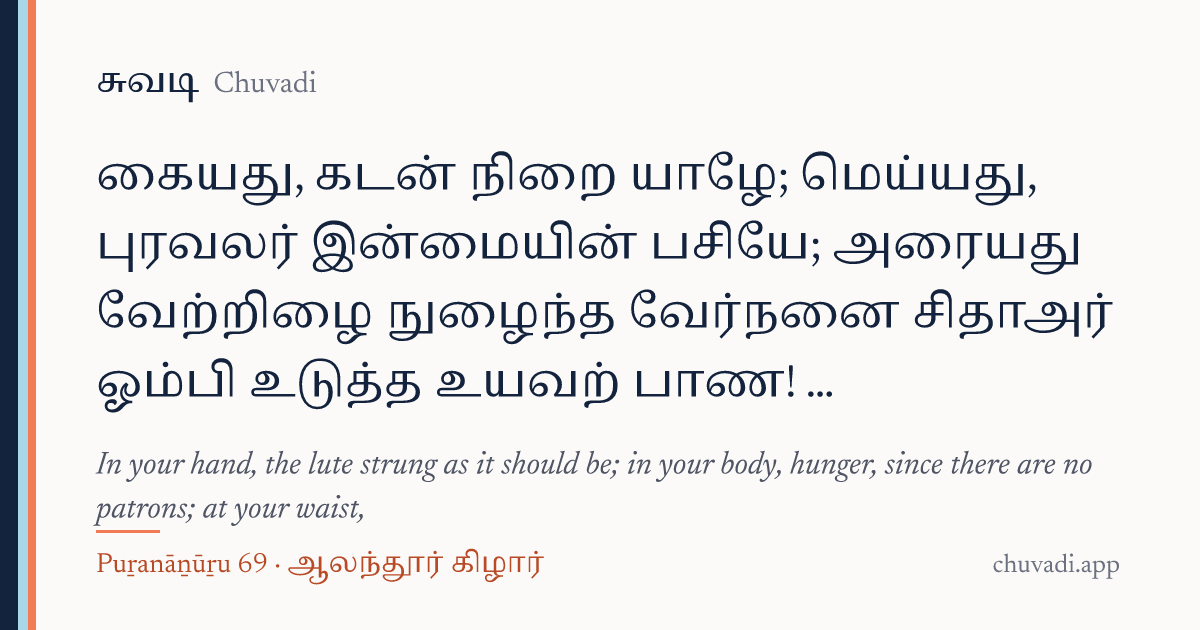
புறநானூறு 69
பாடல் · The poem
Tap a word to see where else it occurs.
பொருள் · Meaning in TamilAI
கையில் இருப்பது முறைப்படி நரம்பு கட்டிய யாழ்; உடலில் இருப்பது, புரவலர் இல்லாததால் வந்த பசி; இடுப்பில் இருப்பது, வேறு நூலால் தைக்கப்பட்ட, வியர்வையால் நனைந்த கிழிந்த ஆடை; அதையும் பாதுகாத்து உடுத்திக்கொண்டிருக்கும் வருந்தும் பாணனே! மன உறுதி இழந்தவனின் உடல் போலச் சோர்ந்து கிடக்கும் பெரிய சுற்றத்தை உடையவனே! உலகம் முழுவதும் சுற்றி வந்து, நீ மெல்ல என்னிடம் கேட்பாயானால் சொல்கிறேன். பகை மன்னர்களின் கொல்லும் யானைகள் வருந்தும், கொடிகள் கட்டிய பாசறையில், இரத்தம் பரவிய நிலத்தில் கொம்புடைய யானைகளைக் கொன்று, போர்க்களத்தைப் புலால் நாற்றம் வீசச் செய்த போர்ப்படையை உடையவன், உயர்ந்த மாடங்களுடைய உறந்தையில் இருக்கிறான்! பகைவர்க்கு எதிராக உயர்த்திய வேலை உடையவன்; ஒரே முயற்சியில் பகை நாட்டின் மேல் படையெடுத்துச் செல்லவும் தகுதி உடையவன். அழகிய மாலையும், ஒளிரும் தீப்போல அச்சம் தரும் புதிய பொன் அணிகலனும் உடைய கிள்ளி வளவனிடம் நீ சென்றால், அவனுடைய உயர்ந்த வாயிலில் காத்து நிற்க வேண்டியதில்லை. பட்டப் பகலில் தேர்களை வாரி வழங்கும் அவையை நிறையக் கண்டு, நீ அவனைப் பார்த்த பிறகு, ஆடும் வண்டுகள் ஒலிக்காத பொற்றாமரைப் பூவைச் சூடாமல் இருப்பது அதைவிட நடக்காத ஒன்று.
இது பாடாண் திணை; துறை பாணாற்றுப்படை, பாணனைக் கொடையாளனிடம் வழிப்படுத்துவது. பாடியவர் ஆலந்தூர் கிழார்; பாடப்பட்டோன் குளமுற்றத்துத் துஞ்சிய சோழன் கிள்ளி வளவன். வண்டு மொய்க்காத தாமரை என்பது பொன்னால் செய்த தாமரை. பதினைந்தாம் அடியில் 'புசும்பூண்' என்பதைப் 'பசும்பூண்' எனக் கொண்டோம். 'ஒரு நிலை' என்பதன் பொருள் உறுதியாகத் தெரியவில்லை.
ஆங்கிலம் · English translationAI
Translation
- In your hand, the lute strung as it should be; in your body,
- hunger, since there are no patrons; at your waist,
- rags threaded with yarn of another kind, soaked with sweat,
- which you take care of and wear, O sorrowful bard!
- Like the body of a man who has lost his resolve,
- your large, great family has gone listless;
- having wandered the whole wide world, if gently
- you ask me: of kings,
- where the killing tuskers groan, in the flag-hung camp,
- slaying the tusked beasts on a spread of blood,
- he of the warring army that has made the field reek of flesh
- is in Uṟantai of towering mansions!
- His spear raised high against his foes, at one stroke
- he is fit to march into enemy land; with his fine garland
- and fresh gold ornaments, fearsome, like bright fire,
- if you go to Kiḷḷi Vaḷavaṉ,
- you will not have to stand at his tall gate; in the full day
- gazing your fill on the court where chariots are given away,
- after you have seen him, a flower,
- a lotus on which no dancing bees hum,
- you not wearing it, that is even less likely.
What the poem says
Ālantūr Kiḻār, in a guiding poem (turai pāṇāṟṟuppaṭai, under the tiṇai pāṭāṇ, praise of a patron), directs a poor bard to the Cōḻa Kiḷḷi Vaḷavaṉ, whom the colophon calls 'who died at Kuḷamuṟṟam'.
The poem begins with a sketch of the bard: a well-strung lute in his hand, hunger in his body for lack of patrons, sweaty rags patched with mismatched thread, and a large family as limp as a man who has given up. If the bard, after wandering the whole world, asks the poet where to go, the answer is Uṟantai, city of high mansions, where the king lives. The poet describes him as a warrior whose army fills the field with the stench of flesh and kills the enemy's tusked elephants on ground spread with blood.
The guarantees that follow are strong. The bard will not wait at the gate; he will see the court where the king gives away chariots in broad daylight; and it is even less likely that he will come away without a lotus 'on which no bees hum', that is, a lotus made of gold, a known gift to bards.
In line 15 the edition prints pucumpūṇ, taken as pacumpūṇ, 'fresh gold ornaments'. Line 13, oru nilai, is taken as 'at one stroke' or 'in one move'; it might also mean 'steadily'.