



புறநானூறு 70
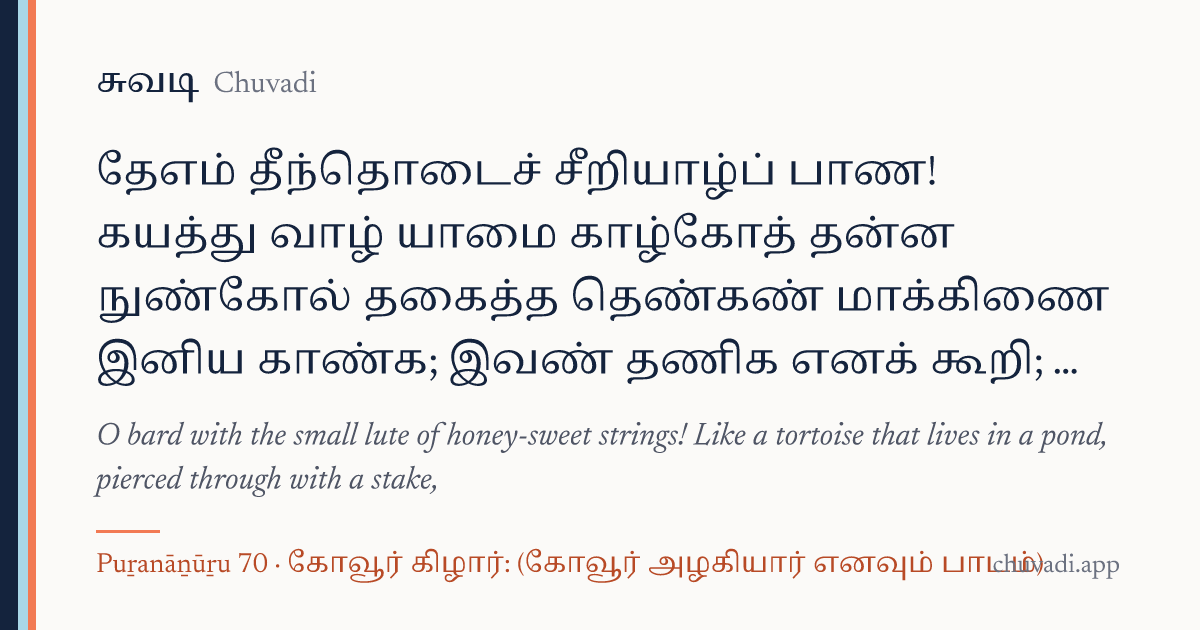
பாடல் · The poem
Tap a word to see where else it occurs.
பொருள் · Meaning in TamilAI
இனிய நரம்புகளைக் கொண்ட சிறிய யாழை உடைய பாணனே! குளத்தில் வாழும் ஆமையின் மேல் கோல் குத்தியது போல, மெல்லிய கோல்களால் இறுக்கப்பட்ட தெளிந்த முகமுடைய பெரிய கிணைப்பறையை உடையவனே! 'இனியவை காண்பாயாக; இங்கே இளைப்பாறுவாயாக' என்று வாழ்த்திக்கொண்டு, கேட்பதில் சலிக்காத, அனுபவம் மிக்க பேச்சுடைய இரவலனே! தை மாதத்துக் குளிர்ந்த குளம் போல, எடுக்க எடுக்கக் குறையாத உணவுடைய அகன்ற நகரம், சமைக்கும் தீயைத் தவிரச் சுட்டெரிக்கும் போர்த்தீயை அறியாது. இருவகை உணவு விளையும் நல்ல நாட்டின் தலைவன் கிள்ளி வளவன். அவனுடைய நல்ல புகழை எண்ணி, மணம் அறியும் கூர்மையுடைய ஆறு கால் வண்டு சிறிய வெள்ளை ஆம்பல் மலர்களின் மேல் ஊதும், கை வள்ளலான பண்ணனுடைய சிற்றூர் வழியே, பாதிரிப் பூ மணக்கும் கூந்தலும் ஒளிமிக்க நெற்றியும் இனிய புன்னகையும் உடைய விறலியுடன் மெல்ல மெல்ல நடந்து நீ சென்றால், சென்ற பயனைப் பெறுவாய். விறகு வெட்டுவோர் தற்செயலாகப் பொன் கண்டெடுத்தது போன்ற எதிர்பாராத வாய்ப்பு அன்று அவன் கொடை. அதைப் பற்றி ஐயப்பட வேண்டாம்; அவன் திருவடிகள் வாழ்க!
இது பாடாண் திணை; துறை பாணாற்றுப்படை. பாடியவர் கோவூர் கிழார் (கோவூர் அழகியார் என்றும் பாடம் உண்டு); பாடப்பட்டோன் குளமுற்றத்துத் துஞ்சிய சோழன் கிள்ளி வளவன். இரண்டு முதல் நான்கு வரையுள்ள அடிகளில் வரும் வாழ்த்து பாணன் சொல்வதா, பிறர் அவனிடம் சொல்வதா என்பது தெளிவாக இல்லை. 'இருமருந்து' என்பது நீரும் உணவும் எனக் கொள்ளலாம்; இது உறுதியில்லை.
ஆங்கிலம் · English translationAI
Translation
- O bard with the small lute of honey-sweet strings!
- Like a tortoise that lives in a pond, pierced through with a stake,
- is your great kiṇai drum with its clear face, held by fine rods;
- 'May you see sweet things; may you rest here,' you say,
- O suppliant of seasoned words who never tires of asking!
- Like a cool pond in the month of Tai,
- the broad city has food that never grows less however much is taken;
- it knows the cooking fire, and never the fire that burns;
- the warrior lord of the good land that grows the two sustenances
- is Kiḷḷi Vaḷavaṉ; thinking of his good fame,
- where the six-legged bird, its sense keen for scent,
- hums over the small white water-lilies,
- by the little village of Paṇṇaṉ, open-handed in giving,
- with the viṟali whose hair smells of pātiri, bright-browed,
- sweetly smiling, if gently, gently, walking
- you go, you will have gone to some purpose;
- not like the gold found by men who gather firewood,
- a stroke of luck, is his giving;
- you need not doubt it; long live his feet!
What the poem says
This guiding poem (turai pāṇāṟṟuppaṭai, tiṇai pāṭāṇ, praise of a patron) is credited to Kōvūr Kiḻār, with the variant Kōvūr Aḻakiyār, and directs a bard to the Cōḻa Kiḷḷi Vaḷavaṉ 'who died at Kuḷamuṟṟam'.
The bard is described by his instruments: a small lute with sweet strings, and a kiṇai drum whose body, braced with thin sticks, looks like a pond tortoise with a stake through its shell. He is a practised, experienced asker who greets people with blessings. The poet tells him of a city as full as a pond in the cool month of Tai, whose food never runs out however much is taken, and which knows only the kitchen fire and never the fire of war. Its lord rules a land that produces 'the two sustenances', probably water and grain.
The bard is to travel slowly with his viṟali, the woman singer of the troupe, whose hair smells of pātiri flowers. The route mentions the little village of Paṇṇaṉ, 'open-handed in giving', where bees hum over white water-lilies; the poem does not say more about Paṇṇaṉ. The king's giving is not chance luck, like woodcutters stumbling on gold, but certain.
Lines 2 to 4 are difficult: it is not clear whether the words 'may you see sweet things; rest here' are the bard's greeting to others or something said to him. The 'two sustenances' (irumaruntu) are also open to more than one reading.