



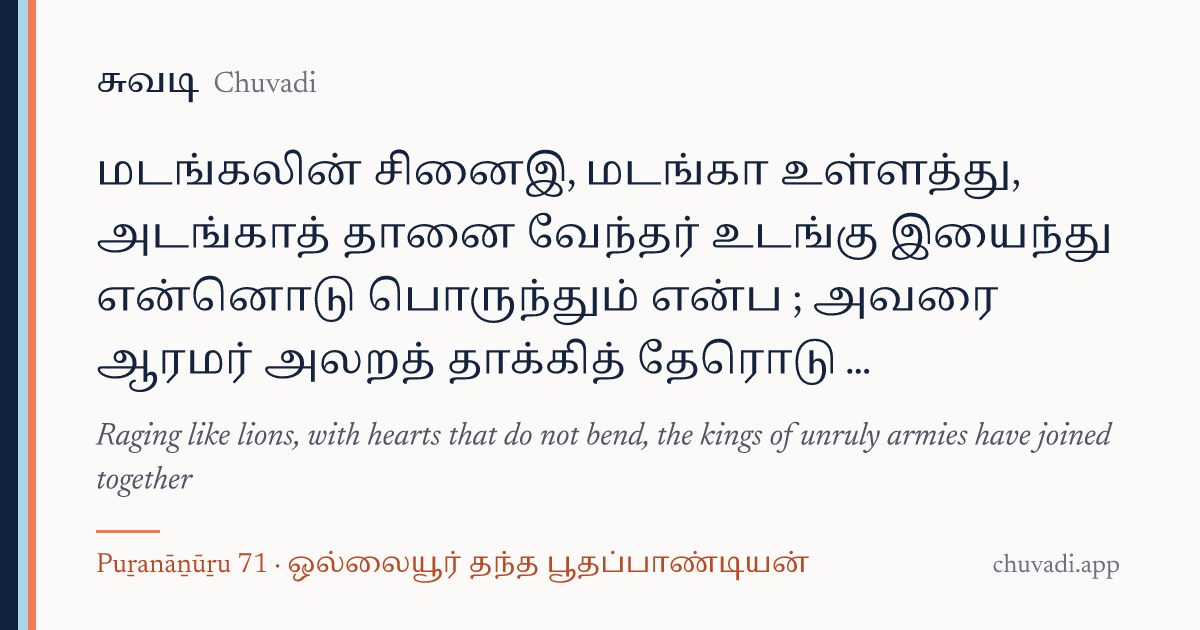
புறநானூறு 71
பாடல் · The poem
Tap a word to see where else it occurs.
பொருள் · Meaning in TamilAI
சிங்கம் போலச் சினந்து, பணியாத உள்ளமும் அடங்காத படையும் உடைய வேந்தர்கள் ஒன்றுசேர்ந்து என்னோடு போரிட வருவார்கள் என்று சொல்கிறார்கள். கடும்போரில் அவர்கள் அலறும்படி தாக்கி, அவர்களின் தேர்களோடு அவர்கள் புறமுதுகிட்டு ஓடுவதை நான் காணவில்லை என்றால், சிறந்த, பெரிய, அழகிய மை தீட்டிய கண்களையுடைய இவளை விட்டுப் பிரிவேனாக! அறநெறி மாறும்படி, என் அன்புக்குரிய அவையில் திறமையற்ற ஒருவனை அமர்த்தி, நீதி தவறிக் கொடுங்கோல் புரிந்தவன் ஆவேனாக! மிகுந்த புகழுடைய வையை ஆறு சூழ்ந்த, வெற்றி பொருந்திய, வளம் குறையாத நாட்டை உடைய மையல் என்னும் ஊரின் தலைவன் மாவனும், நிலைத்த கோட்டையுடைய ஆந்தையும், புகழ்பெற்ற அந்துவஞ்சாத்தனும், ஆதன் அழிசியும், கடுஞ்சினம் உடைய இயக்கனும், இவர்களோடு மற்றவர்களும் ஆகிய, கண் போன்ற நட்புடைய என் உறவினர்களோடு கலந்து மகிழ்ந்த இனிய களிப்பையும் சிரிப்பையும் இழப்பேனாக! அது மட்டுமன்று, மக்களைக் காக்கும் நீண்ட குடிமரபால் சிறந்த தென்னாட்டைக் காக்கும் பொறுப்பிலிருந்து நீங்கி, பிறருடைய வன்மையான வறண்ட நிலத்தைக் காப்பவனாக நான் பிறப்பேனாக!
இது காஞ்சித் திணை; துறை வஞ்சினக் காஞ்சி, அதாவது ஒன்றைச் செய்யாவிட்டால் தனக்கு இன்னின்ன கேடுகள் வரட்டும் என்று உறுதிமொழி கூறுவது. பாடியவர் ஒல்லையூர் தந்த பூதப்பாண்டியன்; அவனே தன்னைப் பற்றிப் பாடுவதால் பாடப்பட்டோர் பெயர் தரப்படவில்லை. இதில் பெயர் சொல்லப்படும் நண்பர்களைப் பற்றிப் பாடல் வேறு எதுவும் கூறவில்லை.
ஆங்கிலம் · English translationAI
Translation
- Raging like lions, with hearts that do not bend,
- the kings of unruly armies have joined together
- and will fight with me, they say; if them,
- striking so the hard battle cries out, together with their chariots
- I do not see in flight, then from her, so fine,
- with her great, alluring, kohl-dark eyes, may I be parted;
- so that the rule of right is overturned, in my well-loved court
- may I set up a man without ability, and, swerving from justice,
- may I be one who held a weak sceptre; of abundant fame,
- in the victorious land ringed by the Vaiyai,
- of unfailing plenty, the lord of Maiyal,
- Māvaṉ, and Āntai of the lasting fort, and the renowned
- Antuvañ Cāttaṉ, and Ātaṉ Aḻici,
- and Iyakkaṉ of fierce anger, and others along with them,
- my kinsmen in a friendship dear as eyes, with whom I have mingled,
- may I lose the sweet joy and glad laughter: not that alone,
- from guarding the southern land, eminent for its long line that protects its people,
- may I be cast out, and in guarding others'
- hard, harsh lands may I be reborn!
What the poem says
This is a vow before battle spoken by a king in his own voice. The colophon names the poet as Pūtappāṇṭiyaṉ 'who took Ollaiyūr', a Pāṇṭiya king, and gives no patron, since the poem is about himself. The tiṇai is kāñci, which usually concerns the impermanence of life, and the turai vañciṉak kāñci is the solemn vow, a speech that binds the speaker with curses on himself if he fails.
Hearing that hostile kings, fierce as lions, have united against him, the king lists what he would suffer if he does not rout them and see their chariots turn tail. He would be separated from his wife, the woman of the large, kohl-darkened eyes. He would set an incompetent man in his court so that justice was perverted, becoming a ruler of 'a weak sceptre'. He would lose the joy of his close friends, whom he names: Māvaṉ, lord of Maiyal by the Vaiyai river, Āntai of the lasting fort, Antuvañ Cāttaṉ, Ātaṉ Aḻici and the hot-tempered Iyakkaṉ. And he would be removed from ruling the southern land and reborn to guard someone else's barren country.
The curses rise in weight from the private to the public: wife, justice, friends, kingdom, and even his next birth. The poem gives the friends' names but nothing more about them.