



புறநானூறு 72
பாடல் · The poem
Tap a word to see where else it occurs.
பொருள் · Meaning in TamilAI
தங்கள் நாட்டைப் பெரிதாகப் புகழ்ந்து பேசுபவர்கள் சிரிப்புக்கு உரியவர்களே. 'இவன் சிறுவன்' என்று நான் மனம் வருந்தும்படி சொல்லி, 'இருபக்கமும் ஒலிக்கும் மணிகளும் அகன்ற அடிகளும் பருத்த கால்களும் உடைய உயர்ந்த நல்ல யானைகளும், தேர்களும், குதிரைகளும், போர்ப்பயிற்சி பெற்ற வீரர்களும் எங்களிடம் உள்ளனர்' என்று, என் மிகுந்த வலிமைக்கு அஞ்சாமல், உடல் முழுவதும் சினம் பொங்கச் சிறுமையான சொற்களைச் சொன்ன சினம் மிக்க வேந்தர்களை, கடும்போர் சிதையும்படி தாக்கி, அவர்களின் முரசுகளோடு ஒருசேரப் பிடிக்காவிட்டால், என் ஆட்சியின் நிழலில் வாழும் மக்கள் வேறு புகலிடம் காணாமல், 'எம் அரசன் கொடியவன்' என்று கண்ணீர் சிந்தி, குடிமக்கள் பழிதூற்றும் கொடுங்கோல் உடையவன் ஆவேனாக! உயர்ந்த சிறப்பும் ஆழ்ந்த கல்வியும் உடைய மாங்குடி மருதனைத் தலைவனாகக் கொண்டு, உலகம் உள்ளவரை நிலைத்து நிற்கும், பலரும் புகழும் சிறப்புடைய புலவர்கள் என் நாட்டைப் பாடாமல் விலக்குவார்களாக! நான் காப்பாற்ற வேண்டியவர்கள் மிகவும் வருந்தும்படி, இரந்து வருவோர்க்குக் கொடுக்க முடியாத வறுமையை நான் அடைவேனாக!
இது காஞ்சித் திணை; துறை வஞ்சினக் காஞ்சி, தோற்றால் தனக்குக் கேடுகள் வரட்டும் என்று அரசன் கூறும் உறுதிமொழி. பாடியவன் பாண்டியன் தலையாலங்கானத்துச் செருவென்ற நெடுஞ்செழியன்; தன்னைப் பற்றியே பாடுவதால் பாடப்பட்டோர் பெயர் இல்லை. முதல் அடியின் பொருளும், 'சென்னிழல்' என்பதன் பொருளும் உறுதியாகத் தெரியவில்லை.
ஆங்கிலம் · English translationAI
Translation
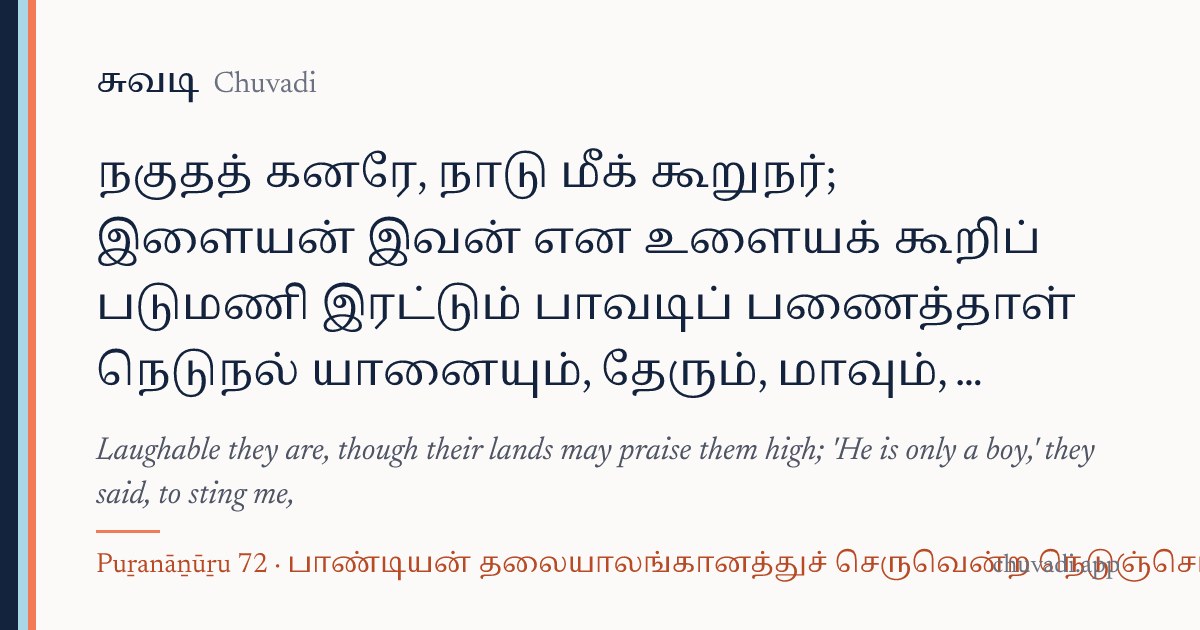
- Laughable they are, though their lands may praise them high;
- 'He is only a boy,' they said, to sting me,
- 'Tall fine elephants with ringing bells on both flanks, broad feet and thick legs,
- and chariots, and horses,
- and warriors trained for war: these we have,' they said;
- unafraid of my great strength, swollen with rage of body,
- the angry kings who spoke these petty words,
- if, striking so that the hard battle is shattered, I do not take them
- all together with their drums, then may those who live
- under my shade, finding no shade to turn to,
- cry 'Cruel is our king!' spreading their tears,
- and may I hold a sceptre that my people curse!
- With the man of lofty distinction and high learning,
- Māṅkuṭi Marutaṉ, at their head,
- may the poets, of excellence praised by many and lasting with the world,
- leave my land unsung and shun it;
- so that those I support suffer sharply,
- may I fall into a poverty that cannot give to those who beg!
What the poem says
Here a king speaks his own vow. The colophon names him as the Pāṇṭiya Neṭuñceḻiyaṉ 'who won the battle at Talaiyālaṅkāṉam', and the poem is classed under kāñci with the turai vañciṉak kāñci, the solemn oath that calls down curses on oneself in case of failure, like puram.71 before it.
Rival kings have mocked him as a mere boy and boasted of their elephants, chariots, horses and soldiers. He swears that if he does not crush them in battle and capture them together with their war drums, three things should befall him. His subjects, finding no protection under his rule, should weep and call him cruel, and his sceptre should be cursed. The poets, led by Māṅkuṭi Marutaṉ, whom he names with great respect for his learning, should refuse to sing of his land. And he should become too poor to give to those who come asking, so that those who depend on him suffer.
The order of the curses is telling: for this king, losing the praise of poets and the power to give is as dreadful as losing the people's love. Line 1 is not certain: nāṭu mīkkūṟunar may mean kings whom their own lands extol, or those who boast of their lands; either way they are 'fit to be laughed at'. In line 10, ceṉṉiḻal is taken as 'a shade to go to', with some doubt.