



புறநானூறு 73
பாடல் · The poem
Tap a word to see where else it occurs.
பொருள் · Meaning in TamilAI
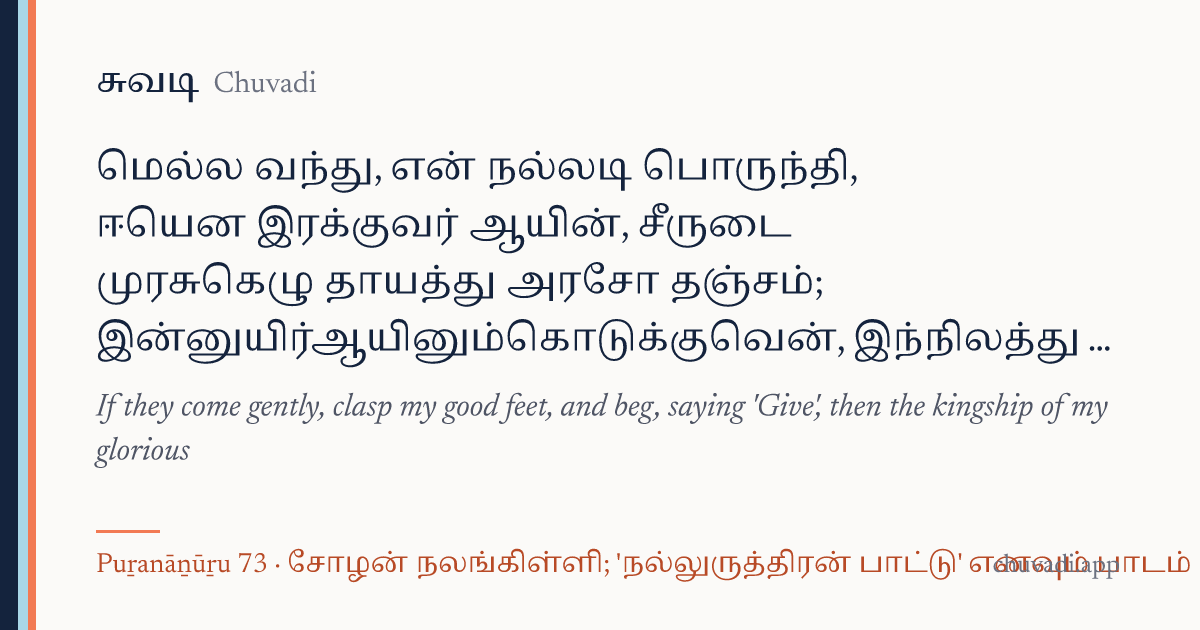
என்னிடம் மெல்ல வந்து, என் நல்ல அடிகளைப் பணிந்து, 'கொடு' என்று கேட்பார்களானால், சிறப்புடைய முரசு முழங்கும் என் முன்னோர் வழிவந்த அரசாட்சியும் எளிய ஒன்றே; இனிய உயிரையும் கொடுப்பேன். ஆனால், இந்த நிலத்தில் வலிமை உடையவர்களின் வலிமையை மதிக்காமல், என் உள்ளத்தை இகழ்ந்த அறிவிலி, தூங்கும் புலியைத் தெரியாமல் இடறிய குருடனைப் போல, தப்பி உயிரோடு திரும்புவது அரிது. வலிமையுடைய, மூங்கிலைத் தின்னும் யானையின் காலில் அகப்பட்ட வலிய, இறுகிய, நீண்ட மூங்கில் முளையைப் போல, அங்கே சென்று அவர்கள் வருந்தும்படி நான் போரிடாவிட்டால், குற்றமற்ற நெஞ்சத்தோடு அன்பு கொள்ளாத, அடர்ந்த கரிய கூந்தலுடைய பெண்களின் விருப்பமில்லாத தழுவலில் என் மாலை கசங்குவதாக!
இது காஞ்சித் திணை; துறை வஞ்சினக் காஞ்சி, அரசன் கூறும் சூளுரை. பாடியவன் சோழன் நலங்கிள்ளி; இது நல்லுருத்திரன் பாட்டு என்றும் ஒரு பாடம் உண்டு. அரசனே தன்னைப் பற்றிப் பாடுவதால் பாடப்பட்டோர் பெயர் இல்லை. 'தஞ்சம்' என்பதை 'எளியது' எனக் கொண்டோம்; இறுதியில் உள்ள சூளுரையின் சரியான நோக்கம் பற்றி வேறு கருத்துகளும் இருக்கலாம்.
ஆங்கிலம் · English translationAI
Translation
- If they come gently, clasp my good feet,
- and beg, saying 'Give', then the kingship of my glorious
- inheritance, loud with drums, is a trifle;
- even my sweet life I would give. But in this land
- heedless of the strength of those who have strength, my
- heart he has scorned, that fool; plainly,
- like a blind man who has stumbled on a sleeping tiger,
- it is hard for him to get away alive. Like the hard,
- packed, long shoot of bamboo caught under the foot
- of a mighty elephant that feeds on cane, if, going there,
- I do not fight so that they suffer, then of women
- who feel no love with a heart that is faultless and true,
- women with abundant dark hair,
- in their unwilling embrace, may my garland be crushed!
What the poem says
Another royal vow (kāñci, turai vañciṉak kāñci), credited in the colophon to the Cōḻa Nalaṅkiḷḷi, with a variant reading that calls it 'the song of Nalluruttiraṉ'. The king speaks for himself, so no patron is named.
He begins with a show of generosity. Anyone who comes humbly, falls at his feet and asks, may have his kingdom, an inheritance announced by drums, as if it were nothing; he would give even his life. But the enemy who has scorned his power is like a blind man who has tripped over a sleeping tiger: he will not easily escape. The king compares what he will do to that enemy to a tough bamboo shoot crushed under the foot of an elephant that feeds on cane.
His self-curse, if he fails, is a striking one. He asks that his garland be crushed in the embrace of women who do not love him and who embrace him unwillingly, women of hired or loveless company rather than a faithful wife. The point seems to be that such loveless union would be the deepest dishonour for a warrior king.
Line 3 ends with tañcam, taken here as 'a trifle, an easy thing'. The sense of lines 11 to 13 depends on how the women are understood, and the exact force of the curse is open to some interpretation.