



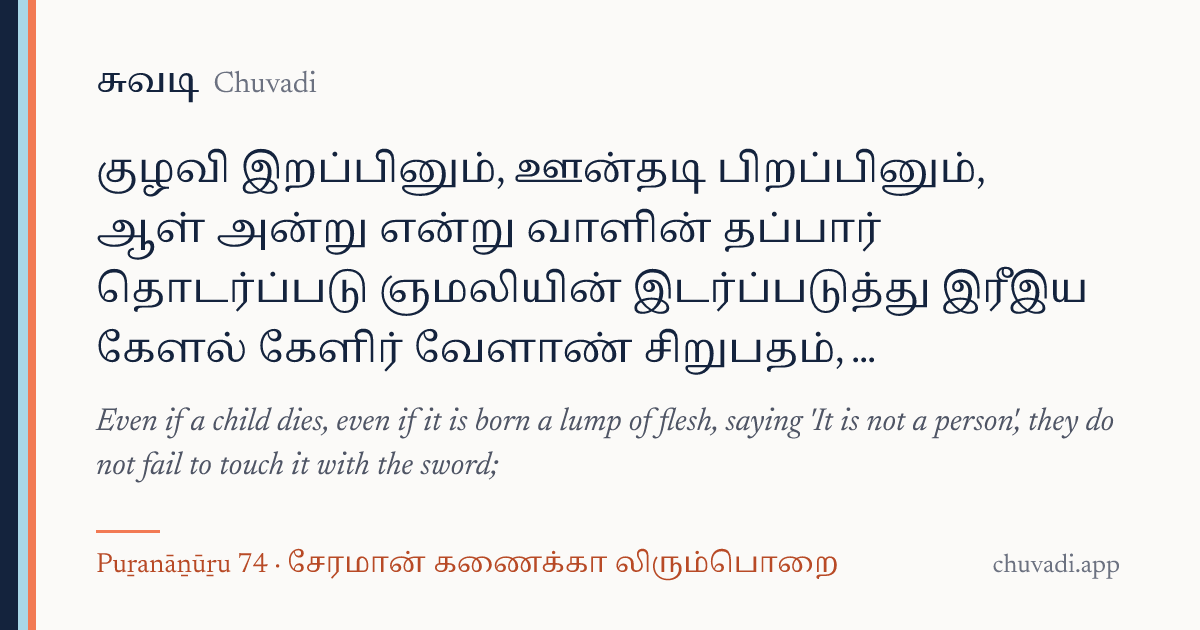
புறநானூறு 74
பாடல் · The poem
Tap a word to see where else it occurs.
பொருள் · Meaning in TamilAI
குழந்தை இறந்து பிறந்தாலும், உருவமில்லாத ஊன் பிண்டமாகப் பிறந்தாலும், 'இது ஆள் அன்று' என்று விட்டுவிடாமல் அதை வாளால் வெட்டுவதைத் தவறாத குடியினர், சங்கிலியால் கட்டப்பட்ட நாயைப் போலத் துன்பப்படுத்தி வைக்கப்பட்டு, உறவினர் அல்லாத பகைவர் இரக்கத்தால் தரும் சிறிதளவு உணவை, மன வலிமை இல்லாமல், வயிற்றில் எரியும் பசித் தீ தணிவதற்காகத் தாமே கெஞ்சிக் கேட்டு உண்ணும் இழிநிலையில் உள்ள ஒருவனை இந்த உலகத்தில் பெறுவார்களோ?
இது பொதுவியல் திணை; துறை முதுமொழிக் காஞ்சி, வாழ்வின் நிலையாமையையும் மானத்தையும் பற்றிய பழமையான அறிவுரை. பாடியவன் சேரமான் கணைக்கால் இரும்பொறை; தன்னைப் பற்றியே பாடுகிறான். இவன் சிறையில் இருந்தபோது காவலர் தாமதித்துத் தந்த நீரை மறுத்து இப்பாடலைப் பாடினான் என்பது மரபுச் செய்தி. 'வேளாண் சிறுபதம்' என்பதை இரக்கத்தால் தரும் சிறிய உணவு எனக் கொண்டோம்.
ஆங்கிலம் · English translationAI
Translation
- Even if a child dies, even if it is born a lump of flesh,
- saying 'It is not a person', they do not fail to touch it with the sword;
- like a dog held on a chain, made to suffer,
- the meagre food given as a favour by kinsmen who are no kin,
- with no spirit left, so that the fire in the belly may be quenched,
- begging it for oneself to eat: such a one
- would they ever beget, in this world?
What the poem says
The colophon gives this short poem to the Cēra king Kaṇaikkāl Irumpoṟai, speaking of himself; no patron is named. Tradition tells that he wrote it as a captive, refusing water that his guards gave grudgingly; the poem itself only shows a king in bondage, humiliated by the food given him.
The first two lines refer to a warrior custom: even a baby that dies, or one stillborn as a shapeless lump of flesh, is touched with a sword, as though it had died in battle, because a death without a wound was thought unworthy. Against this standard the speaker sets his own condition. He is like a dog on a chain, kept in distress, and must beg for a scrap of food from 'kinsmen who are not kin', those who are no friends of his, simply to put out the fire of hunger, having lost the spirit to refuse.
The closing question asks whether a family of warriors would ever give birth to such a man. The tiṇai is potuviyal, the general category, and the turai mutumoḻik kāñci is a poem of old wisdom on the fragility of life and honour.
Lines 1 and 2 are compressed: the sword custom is implied rather than spelled out. Vēḷāṇ ciṟupatam in line 4 is taken as 'meagre food given as a favour'.