



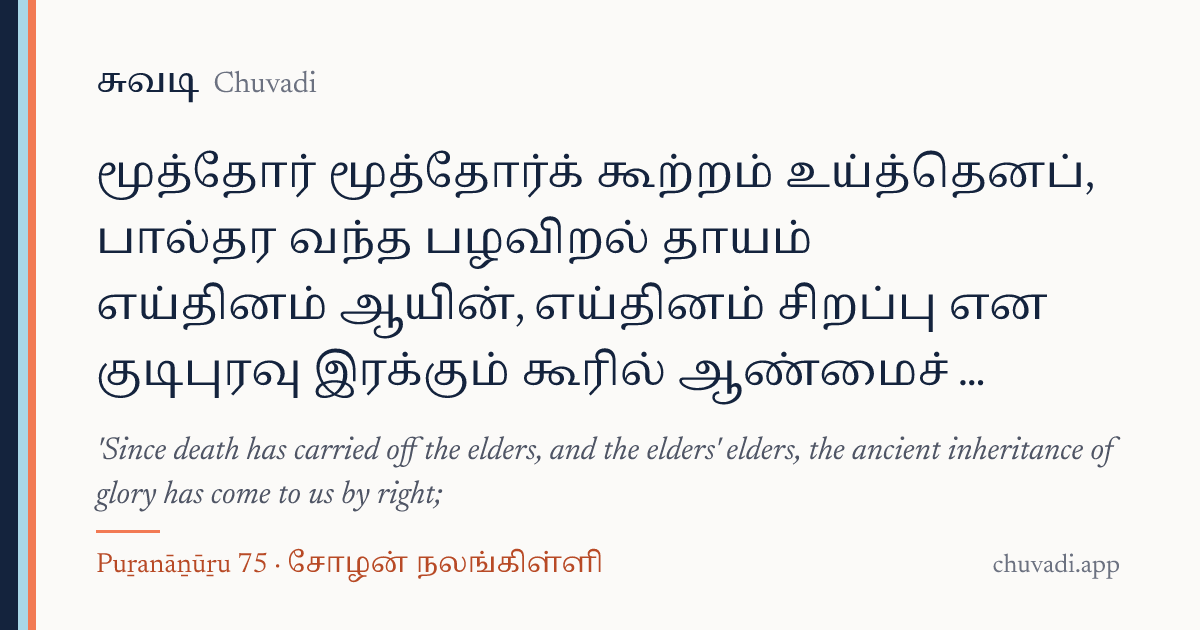
புறநானூறு 75
பாடல் · The poem
Tap a word to see where else it occurs.
பொருள் · Meaning in TamilAI
'முன்னோரையும் அவர்களுக்கு முன்னோரையும் கூற்றுவன் கொண்டுபோனதால், உரிமைப்படி எமக்கு வந்த பழமையான வெற்றிச் செல்வத்தை அடைந்துவிட்டோம்; ஆகவே பெருமையையும் அடைந்துவிட்டோம்' என்று எண்ணி, குடிமக்களிடம் அவர்களுடைய வாழ்வுக்கு உரியதைக் கேட்டு வாங்கும், கூர்மையற்ற ஆண்மையுடைய சிறியவன் அதைப் பெற்றால், அது மிகவும் கனமான சுமையாகும். நெருங்கி வரும் போரைத் தாங்கும் வலிமையும் உறுதியான கால்களும் உடைய சிறந்தவன் அதைப் பெற்றால், நீர் வற்றிய குளக்கரையில் வளரும் சிறிய தண்டுடைய வெண்ணிறச் சடையைக் கோடை வெயிலில் வாடி உலர்ந்தது போல, மிகவும் எளிதாகும். குற்றமில்லாத, வானைத் தொடும்படி உயர்ந்த வெண்கொற்றக் குடையையும் முரசையும் உடைய வேந்தர்களின் அரசச் செல்வம் அத்தகையதே!
இது பொதுவியல் திணை; துறை பொருண்மொழிக் காஞ்சி, வாழ்க்கை பற்றிய ஓர் உண்மையை எடுத்துச் சொல்வது. பாடியவன் சோழன் நலங்கிள்ளி; தானே பொதுவாக அரசாட்சியைப் பற்றிப் பாடுகிறான். 'குடிபுரவு இரக்கும்' என்பதற்கு மக்களிடம் வரி வேண்டுபவன் எனப் பொருள் கொண்டோம்; வேறு பொருளும் கொள்ள இடமுண்டு.
ஆங்கிலம் · English translationAI
Translation
- 'Since death has carried off the elders, and the elders' elders,
- the ancient inheritance of glory has come to us by right;
- now that we have got it, we have got greatness,' thinking so,
- if a small man of blunt manhood, who begs from the people their livelihood,
- should get it, it weighs heavy indeed!
- But if the noble one with strong legs and fierce force who bears the thronging battle
- should get it, then, like by a pond of shrunken water
- almost dried, the white pith on its small stem,
- withered and dry in the summer heat, very
- light indeed it is, the flawless
- white umbrella rising to touch the sky,
- the royal splendour of drum-sounding kings!
What the poem says
Again the speaker is the Cōḻa Nalaṅkiḷḷi, named in the colophon as the poet, with no separate patron. The tiṇai is potuviyal, the general category, and the turai poruṇmoḻik kāñci is a poem that states a truth about life, here a reflection on what kingship weighs.
The first part describes a small-minded heir. The elders have died one after another, the throne has come to him by inheritance, and he imagines that getting it is the same as being great. He has no real courage and lives by asking his subjects for their substance. For such a man, the poem says, the crown is a heavy load.
For a truly worthy king, strong enough to bear the shock of battle, the same royal glory is light. The image is exact and homely: the white, spongy pith that grows by a pond, once the water has almost gone and summer has dried it, weighs next to nothing. The white umbrella that rises to the sky and the drum, symbols of kingship, are light in such a man's hands.
Line 4 is taken to mean a king who 'begs' tribute from his people; kuṭipuravu could also be read as the protection or upkeep of the people, which would change the nuance slightly.